Resources
In the charged atmosphere of the debate on multicultural issues, higher education professionals must take action, even in the face of incomplete information and complicated arguments and counter arguments, and are often expected to set standards when many assumptions are made in deep-rooted, taken-for-granted institutional practices. This volume of New Directions for Teaching and Learning speaks in a practical way to administrators, instructors, faculty/TA developers, and support staff who work in the multicultural classroom and offers valuable information that will serve as a basis for recognizing and solving issues in diversity. This is the 49th issue of the quarterly journal New Directions for Teaching and Learning. For more information on the series, please see the Journals and Periodicals page. (From the Publisher)
Despite the progress of the women's movement, many women still feel silenced in their families and schools. Based on in-depth interviews with 135 women, this moving and important book explains why. (From the Publisher)
Bartolome explores issues in teaching working-class minority students the mainstream academic ways of speaking necessary for success in school. Drawing from her own experience as a white teacher of Mexican- American students, she reveals the veiled antagonism between students and teacher, emphasizes the political dimensions of language, and critiques the dominant deficit ideology that underlies the cultural difference explanation of academic underachievement among linguistic minority students. (From the Publisher)
Journal Issue. This journal presents a collection a essays that offer several new perspectives on teaching practice; give descriptive and narrative accounts of curricular and teaching innovations; and discusses a range of shared learnings obtained from public university, community college, and private college multicultural change processes. (From the Publisher)
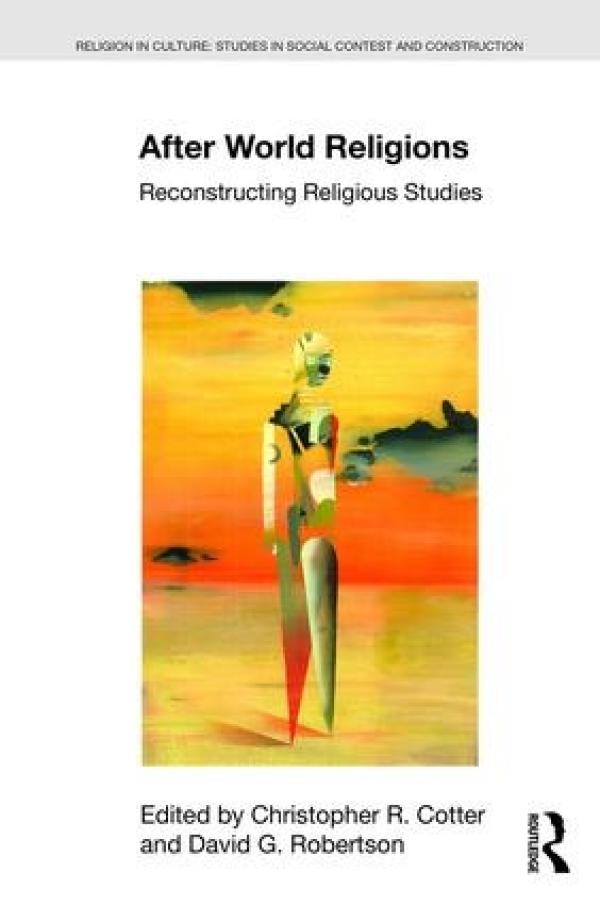
Professors of religion and religious studies may find a familiar link between this edited volume and aspects of their personal academic journey, especially if they are on the tenure track. Both represent texts that involve self-reflection and can embody intellectual wrestling. Most significant for this review: the former also offers tools for rethinking the World Religions Paradigm (WRP) that can challenge pedagogical strategies considered the norm of today and tomorrow. After World Religions: Reconstructing Religious Studies represents a methodologically rigorous way to create a classroom that cements the study of religion as an integral component of both undergraduate and graduate study. The twelve chapters in the volume – spread across three sections – are individually and collectively thought-provoking and intriguing essays. While I acquired the text for potential course adoption in my liberal arts undergraduate methods course, my engagement with the international cast of scholars (from the UK, Australia, Canada, Finland, and the U.S.) confirmed the importance of this work for professors of what might still be considered “world religions” as we strive to help our students “make sense of our world” (186). One of the more teachable moments was delivered by Teemu Taira. In “Doing things with ‘religion,’” Taira sets out to “instigate an exploration of how something came to be understood and classified as ‘religion’ and why,” as it simultaneously questions the inclusion and exclusion of traditions such as Confucianism, Shintoism, and Scientology (84). For example, the formation of Confucianism as a religion is connected with Western scholarship. Yet it “was regarded as a religion in China in 1949,” until the Communists took power in China when they “established the current system in which only Buddhism, Daoism, Catholicism, Protestantism, and Islam are considered as religions” (86, 85). Michel Desjardins provides another significant moment of illumination with “The Desjardins Diet for World Religions Paradigm Loss.” In a post-presidential-election season during which many Americans are threatening to emigrate to Canada, it seemed apropos to gain new insight from a classroom on our shared northern borders. It was easy to be hooked by the chapter’s focus on food and religion as the sole doorway to an introduction to religion seminar. Not only does Desjardins employ his own qualitative research, but he also challenges readers to reimage food – and, thereby, create “more nuanced views of religion” – “as a rich site for examining human nature” (124, 123). Additionally, useful resources are either embedded within the chapters (such as difficult to locate work on Sikhism) or as part of the references with which each ends. The “Afterward” by Russell McCutcheon, a stalwart in the field, concludes the work with a compelling goal: “If what we’re teaching these diverse students in our World Religions courses is not just the names and dates that these students are probably focused on, but, instead, subtly demonstrating to them how scholarship happens,” then we are more likely to teach skills “that are useful in unanticipated settings.” Who among us doesn’t yearn to accomplish that!
Changing demographics in Norway offer new challenges and great opportunities for the field of education. Today Norwegians find themselves living in an interconnected world where the individual that one might consider to be “strange” because of cultural differences is no longer someone that is only viewed from a distance. In many cases, yesterday’s stranger is now one’s next door neighbor or cohort in the classroom (5). How should an instructor approach cultural differences that exist between teacher and student? How does he or she navigate cultural differences between students? These are among the issues that are carefully examined in The Intercultural Dialogue: Preparing Teachers for Diversity. Chapter One introduces readers to the concept of intercultural dialogue (ID). At its core, ID is a constructive and positive interaction between persons or groups which are culturally different from each other (12). One of the central reasons for educators to embrace ID is the need to alter the dominance of monocultural education that exists in many European countries (16). Chapter Two considers ID from a transcultural perspective. A transcultural (as distinguished from a multicultural) perspective is one which seeks to articulate today’s contemporary and altered cultural constitution, thus abandoning conventional views of cultural formations that are no longer viable (13-14). Chapter Three identifies some of the fundamental features of religion including transreligiosity, and discusses the centrality of religion in culture (53). In Chapter Four we find a selection of influential theoretical perspectives on communicative interaction which are offered as frameworks for the understanding of dialogue (69). Next the author examines the Norwegian government’s curriculum framework for teacher education and cites the preconditions for ID in the context of cultural diversity educational policies (109). In Chapter Six, readers discover that ID is most effective because of its unsettled and vulnerable qualities. For an intercultural dialogue to emerge, instability and uncertainty must be part of one’s understanding of ID because “the power of dialogue is located in its weakness”(136). For this reviewer Skrefsrud’s closing references to the dichotomy between power and weakness evoke images of Christian scripture. There is a core Biblical passage wherein the apostle Paul reflects upon a life-changing encounter between himself and Jesus Christ. The text speaks of the redemptive and often paradoxical power of God’s grace. In the midst of Paul’s affliction Christ provides words of comfort: “My grace is sufficient for you, for My strength is made perfect in weakness.” Paul is therefore encouraged to embrace his hardship rather than reject it when he states, “For when I am weak, then I am strong” (2 Cor 12:7-10 [NKJV]). I submit that it is Skrefsrud who prophetically wades into the often turbulent waters of cultural diversity and offers his own words of grace for today’s educators. Some readers will be challenged to embrace a new paradigm for educating both present and future teachers. It is no longer adequate for teachers to develop and maintain academic proficiency alone; Educators must also receive training to become interculturally competent (11). Skrefsrud implores educators to reject the adoption of cultural stereotypes and instead model behaviors that convey a sense of authentic respect for those students who are culturally different. A pedagogy that is aware of what it really means to have an affirming view of students’ complex backgrounds is thus a pedagogy that all students will benefit from (5). Despite its European roots, the underlying message of this book will resonate with many American educators because of our respective experiences of difficulties coping with racial and cultural pluralism. It is well documented that the American educational system, like Norway’s, has not always responded to diversity in positive or constructive ways. We are reminded that the forced enslavement of Africans and African-Americans in the U.S. began around 1619 and ended in 1865. But the sting of xenophobia in many American schools did not stop there. For almost ninety years following the abolition of slavery, America continued to embrace state-sanctioned racial segregation and cultural hegemony in public education. In 1896, the U.S. Supreme Court affirmed the notion that “separate but equal” schools were not only legally permissible but socially desirable (see Plessy v. Ferguson [1896] 163 U.S. 537). “Separate but equal” segregated schools remained lawfully in existence until 1954 when the Supreme Court finally proclaimed that every individual, regardless of race, is entitled to equal protection under the law. In short, “separate but equal” is inherently unequal and therefore unconstitutional (see Brown v. Board of Education [1954] 347 U.S. 483). While Skrefsrud makes no direct reference to the issue of race in America, I think it is fair to assume that he was in some measure influenced by this nation’s story. The Intercultural Dialogue also serves to remind us that culture strongly influences the political landscape. America recently elected its 45th President of the United States. The 2016 presidential campaign was punctuated by heated rhetoric concerning U.S. immigration policy. One candidate rose to prominence by advocating “building a wall” to separate the American border with Mexico, and endorsing the imposition of a temporary ban on the immigration of any Muslim into the U.S. These initiatives were proposed under the campaign banner “Make America Great Again.” Some commentators believed that these ideas reflected an intense desire to draw a bright line of demarcation between so-called traditional American cultural values and the cultures and ethnic groups that the candidate found to be alien and therefore socially inferior. In contrast, Skrefsrud advocates in favor of extending respect and preserving the dignity of those immigrants who are culturally different: The hermeneutical challenge is therefore to maintain the fact that an understanding of the stranger and the strange actually is possible, while at the same time recognize and respect the stranger as the other….The challenge is to approach otherness in a way that allows for distance and closeness at the same time. (49) If questioned about America’s immigration debate, Skrefsrud would likely reject the propositions highlighted above as intellectually unsound, unworkable, and antithetical to prevailing Western notions of democracy and social justice. The broad concept of “preparing teachers for diversity,” especially with respect to college professors, has already been met with some resistance. There are American educators who raise legitimate concerns about (a) the extent to which multiculturalism and cultural awareness impact one’s ability to effectively teach adults, and (b) whether college educators will be asked to alter or adjust their thinking and behavior as they interact with students whose cultural identities differ from theirs. Others may question whether ID is perhaps yet another “political correctness” educational policy initiative that may be incompatible with the instructor’s personal views. Skrefsrud anticipates criticism by offering a cogent rationale for his thesis. Norway, like America, is no longer a static cultural melting pot. It is now a crucible, that is, a dynamic situation involving “culturally other” immigrants in which concentrated and sometimes volatile forces interact to cause or influence change. The arcane notion that immigrants to the United States must completely purge themselves of their cultural identities, and by assimilation adopt the majority’s dominant cultural norms, is simply no longer workable (38-39; 138). In the spirit of King, Gandhi, Mandela, and others, Skrefsrud joins the call for people of goodwill to move beyond mere tolerance of those who are culturally different. Toleration, like accommodation, is beneficial but ultimately inadequate. We must elevate our sights to higher ground which seeks mutual respect, authenticity, and understanding. An average book informs but an outstanding book sparks self-reflection and may even compel the reader to act in new and bold ways. The Intercultural Dialogue: Preparing Teachers for Diversity is an outstanding read that I recommend for any educator or educational policy-maker. The analysis offered by Skrefsrud has the potential to move educational discourse a significant step closer towards the day when all humanity realizes a beloved world community.

Roger S. Nam During my three years as a student at Chongshin Theological Seminary in Seoul, Korea, I never heard a single discussion related to diversity. The student body was roughly 90% male. Every student and faculty member was a member of the Korean Presbyterian Church, and engaged in some.
Eric D. Barreto Alright, not a strange land. It’s just Berkeley. Let me back up. I am currently about halfway through a teaching gig at Pacific School of Religion thanks to the intrepid work of the Hispanic Summer Program. For two weeks, I am helping a group of students find...