Resources
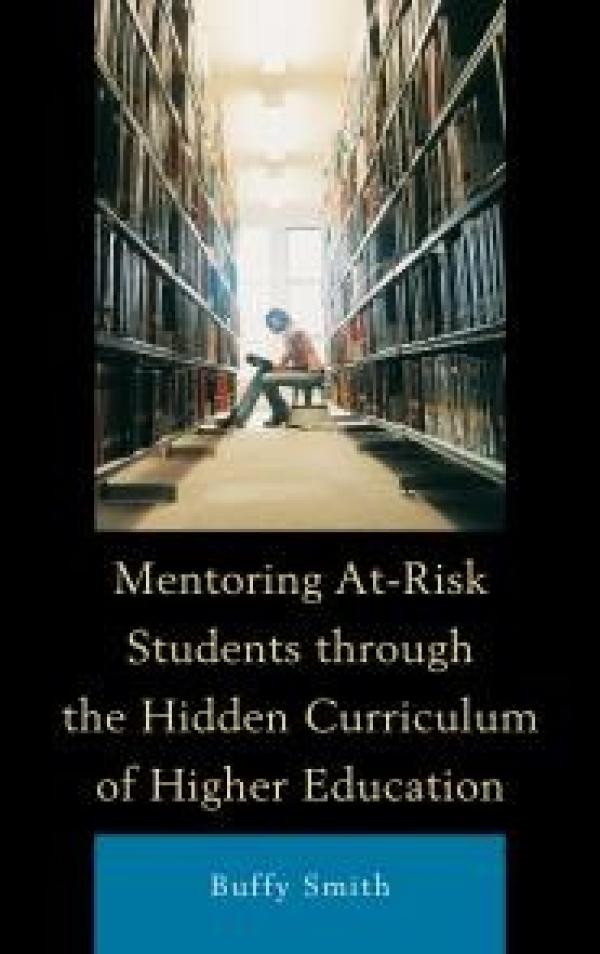
Dr. Smith’s book addresses various issues plaguing the world of higher education in the United States. According to Smith, there is continued disparity between low-income and high-income families’ access to the tools for academic achievement and unconscious cultural favoritism in academic institutions whose institutional culture is primarily informed by a White middle to upper class majority. Both patterns culminate into an amalgam of what Smith refers to as a hidden curriculum which students must master along with the formal curriculum in order to succeed academically. Because obtaining a college degree has the potential to increase a student’s chances at financial security for themselves and their families, being unaware of the hidden curriculum within an academic institution could cost students a great deal. If higher education is still viewed by many Americans to function as “a ladder for upper mobility for the masses of people who were not lucky enough to be born into wealthy families,” then the limitation of access to higher education based on financial or cultural grounds is anathema to the American dream (1). If national morality does not sway the reader, Smith also presents a more utilitarian argument for those who see the civic benefits of a highly educated population (better health care centers, schools, social services, lower crime rates, and a stronger democracy). If those two arguments fall flat, Smith reminds the reader of President Obama’s Administration’s goal to increase the U.S. college graduation rate from 40 percent to 60 percent by 2025 (2). What does this have to do with at-risk students? The population of students often categorized in this way represent a group whose struggles within the university might have more to do with being unaware of the rules of higher education and the hidden curriculum present in their home institutions than a lack of ability, effort, or desire. Smith’s research suggests that one way to help students (at-risk and others) would be to “implement a mentoring model that explicitly teaches students how to decode the hidden curriculum” (55). Smith acknowledges that most educators do not want to admit that cultural and economic favoritism are pervasive in higher education, but research has proven otherwise. According to one 2011 survey referenced by the author, “senior college admission directors admitted to giving preferential treatment to wealthy students even if they had lower grades and test scores” (55). Full-pay and out-of-state students might find entrance into higher education easier than those needing financial assistance. Once low-income and underrepresented students make it onto campus, staying there requires facing challenges of a less overt nature… adjusting to the institution’s culture. Utilizing Pierre Bourdieu’s concept of institutional cultural capital, Smith describes universities as institutions embedded with the norms and values of the dominant group (in this case, often White, upper-class culture). Students are being ‘graded’ not only on their academic ability and progress but also their adherence to these norms and values (the hidden curriculum). According to Smith, the hidden curriculum is important because “teachers use it as an informal indicator of their students’ ability and performance in the formal curriculum” (22). If students are being graded on expectations of which they are unaware, then, per Smith, it is up to these institutions to unveil the hidden curriculum. Smith champions the academic mentor as best suited to teach students about the institutional cultural capital (cultural knowledge, behaviors, and skills that foster academic success). Academic mentors have insider knowledge of how their university works and often have access to privileged information and to social networks on campus. Outlining three cycles of mentoring (advising, advocacy, and apprenticeship), informed by four theoretical perspectives (involvement theory, academic and social integration theory, social support theory, and theory on cognitive levels and developmental stages), Smith lays out a clear but also nuanced mentoring method. While studying the systematic marginalization of students uninitiated into the culture of higher education may lead researchers to despair, Smith’s method offers many examples of how mentorship can empower and enrich the lives of both mentees and mentors. Smith’s steps recommend that mentors advise (tell students what they should do), then advocate (motivate and connect students with key resources on campus), and then, in the apprenticeship phase, “empower mentees to transform into powerful social agents who determine their academic destiny” (62-64). Her model does suggest the view that academic mentoring is a great deal like teaching… just at an intensive level. As an academic advisor, I was especially impressed with the conclusion’s section on the benefits of colleges creating mentoring institutions. Having seen students stumble unaware of the institutional culture and academic etiquette required to succeed in higher education, I hope to bring some of these theories and practices to the attention of the advising community at my university. Notably best suited for administrators and faculty within institutions of higher education, this text would also be insightful to any reader interested in education reform, academic advising and mentoring, and social equity in education. It would not hurt readers to have some familiarity with academic theory from the disciplines of sociology and education but the author does not assume that her readers are well versed in either and provides well-summarized definitions of crucial theoretical terms and concepts throughout the book. Perhaps what I found most helpful in the book were the multitude of fictionalized examples (based on actual experiences of students and mentors) of the hidden curriculum in action which illuminated for me the variety of struggles many at-risk students face.
Motivating Teaching in Higher Education with Technology is a useful manual for both beginning and experienced instructors teaching at the post-secondary level. Jay Wilson is the head of Curriculum Studies Department at the University of Saskatchewan. He has extensive practical experience in the areas of technology with specific application to teaching and instructions. Edwin Ralph is a professor with the College of Education at the University of Saskatchewan with mentorship in education expertise. As indicated in the title, this book is about “motivating teaching.” The authors contend that technology serves a supportive role for teaching and learning. For them, “technology, per se, will not improve poor teaching” and “incorporating technology will not change the quality of your content” (103). Beginning with the theme of motivational teaching principles, learning climate and management, and the distinction between teacher- and learner-centered pedagogies, the book then unfolds what this could mean, using specific applications of technology to teaching in subsequent chapters. The authors claim that technology can enhance the quality of teaching significantly when it is being used with thoughtful design and intention. Major benefits of using technology include: making course materials more accessible and available for review (especially for English as second language students), creating frequent opportunities for interaction beyond classroom hours, and encouraging active, participatory learning. As for online courses offerings, technology allows the possibility of bringing in a diverse student body to enrich the learning experience. The authors emphasize the importance of adequate preparation for any kind of teaching but even more so when teaching with technology. Many instructors tend to focus on the preparation of content and may neglect to consider the administrative side of teaching. This book draws the readers’ attention to the importance of good learning “management” in teaching. Attention to course details such as a clearly laid out rubric of grading criteria, class policies, and behavioral expectations for face-to-face and online discussions all contribute to the success of building a positive learning environment. Further strengthening this book are the step-by-step practical suggestions it provides for putting together learning modules, constructing concept maps, designing learning activities, developing questions for student reflection, and crafting effective assessment methods. “Instructors must carefully orchestrate the integration of technologies with appropriate methods and strategies at key junctures to maximize learner motivation” (100). Having taught both hybrid and online courses for over eight years, I find the suggestions insightful and refreshing. Since the book is designed to be a manual, its writing style is concise and does not contain as many real life examples as readers may like to see. Readers will need to do much integration between the principles articulated and application to actual situations in their own teaching contexts.
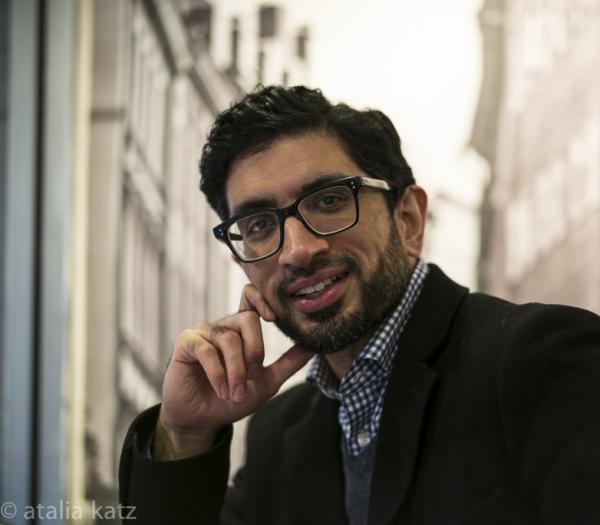
Youshaa Patel Assistant Professor of Religious Studies Lafayette College These days, Islam is no stranger to controversy. Although we may deplore the mainstream media’s deliberate sensationalization of Muslim conflicts, as professors we can also exploit conflict in the classroom to help our students achieve their learning objectives. Many of my.

Cláudio Carvalhaes Associate Professor McCormick Theological Seminary At the heart of education, the most important “instrument” of our lives, the house we inhabit, is the very core of our selves: our bodies. Fully! It is in and through our bodies that we learn and are able to unlearn. The immense.
A single-frame cartoon rests on the upper right-hand corner of my university office door. A professor stands before a full room of students; the board behind her is full of lecture material, most likely a quantum mechanics equation based on the arrows and lines. She is smiling from ear to ear having finished, saying to herself, “That was a great lecture.” Across from her sit her students. They are wide-eyed and, collectively saying to themselves, “I am so confused!” The caption underneath declares it all: “Great Moments in Teaching.” I can hear the collective groaning even as I type. I would like to think that I am becoming a good professor. Not just a good professor, but an effective professor, one who is shaping the minds of future leaders. Many professors would like to think that of themselves. That is why many are in the noble profession of education. The question is, then, are teachers effective in the classroom? Jay Howard’s Discussion in the College Classroom opened my academic eyes to be sensitive to teaching better. I had fallen into the trap similar to that of the professor in the comic – I assumed that because there were no questions the students had listened to and processed everything that I had said. Howard calls this “civil attention,” something that the author claims has become common in college classrooms across the country. According to Howard, the current generation of college students are good students who want to show respect to their faculty members. They do this by quietly checking their Twitter feed, reading the latest Reddit forum, or watching a Vine post from one of their friends. They will laugh in the right places, answer the patented questions correctly and perform well on our rubric-based tests not necessarily because we are the sensational sages that we think we are but because they have learned how to beat the system at its own game – civility receives an “A.” Howard has an antidote for this type of dilemma – figure out your students, how they learn and process information, and then guide them in discussions in ways with which they can effectively engage. As many writers have mentioned, teachers need to become partners in the educational journey. The difference with Howard is that he has mounds of data to back up this assertion. What the book lacks is practical application for contemporary classroom contexts (only the final chapter offers any actual advice on bettering a teacher’s discussion abilities).

Eren Tasar Assistant Professor University of North Carolina at Chapel Hill I remember how dumbfounded I was the first time a student told me he had grown up believing Catholics were not Christian. He had never, moreover, heard of the Orthodox Church, the only form of Christianity recognized by most
The pedagogical landscape of education has recently experienced a tectonic shift in terms of professional development. Once in the field, teachers seeking improvement and new ideas as to how to improve their craft, like so many professionals, used to wait for top-notch scholars to produce new research-based, paradigm-changing tomes. The thinking was that those in the trenches, those who filled kindergarten classrooms and chemistry labs across the country, were not creative enough to provide cutting-edge educational discoveries; only those who labored for a doctorate and took to the ivory towers of academia were capable of such exploration. Sadly, by the time these game-changing discoveries trickled down to the huddled masses in the faculty workroom, these ideas had already been discovered by accident and had been shared among the other faculty on the quad. Teacher’s in-service did not focus on the next great discovery but on how to share the discovery with fellow teachers. As this new wave of creative teachers began filling the gaps in higher education after proving themselves as master teachers and scholars in this area or that (and with the advent of social media), the focus kept evolving: for example, how can this idea, discovered in a chemistry classroom, be applied to the theology, composition, or social work classroom? Thankfully, Hal Blythe, Charlie Sweet, and Russell Carpenter, all writing professors at Eastern Kentucky University, have made it their mission to improve teacher effectiveness across the nation, first with their Noel Studio for Academic Creativity and now with their It Works for Me book series. In this volume, as in the previous seven volumes, Blythe, Sweet, and now Carpenter, have assembled a cadre of interdisciplinary scholars from across the country to engage in a conversation about what these teachers and administrators have found in their efforts to “flip” the classroom in an attempt to improve student learning and retention. The authors selected for this volume exhibited good ideas and were invited to share those ideas with others. Generosity, author and speaker Michael Hyatt would say, has become the new currency in learning, leadership, and life. This volume is divided into seven sections and includes an introduction and take-away-style conclusion. The sections this reviewer found of note were the opening where the flipped classroom is defined (all instructional content is found outside the classroom and classroom time is used for conversations, processing, and reflection), the sections on in-class and out-of-class assignments, and assessment. Each larger section opens with a short introduction from the editors, which is followed by a number of short essays from the contributing authors where each author or team of authors discusses their experiment with flipping the classroom. References, where applicable, have been provided. The concluding take-away section offers twenty ideas, such as never spending more than fifteen minutes on any activity, using Bloom’s taxonomy when crafting course components, engaging other faculty to get feedback on flipped assignments or course structure, and developing your own competency in technology. Overall, this is an incredibly helpful volume. Its strength is in sharing ideas that might inspire a new way of doing one assignment or offering one lecture that might increase student learning and retention. In that way, it works!
There are many important discussions happening in the academy about how to re-envision the student experience in order to provide better learning opportunities. The culture of higher education is undergoing a shift from an instruction-centered model to a learning or student-centered paradigm. These discussions are extremely significant in that they force faculty to re-evaluate and re-envision the traditional models – and ultimately lead to a more thorough and permanent education for the students. However, many of these studies are difficult since ways of applying these new theoretical models is often not immediately obvious. In Building a Pathway for Student Learning, Jones, Noyd, and Sagendorf have compiled a comprehensive and effective workbook addressing this lack. The workbook represents the results of a faculty development course design retreat that the authors have conducted for the last several years. This is not a book about course design, it is a systematic workbook giving direction for designing a learning-centered course in any discipline. At every stage in the course design process, the reader is reminded that, “our success ultimately comes not from what we as instructors are able to do but from what our students learn as a result of taking our courses” (9). To this end, the following pathway is suggested for effective course design. First, know the students you will teach. Second, identify the course learning goals. Third, build a summative assessment to determine the extent to which students have accomplished the learning goals. Fourth, develop a list of learning proficiencies that are required to successfully accomplish the learning goals, and then sequence them. Fifth, create learning experiences that will allow students to build and develop the central proficiencies, and to accomplish the learning goals. Sixth, construct several formative assessments, and use them to evaluate student progress toward the core proficiencies, which will encourage student improvement. After going through each of these stages, the authors lead the reader through two synthetic activities: creating a course poster and syllabus. The course poster assembles the learning experiences to be utilized in class, the proficiencies that will be developed, the way these proficiencies will be assessed, and the goal of the class, in order to ensure coherence and alignment within the course, and to transparently display the structure of the course to students. The syllabus is envisioned as a tool to demonstrate the learning-centered design of the course, not just the course policies and assignments. Each of these synthetic steps is aided by the use of the companion website. The workbook has much to commend. First, each chapter contains a helpful and thorough survey of the more significant research on the topic under consideration. Second, the system suggested to redesign courses is logically ordered, and effective. Third, at several key points the authors suggest proactive ways of finding evaluation of stages in the course design from colleagues. Most importantly, the authors recognize that effective course design has to be a flexible system; they do not claim to have all the answers for how every course can best be structured, rather they provide a series of guiding questions so that individual instructors can think through how to order their classes so that they effectively take students from wherever they begin, to the acquisition of central proficiencies and the accomplishment of learning goals, whatever the discipline. For these reasons, this book should be essential for anyone developing or revising courses towards a learning-centered model.
In a higher education climate of ever-increasing competition and demand for accountability, what residence halls can contribute toward institutional learning objectives has never been more important. Blimling’s comprehensive work takes into account not only this fact, but also the multiplicity of potential philosophies and desired outcomes that may guide residence life professionals’ efforts. The result is a nearly exhaustive list of possible approaches to fostering student learning in residence halls, substantiated by results from past studies. Blimling begins with a review of the history of on-campus housing, followed by a description of the major strands of thought in housing and residence life philosophies. In chapters 2 and 3 he moves on to discuss biological and psychological development in college students and how these and other factors impact learning and cognition. Chapter 4 addresses the effects of different types of residence hall learning programs, while chapter 5 takes a brief digression to discuss key considerations when selecting and training residence life staff. Chapter 6 discusses how the structure (physical and otherwise) of residence halls influences students, and chapters 7 and 8 focus on ways residence life staff may shape the social and academic climate of residence halls to promote learning. Chapter 9 provides an in-depth discussion of assessing residence life programs, including strategies for implementing assessments, using the results, and establishing a culture of assessment. The last chapter presents possibilities for the future of residence halls, based on current trends in higher education and residence life. The strength of Blimling’s work lies in its thoroughness, particularly with regard to evidence. The majority of each chapter is occupied with summarizing findings from the literature on various elements of its subject matter; certainly the book lives up to its title’s promise to show “what works, what doesn’t, and why,” in numerous aspects of student housing ranging from the effects of over-long hallways to the ideal size for a study group. The consequence of this intense focus, however, is that it occasionally obscures the broader context of the information. Practical applications are discussed for many individual techniques, but rarely are they generalized into more comprehensive strategies for programs and initiatives. This may be by design, to encourage readers to develop customized programs for their own unique contexts. In practice, however, it makes it somewhat difficult at first to identify the potential utility of the wealth of information in each chapter, let alone in the entire book. It is easy to imagine a residence life professional turning to this work to find evidence that a specific strategy will be effective, but more difficult to imagine one finishing the book with a clear idea of what future directions in programming to pursue. It is also worth noting that this book is written primarily for an audience of residence life professionals, and its usefulness to teaching faculty is limited. The principal exceptions are, as noted in the preface, “higher educational administrators and faculty who work with students in living and learning programs and other educational enrichment programs that operate in residence halls” (xvii-xviii). Faculty in residence will likely find it of interest, as will faculty advisors to, or participants in, living and learning groups in residence halls. For those simply interested in how to better integrate their teaching with residential learning initiatives, however, it will hold less value, as the majority of the work is focused on managing those aspects of student life that affect learning, rather than on designing or delivering educational programs themselves. For these reasons, I would recommend this book to residence life professionals and staff, faculty who participate in student residences, and faculty and graduate students in relevant areas of higher education administration. For all others, however, I would consider it optional.
This second edition, like the first, is part of a series of volumes directed towards beginning college students. Margot Northey is the first author of each volume, including the eighth edition of the general Making Sense: A Student’s Guide to Research and Writing, and there is considerable overlap among the different volumes that focus on specific subject areas. Distinctive to this book is a short chapter, “Getting to Know Religious Studies,” and the incorporation of examples from the study of religion into many of the other nineteen chapters. Nonetheless, the focus is primarily on those general processes of thinking and self-expression that are common to many college courses. Because it does not focus narrowly on a specific area of the undergraduate study of religion, this book could easily be recommended, or even required, reading in virtually any course. Some instructors might find some of the advice to be too elementary, but there is helpful material for almost any student, including chapters on “Common Errors in Grammar and Usage,” “Punctuation,” and “Misused Words and Phrases,” as well as a glossary. Since scholarship on religion uses a variety of ways of documenting research, the chapter that outlines the requirements of the Chicago, MLA, and APA systems of reference and charts the differences among them could be especially helpful to beginning students. Throughout the book, the authors urge students to think of themselves as “engaged learners” who aim to make the most of their education by taking careful notes, seeking out their teachers, preparing for writing assignments well in advance, and using feedback on their work to identify both strengths on which they can capitalize and weaknesses that need to be remedied. Consequently, the portrait of the ideal students to whom the book is addressed may strike some as insufficiently tempered by the harsh realities of sporadic attendance, bored indifference, and atrocious time management with which so many teachers in higher education are familiar. Nevertheless, the authors offer concrete advice and some step-by-step procedures that can help any student move towards becoming the type of engaged learner that they envisage and who many would love to have in their classes. The focus of this volume is squarely on writing, with more than half of the chapters devoted to some aspect of the writing process, including writing essays (with a separate chapter on comparative essays), writing book reports and book and article reviews, writing essays for tests, and “Writing with Style.” Complementary chapters address finding and using appropriate sources and documenting them properly. Although the book briefly discusses reading religious texts, teachers who are looking for guidelines about how to introduce students to the kind of careful, patient, analytical reading of texts, objects, films, field observations, and other sources frequently used in the study of religion will need to look elsewhere. Nonetheless, this is a book that could be helpful to many teachers of religious studies.