Resources
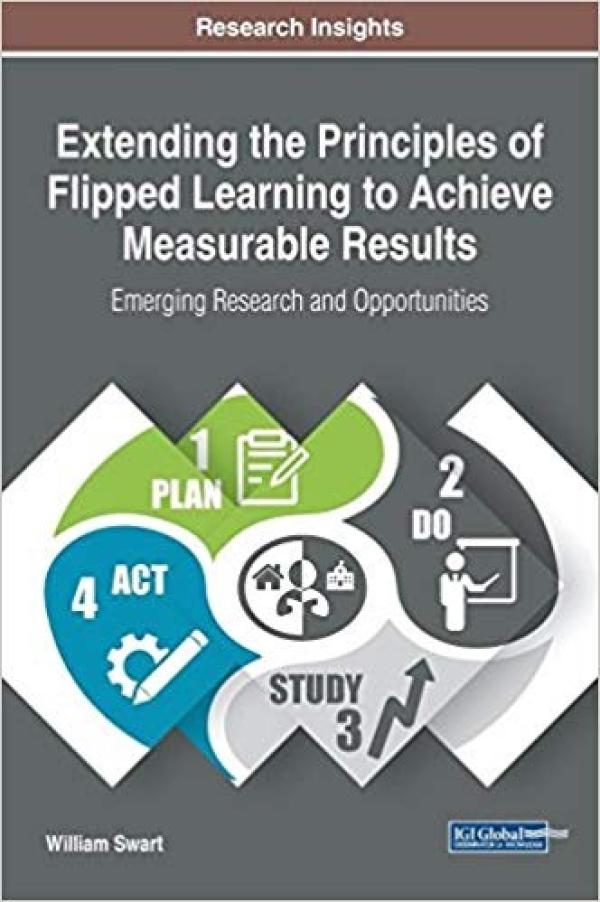
As higher education continues to grapple with expanding online coursework in meaningful ways, faculty must confront a perennial question: how can online coursework mirror the rigor of in-person classes while preserving the flexibility that makes online learning attractive to students? In Extending the Principles of Flipped Learning to Achieve Measurable Results: Emerging Research and Opportunities, William Swart argues that flipped learning has the potential to balance these demands by winnowing the transactional distance, a barrier to student engagement, that is common in traditional coursework. In traditional learning, a lecture typically occurs in class and homework extends beyond the classroom; conversely, flipped learning requires students to study course material at home, including recorded lectures, before engaging in collaborative, problem-solving activities in class. By flipping the traditional model of higher education, flipped learning allows students to invest more deeply in their coursework while simultaneously receiving feedback and peer support in class. While flipped learning may be alluring, enacting such a dramatic reordering requires resources, knowledge, and tools that most faculty do not possess. Written in a straightforward, practical style, Swart’s text provides a viable throughway for faculty members hoping to enact a flipped classroom. Swart begins his exploration of the concept by reviewing the proliferation of online coursework and noting the near-universal agreement among university faculty regarding the disparity of quality in online learning versus face-to-face learning. As an antidote to this pattern, Swart touts the considerable benefits that flipped learning affords students, instructors, and college administrators. Following this introductory material, the text grounds the Plan-Do-Study-Act (P-D-S-A) cycle as the primary vehicle for introducing, executing, and maintaining a flipped classroom. This cycle, originating from business and management, ensures that meaningful learning occurs throughout a new intervention, rather than relying solely on outcome data to judge the effectiveness of an intervention. The heart of the text unpacks each step of the PDSA cycle and its use in a flipped classroom, offering practical advice and data to support those wishing to use the flipped model. This occurs through direct discussion of the model and an embedded case study that illustrates core concepts. Before closing with an exploration of possible future research, Swart also includes candid discussion of the challenges—both anticipated and unanticipated—that flipped learning often produces. As Swart notes, while there is positive evidence regarding student preferences, achievement, and satisfaction concerning flipped learning, there is a paucity of research documenting its role in promoting other desirable values in students. This text adds to a growing body of research explicating the promise of flipped learning within K-12 and higher education. Particularly for faculty members in theological education or religious studies in a liberal arts setting, this text provides short-term and lasting benefits. Swart’s thorough unpacking of flipped learning delivers a robust catalog of research-based, practical advice for enacting this model. Perhaps most valuable for these faculty is the opportunity for students to engage with weighty ideas in a collaborative manner after having initial, independent preparation.
Adult learners are different than younger learners. These groups do, however, share some interests and learning similarities; for instance, both are motivated to use technology in learning. Yet adult learners often have additional challenges using technology because of their late involvement with the digital world. Older adult learners’ participation in online learning and continuing education pose institutional, situational, and dispositional challenges. Online learning provides particular possibilities for adult learners, thereby allowing them to cope with specific adult learning demands. It helps adult students to maintain some sustainability while navigating new technological terrains. Adult learners may have particular learning issues and challenges arise from time to time. The Handbook of Research on Student-Centered Strategies in Online Adult Learning Environments was developed for educators who work with adult learners in online programs. It is a book primarily focused on helping teachers by offering specific ideas for working with students in online environments and serving as a guide for structuring learning experiences for people at different stages of development. The book comprises 22 chapters organized in four sections. Section 1, “Integrating Educational Practices into Online Learning,” provides insights into how educators can link natural learning tendencies in teaching to students’ learning. Furthermore, it highlights competency-based education and the position of student-centered online learning. Section 2, “Adult Learners and Learning,” discusses andragogy in relation to the transitions in knowledge acquisition, focusing on concepts of digital natives and digital immigrants. Discourse on preparing the efficient teacher in the age of information and communication technology is foregrounded in Section 3, “Professional Learning.” For instance, Chapter 14, “A Guide to Professional Learning for Secondary Mathematics Teachers,” explores the impact of a professional learning program on mathematics teachers’ self-efficacy. Section 4, “Student-Centeredness and Collaboration,” provides an overview of collaborative learning as well as student-centered online learning. This handbook also provides arguments on converting theoretical frameworks into practical work in an online classroom or any other digital context. The chapters are organized subsequently in a rational order, yet the reader can start with any chapter of potential interest. However, the discourse on neoliberalism, along with austerity, and their impact—on online education generally, and online adult education particularly—is absent. Furthermore, the counter-argument which debates that online learning should be accepted with much caution receives only 15 pages. Moreover, while Dan Patroc argues that insufficient non-verbal communication is a major drawback in online learning, non-verbal communication receives only one paragraph. Overall, the editors and authors provide a remarkable contribution to the literature on online adult education. Handbook of Research on Student-Centered Strategies in Online Adult Learning Environments is highly recommended for adult educators, online trainers, researchers, and policymakers.

When we engage our teaching world online, let me encourage you to start where you are. It is not about the tech, gear and gadgets. It is about vision, imagination and design. In this vlog I show you my setup, my online classroom and how I think about this space. This is not a “how to video” but rather it is a glimpse into my inner world. I want to invite you to dream about your space, your vision for online teaching and how this might look for you. My goal is to inspire you to think deliberately about your presence and vision for your online classroom. [su_vimeo url="https://vimeo.com/403354389" title="My Online Classroom"]

When we first move into online classroom spaces, we often miss the dynamic energy of gathered bodies in a familiar location. We lose the immediate gratification of watching in real time as new knowledge “clicks” for students in discussions and class activities. Online classrooms may initially feel sterile, artificial, and indistinguishable from one another in our learning management system. With time and experience in teaching in online classrooms, we may begin to reconsider how a traditional residential classroom is also an artificial space. Residential education occurs on the educational institution’s “turf,” asking students to put their relational connections, participation in the economy, and other vocational expressions on hold to enter into these four walls to be formed and informed. Traditional schooling is an attempt to engage life wisdom from across generations and cultures in a simulated environment that speeds knowledge acquisition and re-organizes it more efficiently from how we might naturally encounter it in life. There is nothing “natural” about a classroom with 12-200 students in it all trying to learn the same things at the same time, regardless of their existing experience or knowledge. What feels “traditional” about this education is actually a factory model of education largely adopted during the industrial revolution for the sake of increasing access to and efficiency of education for the masses. To be certain, online classrooms have many of the same constructed elements. However, they are also more porous than synchronous residential learning experiences. You may experience this in the plethora of Zoom meetings that are happening right now in the midst of staying-at-home as a part of Covid 19 mitigation. Suddenly, you see your students in their home contexts, sometimes with roommates, children, spouses, or pets wandering into the picture. The students’ home contexts become a part of the teaching and learning milieu in more pressing ways when they stay embedded in them. While they are still engaging with a community seeking knowledge, they are also embedded in other relationships and contexts where that knowledge can be tested and integrated on a daily basis. Another of the unique features of online spaces is the capacity for immediate linkage to communities and resources far beyond those of the “walled-in” residential classroom. Opportunities to have students video-conference with scholars or practitioners around the world, curate their own examples or applications of course content drawn from internet resources and their local context, or interact with external media or images related to the course are easy to arrange in online classrooms. This allows course content and the contexts in which knowledge is situated to expand in ways sometimes even beyond faculty expectations and expertise. By asking students to take the insights they are gaining into other settings or to make connections with external resources, faculty may find ways to make online interactions more analytical, more relevant to students’ final vocational destinations, and more engaging for both students and faculty. Additionally, porosity means that students can share learnings from the course through online forums from Twitter feeds to YouTube videos by linking to these in the online classroom. This practice serves as a way to test out ideas in other publics and to help students understand that ultimately this knowledge is not for regurgitation in a classroom setting for their instructor to judge but rather for integration and application in other settings. The longer I have taught online, the more I have become reluctant to serve as the primary audience for student written work. While I always read student work and provide the best feedback my own expertise and experiences with the material can provide, I find that they are better and more committed scholars when they know that what they are creating will find its way into a group who can benefit from what they are creating, whether their class colleagues or some other part of their community. Student papers are remarkably stronger when they know they will share them with their classroom colleagues or other external audiences in comparison to the ones that they will just dash off at the last minute to submit to me in order to complete an assignment. This strategy improves student formation by positioning them more regularly as persons whose knowledge impacts not only their experience but serves other communities as well. The space for collaborative exchange between students is so much easier to engage in porous online settings where students can share resources and insights easily through links and public postings. There are times when the porosity of online classrooms can be concerning. It is helpful to protect some spaces where mistakes can be made and opinions shared that are within relationships of mutual accountability rather than in the general public. And in theological education where I teach, students are often accountable to ordination boards and hiring committees who may not yet need to witness their growth and development as they encounter new ideas. Some of those boundaries can be maintained in online classrooms to the extent that they can in the public space of a residential classroom. But the possibility of regularly opening up the classroom to the world outside the four walls is an engaging gift of online education.
This case study explores the learning experiences of three international students who were enrolled in an online master’s program offered by a large university in Canada. The aim of the study was to understand the international students’ experiences with, and perspectives on, the online learning environment. Findings indicate that previous education and especially language proficiency strongly impacted the learning of these students in this environment. Non-native English speakers required considerably more time to process readings and postings and to make postings themselves. Their lack of familiarity with the details of North American culture and colloquial language made it difficult to follow much of the course discussions. They also tended to avoid socializing in the course, which left them at the periphery of course activities. Based on these findings, the authors make the following recommendations for designers and instructors of online courses: 1) Raise the English language proficiency requirement for graduate admissions into online programs because the text-based communication in a CMC space requires interpreting messages without non-verbal cues; 2) Ensure that online distance education course designers are aware of the needs and expectations of international students; and 3) Combine the design principles from both traditional and constructivism theories.
Culturally responsive teaching and design practices flip the online classroom by creating an environment that acknowledges, celebrates, and builds upon the cultural capital that learners and teachers bring to the online classroom. Challenges exist in all phases of online course design, including the ability to create online courses that reflect the instructor’s commitment to inclusive excellence, diversity, and social justice. Designing an online environment that supports all learners regardless of their backgrounds is important in their future success as professionals; thus, it is important for faculty to design courses with all students in mind. The purpose of this article is to share best practices in the design of culturally and linguistically responsive online courses that support the culturally and linguistically diverse (CLD) students we serve. Based on Gay’s (2010) culturally responsive teaching practices, this article provides examples of online activities that are validating; comprehensive; multi-dimensional; empowering; transformative, and emancipatory.
This article reports the findings of a case study that investigated the perceptions of international students regarding the impact of cultural differences on their learning experiences in an online MBA program. The study also revealed that online instructors need to design courses in such a way as to remove potential cultural barriers, including language, communication tool use, plagiarism, time zone differences and a lack of multicultural content, which may affect international students’ learning performances. The study indicates that a culturally inclusive learning environment needs to consider diversity in course design in order to ensure full participation by international students.

One of the major advantages of the online learning environment is the capacity to help students develop critical thinking in more effective and efficient ways than the classroom environment allows. Emphasizing student engagement through online discussion forums is a powerful way to cultivate critical thinking. By having students engage more intentionally with texts and media, and respond to well-crafted prompts and questions, instructors can immediately assess the level of a student's understanding and concepts acquisition. Reading student responses to well-crafted prompts and questions is akin to a form of mind reading. The instructor gains immediate feedback on what the student thinks, how a student is thinking, the level of understanding achieved, and can identify misunderstandings. Assessing online student responses allows the teacher to provide correctives, follow up with clarifying questions, challenge fuzzy thinking, and push for specificity. In this way the teacher can cultivate critical thinking and assess evidence about how well students achieve it throughout the course. Critical thinking is one of the universally desired goals in teaching. The current ATS M.Div. program goals includes “. . . development of capacities—intellectual and affective . . . ” as one of its ministerial formation outcomes (Degree Program Standards A.3.1.3.). The online discussion experience is one of the most useful methods for developing and assessing critical thinking. What is Critical Thinking? Critical thinking is a particular cognitive activity evidenced by specific components. Attached is a handout, "Assessing and Cultivating Critical Thinking Online" with nine of those components. Other components of critical thinking not included are credibility, sufficiency, reliability, and practicality. You can use the handout to assess student responses for critical thinking. Sharing the chart with your students, or, converting it into an assessment rubric for online academic discussion can help your students cultivate critical thinking and help you assess how well they achieve it.
We are in the midst of unprecedented social upheaval. Many colleagues are being asked to migrate their teaching formats to online learning and curtail their interactions with learners to the digital spaces. Even so, I believe our roles as teachers can assist our students as we move through this crisis, together. Teaching during crisis can seem as if we are taxed beyond our capabilities, pushed beyond our job descriptions, and stretched beyond our capacities. According to the scientists and medical professionals, this particular crisis will last longer than a few days. The pandemic which grips our nation, and the world, will likely have a duration of months. We do not know how many months. We are likely participating in a paradigm shift in higher education. Before our very eyes, this crisis is likely causing long-term societal shifting. The abrupt behavioral shifts of the society are and will continue to affect the patterns and habits in our schools and classrooms. Practices of social distancing will likely linger in our society after the threat of the pandemic has been eliminated. The advantages of online learning will become more utilized as the threat of human proximity lingers in our shared memory. In the midst of so much abrupt and radical change - still yourself. Ask yourself not to panic, but to find balance and calm. The health, healing and wholeness of our schools and communities will require all of us to be attentive to this situation. Resist the impulse for “business as usual.” In these emotionally charged times, teachers are looked to as role models, as responsible people who set the tone and tenor in our classrooms of students as well as in our own families and communities. We are called to be a non-anxious presence even when we are struggling in anxious times and with our own personal anxieties. Faculties are being asked to immediately shift from a face-to-face format of course design to online learning. Teachers are having to quickly redesign 1,2,3, and in some cases, 4 courses to an online format in a matter of days. Migrating courses from face-to-face formats to online is not impossible, but it takes thought and preparation. Returning to the basics of your course seems key in this unusual/unprecedented situation. Format affects teaching, but it does not have to diminish or weaken your standards. Resist surrendering to your own frustration. Relax your typical standards for what “has to be taught.” A key is to keep your students engaged and keep your learning aim and goals as your guide – there are many, many ways to get to any one of those goals. What do you do? Do enough and do it well enough – it will not be how you planned, but it will be good enough. Do new and needed activities with your students. Remember the learning activities maybe new to you, but likely not new to your students. Do differently than you planned. Migrating from one format to another is no small task. Lean into the difference and know that teaching differently does not mean that your teaching will become inferior or bad. Change does not have to compromise quality. Remind yourself of the metaphor you employ when you think of yourself as a good teacher – in the best of times. Typical metaphors or similes for the good teacher are: gardener, light bearer, guide, architect, chef, builder, dancer. The list could go on. Each of these metaphors has in its wider narrative and iconographic knowledge the role of teacher in a crisis. For example, the gardener knows ways to combat drought or flood; the light bearer knows ways to keep the wicks trimmed and burning; the guide knows alternative routes should one path be blocked or destroyed; the chef knows how to save a ruined dish; the builder knows how to correct architectural errors; the dancer knows how not to get caught unaware when the tempo of the music suddenly changes. In this moment of unimaginable circumstance, use your imagination to encourage yourself for the ways you need to adapt your teaching and teaching persona. Refrain from allowing your classroom time (online or face-to-face) to dissolve into conversation exclusively about the health crisis. Continue to teach your course, even in its modified and adapted forms. Students are still enrolled in degree programs and still seeking graduation. Stay focused upon your course topics. It is likely that concentrating upon something other than the crisis will be refreshing to you and your students. Consider that this is also a time of opportunity, adventure, and new learning. The foil to crisis is creativity. Creativity is the tool of innovation and invention. Let go of that which would have you stay mired in established ways and current semester plans. Allow yourself to think new thoughts about your own old, rehearsed modes of teaching. Let the tropes go! Suspend judgement about the fictitious standard of teaching which no longer applies in this peculiar moment and let yourself be creative. Finish the semester strong by finding ways of engaging with your students on the course themes – it could be that straight forward! In this moment of social distancing, hand washing, quarantine, suspicion, and fear continue to take notice of your students. Inherently, teaching is a communal act. Even in online classrooms, pedagogical intimacy can encourage, strengthen, and hearten students. Students depend upon our words of assurance, our gestures of care, our attitudes of warmth and belonging. Be empathic with your students, remembering that they too are in crisis. The Wabash Center has provided a dedicated page for online teaching - https://www.wabashcenter.wabash.edu/resources/teaching-online/. We have also published podcasts of many interviews with colleagues who are well versed in online learning https://www.wabashcenter.wabash.edu/resources/videos/.
Podcast Series. For over 15 years, veteran educator Matthew Lynch has written about and researched the field of education. On “The Edvocate Podcast,” he discusses education trends, issues, and futures.