Resources
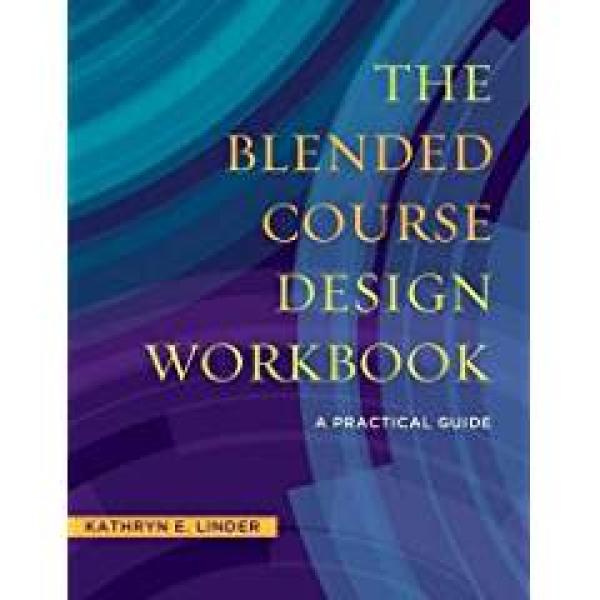
Click Here for Book Review Blended (also called hybrid) classrooms, in which face-to-face interaction is intentionally combined with online activities to aid student learning, are becoming more and more common. Most recently, “flipped” classrooms have become a popular method for teaching because more time for active learning in-class can be gained by moving content delivery such as lecture to outside-of-class homework using technology tools such as video or lecture capture. The blended model is proving to be an environment that provides more self-directed, technology-mediated learning experiences for students who will be incorporating technology more and more into their professional lives post-college. The Blended Course Design Workbook meets the need for a user-friendly resource that provides faculty members and administrators with instructions, activities, tools, templates, and deadlines to guide them through the process of revising their traditional face-to-face course into a blended format. Providing a step-by-step course design process that emphasizes active learning and student engagement, this book will help instructors adapt traditional face-to-face courses to a blended environment by guiding them through the development of course goals and learning objectives, assignments, assessments, and student support mechanisms with technology integration in mind. It will also help instructors choose the right technologies based on an instructor’s comfort level with technology and their specific pedagogical needs. The book will help each instructor who uses the text to develop a unique course by making choices about their course design based on student learning needs for their chosen topic and discipline. Every component of the workbook has been piloted with faculty designing and implementing blended courses and then revised to better meet the needs of faculty across a range of comfort levels with technology use. The Blended Course Design Workbook includes detailed instructions for each stage of course design alongside specific activities that the reader can complete. The book is unique because it facilitates a step-by-step process for blended course design with specific templates and tools that can be used across disciplines. (From the Publisher)

Click Here for Book Review Abstract: Update the visual design of your course in pedagogically sound ways Visual Design for Online Learning spotlights the role that visual elements play in the online learning environment. Written for both new and experienced instructors, the book guides you in adding pedagogically relevant visual design elements that contribute to effective learning practices. The text builds upon three conceptual frameworks: active learning, multiple intelligences, and universal design for learning. This resource explores critical issues such as copyright, technology tools, and accessibility and includes examples from top Blackboard practitioners which are applicable to any LMS. Ultimately, the author guides you in developing effective visual elements that will support your teaching goals while reinforcing the learning materials you share with your students. There has been a steady increase of over 10% in online enrollment for higher education institutions since 2002, yet the visual look of online courses has not changed significantly in the last ten years. Adapting to the needs of students within online classes is critical to guiding your students toward success—and the right visual elements can play an integral role in your students' ability to learn and retain the information they need to thrive in their chosen programs. In fact, visual elements have been shown to increase student participation, engagement, and success in an online course. - Leverage the best practices employed by exemplary Blackboard practitioners - Explore three foundational conceptual frameworks: active learning, multiple intelligences, and universal design for learning - Increase student retention and success Visual Design for Online Learning is an essential reference for all online educators--both new and experienced. (From the Publisher)

Click Here for Book Review Abstract: In this environment of disruptive technological change, higher education institutions must determine whether they will develop and offer technology-supported, hybrid, or online courses and degrees, which courses and degrees, how many, for whom, and for what purpose. They must make decisions about development models and design, processes, costs, and student and faculty support. In this volume, the authors explore the current and future practice of distance education in higher education institutions, including: - developing an initial infrastructure to support course design and development, - revitalizing existing structures and processes for distance education, and - cutting-edge practices that innovate and lead the field. These topics help guide decision makers as they determine appropriate responses to distance learning opportunities. This is the 173rd volume of the Jossey-Bass quarterly report series New Directions for Higher Education. Addressed to presidents, vice presidents, deans, and other higher education decision makers on all kinds of campuses, it provides timely information and authoritative advice about major issues and administrative problems confronting every institution. (From the Publisher)
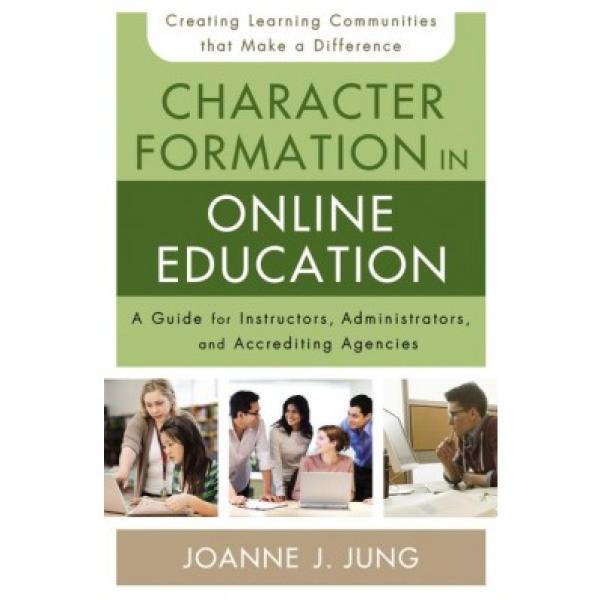
Click Here for Book Review Abstract: The unfortunate reputation of online education today is one of little or no effort on the professor's part and little or no learning on the student's part. A missing element in much online education is the kind of mutual engagement between student and instructor that provides not only a higher level of learning but also lasting character formation within the student. Character Formation in Online Education stems from author Joanne Jung's years of experience teaching online courses with the aim of improving the teaching environment for professors and the learning environment for students. By replicating, customizing, and incorporating the best and most effective practices of what a great professor does in on-campus classes, reimagined for an online delivery system, Jung shows how a higher level of learning and transformation can be achieved through online learning communities. Handy and practical, this user-friendly book provides guidance, helpful tools, and effective suggestions for growing learning communities in online courses that are marked by character growth in students—the kind of growth that is central to the mission of Christian higher education. (From the Publisher)
Click Here for Book Review Abstract: In MOOCs, High Technology, and Higher Learning, Robert A. Rhoads places the OpenCourseWare (OCW) movement into the larger context of a revolution in educational technology. In doing so, he seeks to bring greater balance to increasingly polarized discussions of massively open online courses (MOOCs) and show their ongoing relevance to reforming higher education and higher learning. Rhoads offers a provocative analysis of a particular moment in history when cultural, political, and economic forces came together with evolving teaching and learning technologies to bring about the MOOC. He argues persuasively that the OCW and MOOC movements have had a significant impact on the digitalization of knowledge and that they have helped expand the ways students and teachers interact and develop ideas collaboratively. He also critically analyzes the extensive media coverage of MOOCs while examining empirical studies of MOOC content delivery, the organizational system supporting the OCW/MOOC movement, and faculty labor concerns. Too often, technology advocates champion the MOOC movement as a solution to higher education’s challenges without recognizing the pedagogical, social, and economic costs. MOOCs, High Technology, and Higher Learning challenges many of the democratic claims made by MOOC advocates, pointing to vast inequities in the ways MOOCs are presented as an alternative to brick-and-mortar access for low-income populations. This book offers a clear-eyed perspective on the potential and peril of this new form of education. (From the Publisher)
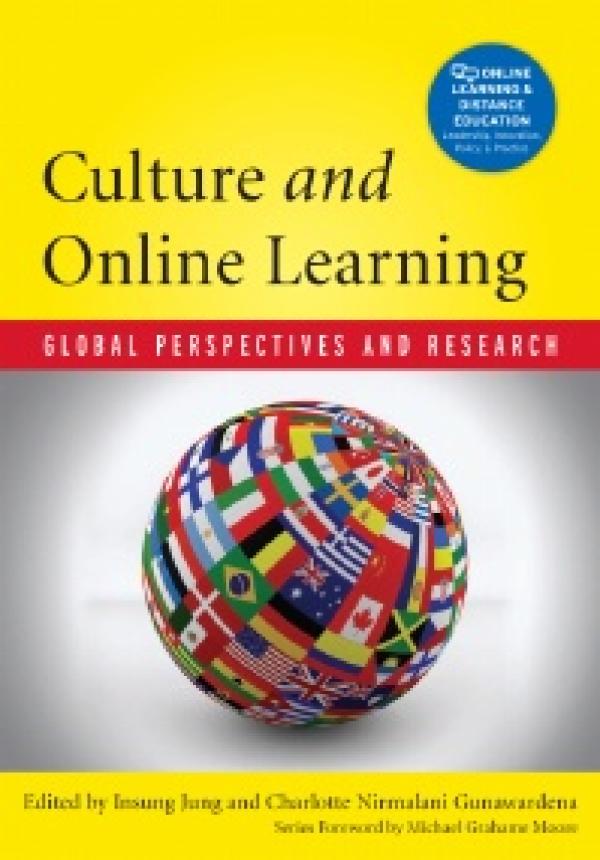
Click Here for Book Review Abstract: Culture plays an overarching role that impacts investment, planning, design, development, delivery, and the learning outcomes of online education. This groundbreaking book remedies a dearth of empirical research on how digital cultures and teaching and learning cultures intersect, and offers grounded theory and practical guidance on how to integrate cultural needs and sensibilities with the innovative opportunities offered by online learning. This book provides a unique analysis of culture in online education from a global perspective, and offers: * An overview of the influences that culture has on teaching, online learning, and technology * Culture-sensitive instructional design strategies and teaching guidelines for online instructors and trainers * Facilitation and support strategies for online learners from different cultures * An overview on issues of design, development, communication, and support from a cross-cultural perspective * An overview of how online education is perceived, planned, implemented, and evaluated differently in various cultural contexts Written by international experts in the field of online learning, this text constitutes with a comprehensive comparative introduction to the role of culture in online education. It offers essential guidance for practitioners, researchers, instructors, and anyone working with online students from around the world. This text is also appropriate for graduate-level Educational Technology and Comparative and International Learning programs. (From the Publisher)
Click Here for Book Review Abstract: This book serves as an introduction to using online teaching technologies and hybrid forms of teaching for experiential learning and civic engagement. Service-learning has kept pace neither with the rapid growth in e-learning in all its forms nor with the reality that an increasing number of students are learning online without exposure to the benefits of this powerful pedagogy. Eservice-learning (electronic service-learning) combines service-learning and on-line learning and enables the delivery of the instruction and/or the service to occur partially or fully online. Eservice-learning allows students anywhere, regardless of geography, physical constraints, work schedule, or other access limitations, to experience service-learning. It reciprocally also equips online learning with a powerful tool for engaging students. In eservice-learning, the core components of service, learning, and reflection may take a different form due to the online medium—for example, reflection often occurs through discussion board interactions, journals, wikis, or blogs in an eservice-learning course. Moreover, the service, though still community-based, creates a world of opportunities to connect students with communities across the globe—as well as at their very own doorstep. This book introduces the reader to the four emerging types of eservice-learning, from Extreme EService-Learning (XE-SL) classes where 100% of the instruction and 100% of the service occur online, to three distinct forms of hybrid where either the service or the instruction are delivered wholly on-line – with students, for instance, providing online products for far-away community partners – or in which both are delivered on-site and online. It considers the instructional potential of common mobile technologies – phones, tablets and mobile reading devices. The authors also address potential limitations, such as technology challenges, difficulties sustaining three-way communication among the instructor, community partner, and students, and added workload. The book includes research studies on effectiveness as well as examples of practice such drafting grants for a community partner, an informational technology class building online communities for an autism group, and an online education class providing virtual mentoring to at-risk students in New Orleans from across the country. (From the Publisher)
One page Teaching Tactic: student activities in the initial face-to-face gathering help establish community in an online course.
Click Here for Book Review Abstract: Best Practices in Online Program Development is a practical, hands-on guide that provides the concrete strategies that academic and administrative departments within institutions of higher learning need to develop in order to create and maintain coherent and effective online educational programs. Unlike individual courses, an online education program requires a comprehensive, inter-departmental effort to be integrated into the ongoing educational project of a college or university. This book focuses on the: Integration of online education into the institutional mission Complex faculty-related issues including recruiting, training, and teaching Multifaceted support required for student retention and success Need for multilayered assessment at the course, program, technical, and institutional levels Challenges posed to governance and by the need to garner resources across the institution Model to insure ongoing, comprehensive development of online educational programs Best Practices in Online Program Development covers the above topics and more, giving all the stakeholders in online educational programs the building blocks to foster successful programs while encouraging them to determine what role online education should play in their academic offerings. (From the Publisher)
A special report featuring 12 articles from Online Classroom examining methods of online assessment and common assessment mistakes to avoid.