Resources
This 6 page essay from the Association of American Colleges & Universities (AAC&U) deals with the different levels of investing in faculty: preparing graduate students to be successful future faculty; supporting new faculty entering the college/university; the mentoring of faculty close to retirement who have invested their lives in the support of education. Publisher: Project Kaleidoscope
A method for fostering constructive dialogue where conflicts are driven by differences in identity, beliefs, and values. Workshops, resources, blog, client services.
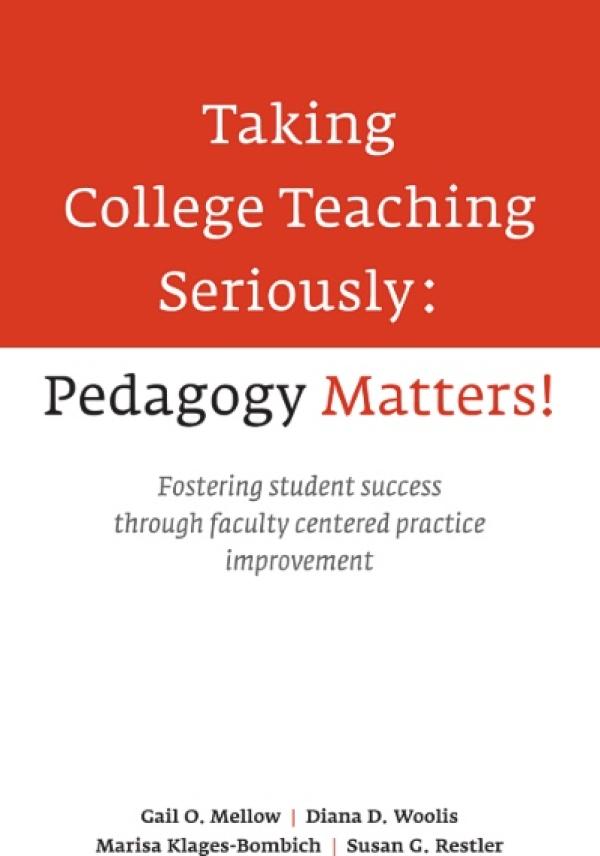
Click Here for Book Review Abstract: “College teaching is not rocket science – it’s much, much harder.” Diana Laurillard, University of London College faculty, both adjunct and full-time, stand with their students at the coalface of learning, wishing for more to succeed and disappointed at how illusory academic success is for so many. Among the array of investments colleges are making to improve student outcomes, from predictive data analysis to enhanced advising, too little attention is paid to supporting faculty. Yet the impact of teacher and teaching on student learning is incontrovertible. Taking College Teaching Seriously: Pedagogy Matters! stands against the tide – celebrating the incredible work faculty members do each day and challenging them to expand their capacity to present their content expertise effectively. This book presents a model of embedded professional development, which capitalizes on the affordances of technology to enable groups of faculty to examine their practice in a non-evaluative context, but with a clear focus on improvement. The core of the work involves individual reflection and the design provides for an accessible way to “see” into the classrooms of discipline peers. Most importantly, the Taking College Teaching Seriously experience is not an intense one-shot, but rather a structured opportunity for a faculty member to examine and adapt practice over time and to assess the impact of changes on student learning. Faculty who have participated in the Taking College Teaching Seriously experience found it to be transformative: • English Professor, Kentucky: Participating in (the work) this year has helped me to be more reflective in every single action. I constantly analyze how each session went… (it) gave me the tools to think about every minute detail of a classroom. • Adjunct Math Professor, Mississippi: Speaking as an adjunct, I have valued the chance to share my teaching and get ideas from others. I can honestly say that this experience has been a lifeline of sorts this year. In a “magic wand” instructional setting, I’d wish for the kind of honest, respectful and professionally challenging discussions we have in Classroom Notebook* at weekly staff meetings. *Classroom Notebook is the Taking College Teaching Seriously online platform • Math Professor, NJ: I think the continual self-evaluation and reflection allowed us to work together to brainstorm improvements and positive tweaks to be more purposeful in our classrooms as opposed to just randomly reaching in the dark for ideas and techniques in HOPE of success. Taking College Teaching Seriously: Pedagogy Matters! breaks new ground in professional development. Each faculty member is at the center of the learning experience, stimulated and supported by peers working in similar contexts. They share a desire to see more students learn deeply and find that honing their skill at adapting to the learning needs of specific classes and students allows them to realize this goal. Uniquely, Taking College Teaching Seriously illuminates the link between faculty teaching expertise and improving student outcomes. The introduction to the book examines the challenges facing faculty in higher education today and reviews the literature on teaching and learning. Chapter 1 looks at the analytical foundations for all of the model’s elements, from adult learning theory to communities of practice, and Chapter 2 presents the model’s theory of change. Chapter 3 describes the model in detail and Chapters 4 and 5 concern the infrastructure of the faculty collaborative community, focusing on both its interpersonal and technological dimensions. The book concludes in Chapter 6 with an assessment of the value of this approach to professional development and a call to action for faculty member engagement in this important work, so essential to both professional passion and mandate. (From the Publisher)
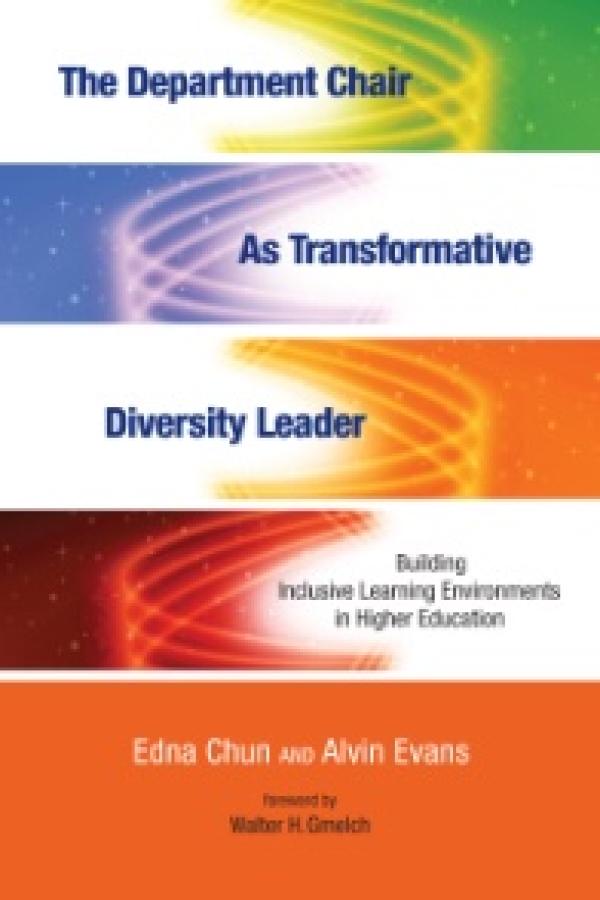
Click Here for Book Review Abstract: With the imminent demographic shifts in our society and the need to prepare students for citizenship in a global, knowledge-based society, the role of the academic department chair in creating diverse and inclusive learning environments is arguably the most pivotal position in higher education today. In the United States, increasing minority student enrollment coupled with the emergence of a minority majority American nation by 2042 demands that academic institutions be responsive to these changing demographics. The isolation of the ivory tower is no longer an option. This is the first book to address the role of the department chair in diversity and addresses an unmet need by providing a research-based, systematic approach to diversity leadership in the academic department based upon survey findings and in-person interviews. The department chair represents the nexus between the faculty and the administration and is positioned uniquely to impact diversity progress. Research indicates that more than 80 percent of academic decisions regarding appointment, curriculum, tenure and promotion, classroom pedagogy, and student outcomes are made by the department chair in consultation with the faculty. This book examines the multidimensional contributions that chairs make in advancing diversity within their departments and institutions in the representation of diverse faculty and staff; in tenure and promotion; curricular change; student learning outcomes; and departmental climate. The scope and content of the book is not limited to institutions in the United States but is applicable to academic institutions globally in their efforts to address the access and success of increasingly diverse student populations. It addresses institutional power structures and the role of the dean in relation to the appointment of chairs and their impact on the success of chairs from non-dominant groups, including female, minority, and lesbian/gay/transgendered individuals who serve in predominantly white male departments. Using qualitative and quantitative research methods, the book analyzes predominant structural and behavioral barriers that can impede diversity progress within the academic department. It then focuses upon the opportunities and challenges chairs face in their collaborative journey with faculty and administration toward inclusive departmental and institutional practices. Each chapter provides concrete strategies that chairs can use to strengthen diversity in the academic department. Addressed to department chairs, deans, faculty, and administrative leaders in higher education in all Western societies facing demographic change and global challenges, this book offers a critical road map to creating the successful academic institutions that will meet the needs of our changing populations. (From the Publisher)
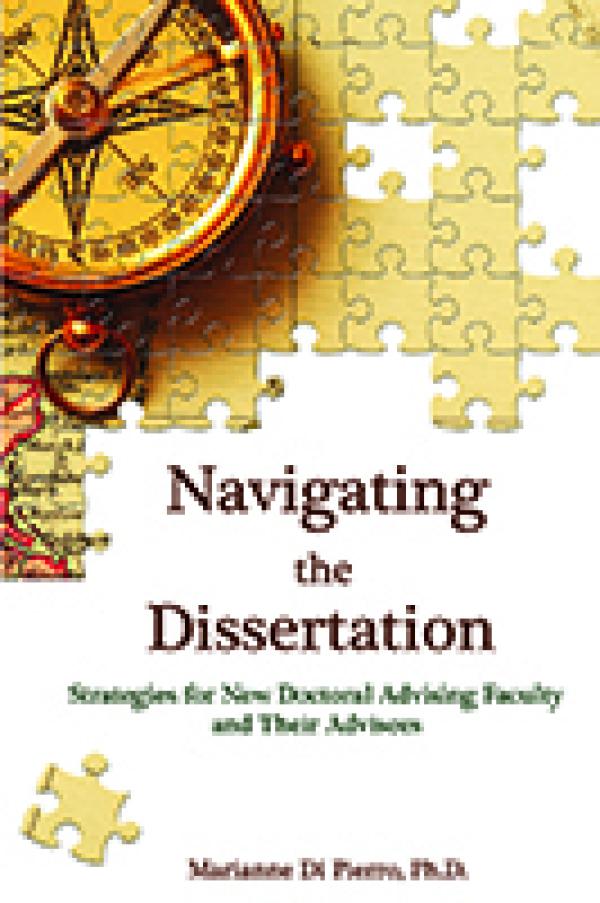
Click Here for Book Review Abstract: This book examines the intricacies of the doctoral educational process and delineates a process for continuous improvement that will shape and enhance better professional relationships between dissertation advisors and their advisees and cultivate opportunities for increased retention and graduation. The book includes critical principles, interwoven with students’ real life experiences which serve as illustrative vehicles. Moreover, its innovative approach – a book written for new advisors and their advisees or for seasoned advisors seeking new ways to communicate with their advisees – departs from other books that provide generally only a one-dimensional view, usually from the student’s perspective. The titles of many of these are couched in metaphors of survival and overcoming a threat, rather than centered in strong initiatives that will lead to timely graduation in a supportive and encouraging environment. This book offers innovative and pioneering leadership approaches to transport advisors and advisees to a successful outcome. (From the Publisher)
The actual program is limited to graduate students at the University of North Texas, but the website provides a helpful description of an online program to prepare graduate students for teaching roles in higher education by equipping them with teaching skills, knowledge about teaching strategies and peer support.
Initial findings from this exploratory study indicate significant questions, such as: why does the focus of faculty work appear to shift and, in later career? How do the administrative and leadership roles often assumed by midlife and mid-career faculty affect other dimensions of faculty work? Is the level of work satisfaction of mid-career faculty a function of the job demands or of life assessment and career questioning? What roles do institutional context and disciplinary field play in the experiences and perceptions of the middle years of the academic life cycle?
Policies should encourage senior professors to engage in periodic review of their performance and professional goals and allow deans and department chairs to negotiate revised responsibilities are necessary to take fuller advantage of the gifts senior faculty can share with their institutions – and to ensure that senior faculty are treated fairly and consistently. 
Monthly postings provide insight and advice for academic deans in theological education. Israel Galindo, Associate Dean for Lifelong Learning at Columbia Theological Seminary, formerly Academic Dean at Baptist Theological Seminary (Richmond), helps leaders apply Bowen Family Systems theory for healthy and effective functioning in home and work settings.

Journal Issue.