Resources

Click Here for Book Review The University of Alaska Anchorage and Alaska Pacific University created Start Talking: A Handbook for Engaging Difficult Dialogues in Higher Education, a field manual for professors who wish to engage their students more effectively in conversations about the most important issues of our time. The book addresses themes of academic freedom; classroom safety; rhetoric and debate; race, class and culture; science and religion; and business, politics and social justice. For information about the project, including faculty intensives on difficult dialogues and indigenous ways of teaching and learning, see UAA Initiatives. (From the Publisher)
Formally known as a “Small Group Instructional Diagnosis” (SGID), specialists from the Illinois State Center for Teaching, Learning and Technology visit a classroom and interview the students in a consensus-building process that enables instructors to gain insights into students' perceptions about the class and their learning.

Click Here for Book Review Organizing Academic Work in Higher Education explores how managers influence teaching, learning and academic identities and how new initiatives in teaching and learning change the organizational structure of universities. By building on organizational studies and higher education studies literatures, Organizing Academic Work in Higher Education offers a unique perspective, presenting empirical evidence from different parts of the world. This edited collection provides a conceptual frame of organizational change in universities in the context of New Public Management reforms and links it to the core activities of teaching and learning. Split into four main sections: - University from the organizational perspective, - Organizing teaching, - Organizing learning and - Organizing identities, this book uses a strong international perspective to provide insights from three continents regarding the major differences in the relationships between the university as an organization and academics. It contains highly pertinent, scientifically driven case studies on the role and boundaries of managerial behaviour in universities. It supplies evidence-based knowledge on the effectiveness of management behaviour and tools to university managers and higher education policy-makers worldwide. Academics who aspire to institutionalize their successful academic practices in certain university structures will find this book of particular value. Organizing Academic Work in Higher Education will be a vital companion for academic interest in higher education management, transformation of universities, teaching, learning, academic work and identities. Bringing together the study of the organizational transformation in higher education with the study of teaching, learning and academic identity, Organizing Academic Work in Higher Education presents a unique cross-national and cross-regional comparative perspective. (From the Publisher)

Click Here for Book Review Abstract: This volume offers new perspectives from Indigenous leaders in academic affairs, student affairs and central administration to improve colleges and universities in service to Indigenous students and professionals. It discusses and illustrates ways that leadership norms, values, assumptions and behaviors can often find their origins in cultural identities, and how such assumptions can affect the evolvement of colleges and universities in serving Indigenous Peoples. It contributes to leadership development and reflection among novice, experienced, and emerging leaders in higher education and provides key recommendations for transforming higher education. This book introduces readers to relationships between Indigenous identities and leadership in diverse educational environments and institutions and will benefit policy makers in education, student affairs professionals, scholars, faculty and students. (From the Publisher)

Click Here for Book Review Abstract: What makes a good college teacher? This book provides an evidence- based answer to that question by presenting a set of "model teaching characteristics" that define what makes a good college teacher. Based on six fundamental areas of teaching competency known as Model Teaching Characteristics outlined by The Society for the Teaching of Psychology (STP), this book describes how college faculty from all disciplines and at all levels of experience can use these characteristics to evaluate, guide, and improve their teaching. Evidence based research supports the inclusion of each characteristic, each of which is illustrated through example, to help readers master the skills. Readers learn to evaluate their teaching abilities by providing guidance on what to document and how to accumulate and organize the evidence. Two introductory chapters outline the model teaching characteristics followed by six chapters, each devoted to one of the characteristics: training, instructional methods, course content, assessment, syllabus construction, and student evaluations. (From the Publisher)

Click Here for Book Review Abstract: In Tell Me So I Can Hear You, Eleanor Drago-Severson and Jessica Blum-DeStefano show how education leaders can learn to deliver feedback in a way that strengthens relationships as well as performance and builds the capacity for growth. Drawing on constructive-developmental theory, the authors describe four stages of adult growth and development and explain how to differentiate feedback for colleagues with different “ways of knowing,” which include: - Instrumental knowers, who tend to see things in black and white (“Did I do it right or wrong?”) and may need to develop the capacity for reflection. - Socializing knowers, who are concerned with maintaining relationships (“What do you want me to do?”) and may need support developing their own ideas. - Self-authoring knowers, who have strong ideologies and values (“How does this fit with my goals and vision?”) and may need help with perspective taking. - Self-transformative knowers, who are able to examine issues from multiple points of view (“How can I understand this more deeply?”) and may need guidance in resolving tensions and contradictions. The authors show how leaders can provide feedback in ways that “meet people where they are” while expanding the developmental capacities educators bring to their work. Drago-Severson and Blum-DeStefano provide real-life examples with practical strategies for creating a safe space for feedback, finding the right words, and bridging feedback and action. Tell Me So I Can Hear You offers invaluable guidance to help educators support a culture of learning in classrooms, schools, and districts. (From the Publisher)

Skill at mentoring has . . . attained a certain cachet among those at all career stages who find in it an alternative way of being in academe-one that tilts away from the endemic competition of the research environment in favor of cooperation and mutual purpose. Part of mentoring’s appeal lies in its ability to gesture in two directions at once: forward . . . to new modalities and more egalitarian relationships, and backward, to a tradition of cross-generational support and identification as old as universities themselves, and that continues to feed the romance of the academic life in the minds of would-be faculty. (From the Publisher)
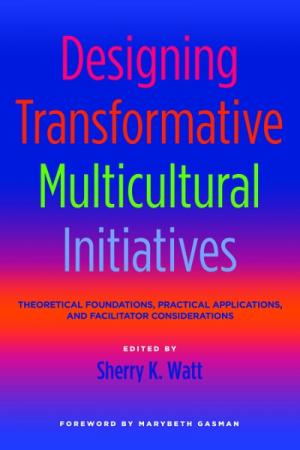
Click Here for Book Review Abstract: Higher education is facing a perfect storm as it contends with changing demographics, shrinking budgets and concerns about access and cost, while underrepresented groups – both in faculty ranks and students – are voicing dissatisfaction with campus climate and demanding changes to structural inequities. This book argues that, to address the inexorable changes ahead, colleges and universities need both to centralize the value of diversity and inclusion and employ a set of strategies that are enacted at all levels of their institutions. It argues that individual and institutional change efforts can only be achieved by implementing “diversity as a value” – that is embracing social change efforts as central and additive rather than episodic and required – and provides the research and theoretical frameworks to support this approach, as well as tools and examples of practice that accomplish change. The contributors to this book identify the elements that drive successful multicultural initiatives and that strengthen the effectiveness of campus efforts to dismantle systemic oppression, as well as the individual and organization skills needed to manage difference effectively. Among these is developing the capacity of administrators, faculty and student affairs professionals as conscious scholar practitioners to sensitively manage conflicts on campus, deconstruct challenging structures and reconstruct the environment intentionally to include in respectful ways experiences of historically marginalized groups and non-dominant ways of being in the world. The books’ focus on developing capacities for multicultural competence aligns with higher education’s increasing emphasis on civic engagement and institutional goals promote skills to interact in meaningful and responsible ways around difference, whether of people, ideas or identities. Designing Transformative Multicultural Initiatives provides guiding principles and practical strategies to successfully transform higher education to become fully inclusive and advance the success of all constituents and stakeholders. (From the Publisher)
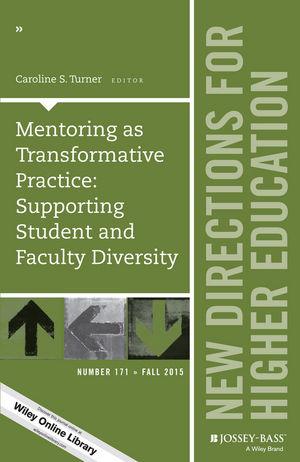
Click Here for Book Review Abstract: Scholars examining how women and people of color advance in academia invariably cite mentorship as one of the most important factors in facilitating student and faculty success. Contributors to this volume underscore the importance of supporting one another, within and across differences, as critical to the development of a diverse professoriate. This volume emphasizes and highlights: - the importance of mentorship; - policies, processes, and practices that result in successful mentoring relationships; - real life mentoring experiences to inform students, beginning faculty, and those who would be mentors; - evidence for policy makers about what works in the development of supportive and nurturing higher education learning environments. The guiding principles underlying successful mentorships, interpersonally and programmatically, presented here can have the potential to transform higher education to better serve the needs of all its members. This is the 171st volume of the Jossey-Bass quarterly report series New Directions for Higher Education. Addressed to presidents, vice presidents, deans, and other higher education decision makers on all kinds of campuses, it provides timely information and authoritative advice about major issues and administrative problems confronting every institution. (From the Publisher)

This book breaks down the sometimes overwhelming and difficult task of creating a successful grant winning proposal into a series of clear and definable steps that lead to grant success. The implementation of these pro-active grant steps results in government, foundation and corporate grants success. Whether you are with a non-profit organization, a school district, or an institution of higher education, this step-by-step process will demystify the grants process and help you become a confident and knowledgeable grantseeker. Researching the grantor, reviewing previously funded proposals, and making pre-proposal contact with the funding source are just a few of the pro-active steps that will help to assure you that what you propose is right for the grantor and that the grantor should therefore select you to fund. The exhibits/worksheets in The “How To” Grants Manual further support this successful system. Revisions to grant-seeking strategies have caused the author, working with grantors and advisory groups, to retool the manual's worksheets and communications templates. These extremely useful supplementary materials are available to students and instructors, contact textbooks@rowman.com for details. If your organization or institution wants to increase your success in attracting grants, this book if for you. From operating grants to technology to research, this book will help you outline your plan for success. (From the Publisher)