Resources
Leading a Diversity Culture Shift in Higher Education offers a practical and timely guide for launching, implementing, and institutionalizing diversity organizational learning. The authors draw from extensive interviews with chief diversity officers and college and university leaders to reveal the prevailing models and best practices for strengthening diversity practices within the higher education community today. They complement this original research with an analysis of key contextual factors that shape the organizational learning process including administrative leadership, institutional mission and goals, historical legacy, geographic location, and campus structures and politics. (From the Publisher)
Kennesaw’s Center for Excellence in Teaching and Learning maintains one of the most extensive directories of conferences focused on college/university teaching and their sponsoring organizations.  
Click Here for Book Review In Going Online, one of our most respected online learning leaders offers insights into virtual education―what it is, how it works, where it came from, and where it may be headed. Robert Ubell reaches back to the days when distance learning was practiced by mail in correspondence schools and then leads us on a tour behind the screen, touching on a wide array of topics along the way, including what it takes to teach online and the virtual student experience. You’ll learn about: -how to build a sustainable online program; -how to create an active learning online course; -why so many faculty resist teaching online; -how virtual teamwork enhances digital instruction; -how to manage online course ownership; -how learning analytics improves online instruction. Ubell says that it is not technology alone, but rather unconventional pedagogies, supported by technological innovations, that truly activate today's classrooms. He argues that innovations introduced online―principally peer-to-peer and collaborative learning―offer significantly increased creative learning options across all age groups and educational sectors. This impressive collection, drawn from Ubell's decades of experience as a digital education pioneer, presents a powerful case for embracing online learning for its transformational potential.
Former dean of the Harvard Graduate School of Education, Jerome Murphy writes as a seasoned educator about how to best care for yourself as a teacher in the midst of daily stress. This book applies to the stress of academia as well as ministry. It is a book I would recommend to students preparing to teach and to serve in ministerial vocations. Murphy highlights the source of stress that afflicts educators: our own responses to stress. When difficult situations arise, we tend to respond in one of three self-defeating ways: ruminating on the negative, rebuking ourselves, or resisting our emotions. Murphy draws from the literature on mindfulness to point out the health benefits of becoming aware of our emotions in the moment and accepting our shortcomings. As an alternative to the cycles of rumination, rebuke, and resistance, Murphy offers a list of instructions that help educators focus on their own values, summarized by the acronym “MY DANCE.” Each letter represents a phrase discussed in the following chapters. “Minding your values” advocates understanding our own life goals and naming our best version of ourselves. Knowing who we want to be helps us evaluate whether our actions are in line with our values. The next chapter, “Yield to now,” captures the importance of in-the-moment mindfulness, trying to stay present to ourselves and others, and includes exercises for practicing mindfulness. “Disentangle from upsets” also highlights the role of mindfulness in preventing us from being consumed by our stress. The chapter titled “Allow unease” instructs readers to attend to the discomfort of negative feelings. “Nourish yourself” emphasizes intentional self-care and practices of gratitude, while “Cherish self-compassion” takes self-care to a deeper level. The last element of the acronym is “Express Feelings Wisely.” In each of these chapters, Murphy brings in personal anecdotes from years of administration and leading workshops for teachers and school principals. He intersperses these lessons with some of his own personal struggles, such as his wife’s diagnosis with Alzheimer’s disease. In these glimpses of personal sharing, the reader gets a sense of how these practices of self-care have been imperative for someone who has transitioned from being a dean of a Harvard graduate school to a full-time caregiver for his wife of nearly fifty years as she slowly loses her ability to recognize him. This book draws our attention to the humanity of all educators: we are not simply vessels of information or mediums of higher learning. Each person has his or her own struggles in living daily life, on top of the demands of our teaching vocations. Attending lovingly to our limitations and caring for ourselves in the midst of these struggles is crucial if we are to be effective as teachers and healthy individuals. I recommend this book to anyone who wants to learn how to better care for themselves in the midst of life’s demands.
Despite deans playing critical roles in education, little is known about the knowledge, skills, and dispositions needed for the job, or the practical dilemmas they face on an almost daily basis. Each chapter of this international collection opens the role up for examination and critique, developing a deeper understanding of what it means to be a dean, and offering insights into the transition into the role, managing the daily demands and expectations of it, and what it means to exit the deanship. The book brings being a dean and the leadership inherent in the position into sharp focus based on international perspectives on doing the job.

Click Here for Book Review Not everyone is surprised at the rumor suggesting that Karl Wolfe, Dean of The University School, recently told Rebecca Swingle, new professor at the school, that a promotion could be more easily attained were she to sleep with him. Certainly those least surprised were several female students who had been the target of the Dean's amorous behavior. But the question remains--who might stand and suggest that such behavior should not occur in a divinity school, of all places? The Dean's Demise offers readers a fictional case study in how something like sexual harassment impacts a divinity school's educational vision, its theological understanding of community, and the practical issues of governance.
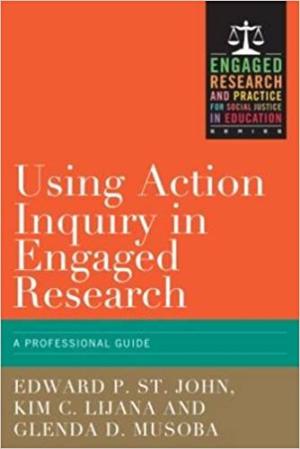
Click Here for Book Review Using Action Inquiry in Engaged Research: A Professional Guide offers higher education and school professionals practical guidance and methods for using the Action Inquiry Model (AIM) in engaged research initiatives and community partnerships. Replete with group exercises and case studies, this guide was originally developed to supplement workshops for faculty, administrators and students working on action initiatives that focused on critical educational issues facing local communities. It provides a useful framework and straightforward techniques for building empowering partnerships. The Action Inquiry Model (AIM) includes four stages: • Assessment: Using research and experience to identify critical challenges facing the university with respect to the improvement of educational opportunities • Organization: Developing workgroups to collaborate on initiatives that address critical challenges; providing financial support for new initiatives; and providing release time and professional development opportunities for faculty and staff who engage in reform initiatives • Action Initiatives: Treating reforms as pilot tests for new strategies, as a means of promoting organizational learning, professional development, and student success • Evaluation: Integrating the evaluation of current programs and incorporating new initiatives into the reform process. This guide provides two methods for learning the inquiry process: a step-by-step process for defining tasks for teams of researchers and practitioners working together to use research to inform the educational improvement; and sets of case studies on assessment and action inquiry to inform groups in collectively discussing problems and strategies, an approach that supports the classroom use of the Guide. The key tasks in action inquiry initiatives include: 1. Build an understanding of the challenge 2 Identify the causes of the challenge using data to test hypotheses 2. Look internally and externally for solutions 3. Assess possible solutions 4. Develop action plans 5. Implement pilot test, and evaluate This guide is appropriate for professional development programs and as a text for higher education Masters and Ph.D. programs. (From the Publisher)
Classroom instructors implementing pedagogical strategies for embodied learning about sexuality and religion need institutional support and assistance from colleagues and mentors to be successful. One means of providing institutional and peer support for classroom instructors is to host and lead a pedagogy workshop. Building on the work of Ott and Stephens on embodied learning and other articles and teaching tactics found throughout this issue of Teaching Theology and Religion, this article presents a sample design for a two-hour workshop with faculty and/or graduate teaching assistants on the topic of teaching sexuality and religion. Non-expert facilitators can lead this workshop and it is intended to start a conversation about pedagogy rather than to provide definitive answers to end the discussion. The goals are to demystify a taboo topic and to provide concrete strategies for teaching that will promote responsible engagement and a better-integrated learning experience for students.
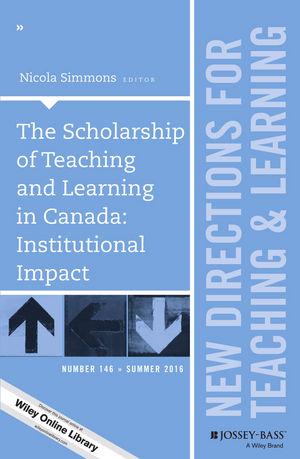
Develop effective models of practice and positively impact institutional teaching and learning quality. This volume provides examples and evidence of the ways in which post-secondary institutions in Canada have developed and sustained programs around the scholarship of teaching and learning (SoTL) that impact the institutional pedagogical climate. Topics include: - the historical development of SoTL in Canada, - institutional SoTL practices, including evidence of impact, - program design and case studies, and - continuing challenges with this work. This is the 146th volume of this Jossey-Bass higher education series. It offers a comprehensive range of ideas and techniques for improving college teaching based on the experience of seasoned instructors and the latest findings of educational and psychological researchers. (From the Publisher)
Click Here for Book Review At a time when higher education faces the unprecedented challenges of declining revenues and increased scrutiny, questions about access, cost, and the value of degrees, and the imperative to educate a more diverse student body, there is an urgent need for leadership that is conversant with, and able to deploy, the competencies, management tools, and strategic skills that go beyond the technical or disciplinary preparation and “on the job” training that most leaders have received. This book is intended as a practical resource for academic and administrative leaders in higher education who seek guidance in dealing with today’s complexity, opportunities, and demands. It is also addressed to those who aspire to hold positions of leadership, and to the many faculty and staff members who serve in informal leadership roles within their departments, disciplines, or institutions. Additionally, the book serves as a guide and resource for those responsible for the design and implementation of leadership development programs in higher education. While recognizing the differences in mission and circumstance across institutional types, the authors begin by offering a foundational understanding of higher education as a sector, the political, social, and economic climate in which it operates, and the potential opportunities ahead. Subsequent sections of the book cover leadership concepts and competencies, along with a series of applied tools for leadership and organizational effectiveness. Each chapter concludes with related case studies and guiding questions for further reflection. The final section highlights models for developing institutional leadership programs that progressively meet the needs of leaders along their careers. The content and format of this book reflect the authors’ views that leadership development is most effective when it is an intentional, reflective, and systematic experience. While they espouse the practice of general principles of leadership, they also take into account the unique context of higher education with its numerous internal and external stakeholders, multiple missions, particular organizational governance, and a culture that fosters individual autonomy and creativity. (From the Publisher)