Resources
A non-partisan collaborative of more than 2,500 professors, administrators, and graduate students committed to enhancing the quality and impact of research — and improving education — by promoting open inquiry, viewpoint diversity, and constructive disagreement in institutions of higher learning. In order to address society’s most intractable problems, learners must weave together the best ideas from a range of perspectives. In many fields, scholars’ backgrounds and commitments are insufficiently diverse. As a result, important questions and ideas may go unexplored, key assumptions can go unchallenged, and the natural human tendencies towards motivated reasoning, confirmation bias, and tribalism can go unchecked. As a collaborative of academic insiders, we are deeply committed to the continued flourishing of colleges and universities — and deeply concerned about the current state of affairs, which is not sustainable. We aspire to help chart a different path forward by:
• Increasing public awareness of these issues, to spur action among faculty, staff, students, alumni and donors;
• Conducting, disseminating and facilitating research to better understand the nature of the challenges facing institutions of higher learning — and how they can be effectively addressed;
• Developing tools and resources that professors, administrators, and others can deploy to assess and then improve their own pedagogical, disciplinary and broader campus cultures;
How is quilt‐making both metaphor and pedagogy for early‐career faculty of theology and religion who seek to cultivate critical and creative imagination for teaching, and to probe the challenges and promises of complex identities and vocations within 21st‐century landscapes of theological education? This forum presents essays (with explanatory introduction) by five members of the 2016–2017 Workshop for Early Career Theological School Faculty, who were impelled to story their experience of being “handed over to themselves” by an “arts and craft” project which forced them to think with their hands, speak with found objects, and re‐present themselves in the form of 12 × 12‐inch quilt squares. In self‐reflexive prose, these scholar‐teachers offer through this medium a glimpse of their unexpected moments of revelatory learning, as each was pulled into deeper contemplation of their personhood, experience, know‐how, and practical wisdom, each uncovering valuable hidden sources for more expansive theological query, and each re‐thinking the possibilities for theological education and its pedagogies.
Disability in Higher Education: A Social Justice Approach examines how disability is conceptualized in higher education and ways in which students, faculty, and staff with disabilities are viewed and served on college campuses. Drawing on multiple theoretical frameworks, research, and experience creating inclusive campuses, this text offers a new framework for understanding disability using a social justice lens. Many institutions focus solely on legal access and accommodation, enabling a system of exclusion and oppression. However, using principles of universal design, social justice, and other inclusive practices, campus environments can be transformed into more inclusive and equitable settings for all constituents. The authors consider the experiences of students, faculty, and staff with disabilities and offer strategies for addressing ableism within a variety of settings, including classrooms, residence halls, admissions and orientation, student organizations, career development, and counseling. They also expand traditional student affairs understandings of disability issues by including chapters on technology, law, theory, and disability services. Using social justice principles, the discussion spans the entire college experience of individuals with disabilities, and avoids any single-issue focus such as physical accessibility or classroom accommodations. (From the Publisher)
Click Here for Book Review Toxic Ivory Towers seeks to document the professional work experiences of underrepresented minority (URM) faculty in U.S. higher education, and simultaneously address the social and economic inequalities in their life course trajectory. Ruth Enid Zambrana finds that despite the changing demographics of the nation, the percentages of Black and Hispanic faculty have increased only slightly, while the percentages obtaining tenure and earning promotion to full professor have remained relatively stagnant. Toxic Ivory Towers is the first book to take a look at the institutional factors impacting the ability of URM faculty to be successful at their jobs, and to flourish in academia. The book captures not only how various dimensions of identity inequality are expressed in the academy and how these social statuses influence the health and well-being of URM faculty, but also how institutional policies and practices can be used to transform the culture of an institution to increase rates of retention and promotion so URM faculty can thrive. (From the Publisher)
Leading a Diversity Culture Shift in Higher Education offers a practical and timely guide for launching, implementing, and institutionalizing diversity organizational learning. The authors draw from extensive interviews with chief diversity officers and college and university leaders to reveal the prevailing models and best practices for strengthening diversity practices within the higher education community today. They complement this original research with an analysis of key contextual factors that shape the organizational learning process including administrative leadership, institutional mission and goals, historical legacy, geographic location, and campus structures and politics. (From the Publisher)
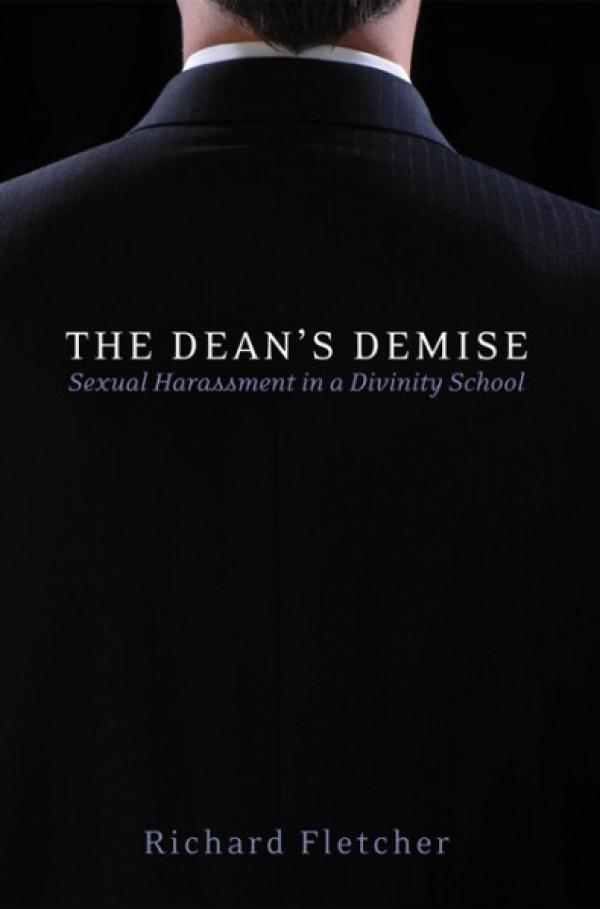
Click Here for Book Review Not everyone is surprised at the rumor suggesting that Karl Wolfe, Dean of The University School, recently told Rebecca Swingle, new professor at the school, that a promotion could be more easily attained were she to sleep with him. Certainly those least surprised were several female students who had been the target of the Dean's amorous behavior. But the question remains--who might stand and suggest that such behavior should not occur in a divinity school, of all places? The Dean's Demise offers readers a fictional case study in how something like sexual harassment impacts a divinity school's educational vision, its theological understanding of community, and the practical issues of governance.
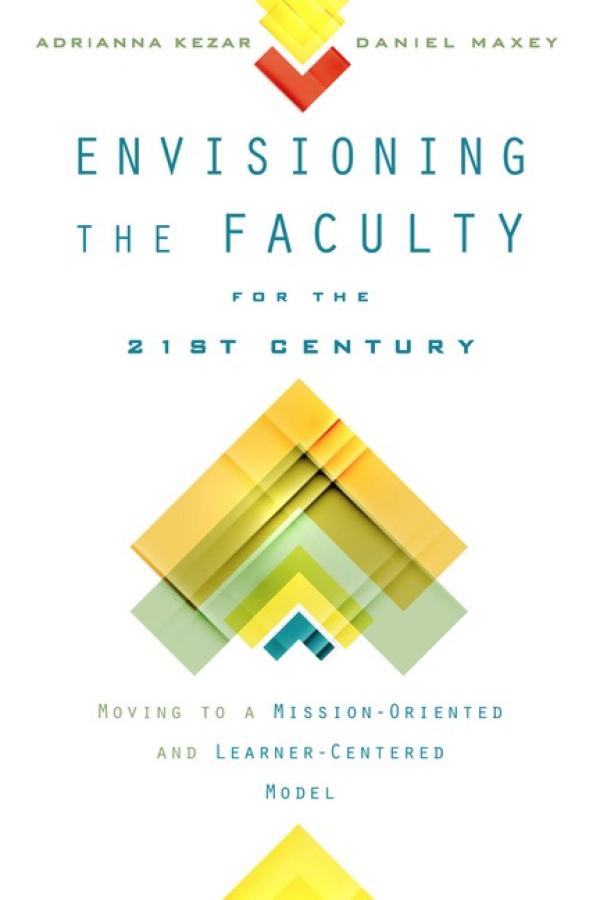
What functions occupy your time as an academic? Are they equally respected, sensibly arranged, and fairly evaluated? Are they well-coordinated with the mission of your institution? Do they complement the functions your colleagues carry out? Do they all contribute to student learning? If you have ever wondered about such questions, you must read this book. Adrianna Kezar and David Maxey, of the Delphi Project on the Changing Faculty and Student Success, gathered a distinguished group of contributors to produce this volume on the future role of faculty in U.S. higher education. They start by pairing two concerns often considered separately despite their proven interconnection: the erosion in recent decades of the traditional faculty model (the full-time, tenured or tenure-track faculty member), and student success. The unbundling of faculty roles, and the consequent re-distribution to assorted academic personnel, of curriculum development, course design, content delivery, assessment, advising, research, community engagement, and so forth—has negatively affected faculty-student interactions and therefore student learning and self-efficacy. Adjunct faculty members are not the problem. Even the disappearance of tenure is not the problem. The problem has been the random, reactive, and poorly conceived responses to market forces and technological revolutions in education. The volume goes on to raise many other concerns that changes to the faculty have effected, including: an evolving understanding of academic freedom based less on individual rights and more on collective responsibility, the way that internationalization of higher education and a global academic workforce challenge assumptions about U.S. supremacy, the need to base faculty evaluations on the success of the department as well as individual achievement, a shift in faculty development programs from mere technology training toward adult learning, and the pros and cons of customizing academic careers to support work-life balance. Contributors do not uncritically valorize the traditional faculty model; while they generally support the return to more full-time positions, they also recognize the need for flexibility and coordination in the design of faculty roles, alignment of those roles with institutional priorities, and collaboration rather than competition among communities of scholars. One specific innovation lifted up as noteworthy is the way medical schools have created multiple tracks (investigator, clinical-educator, clinical, research, and educator) that provide distinct but parallel career pathways for their faculty while simultaneously serving their institutional needs. Though the book does not conclude with a fully envisioned alternative model for the 21st century, several points of consensus do emerge, especially around the need for collegiality, professionalism, responsibility for students, differentiation and diversification of roles, and more expansive definitions of research and scholarship. This collaboration is a rare and refreshing example of one to which the contributions are evenly strong. Every chapter piqued my interest. Readers of this journal may especially appreciate the chapter on academic freedom because it is written by a religion scholar and has a familiar ring. Readers new to the literature on developments in higher education might first want to read Ernest Boyer’s 1990 Scholarship Reconsidered, referenced frequently by contributors. Envisioning the Faculty for the 21st Century will become an equally important and influential work. Works Cited Boyer, Ernest L., author. Drew Moser, Todd C. Ream, and John M. Braxton, editors. 2016 expanded edition. Scholarship Reconsidered: Priorities of the Professoriate. San Francisco: Jossey-Bass.
Journal Issue. (This issue, and all "Spotlight on Teaching" issues prior to 1999, are not available on the AAR website.)
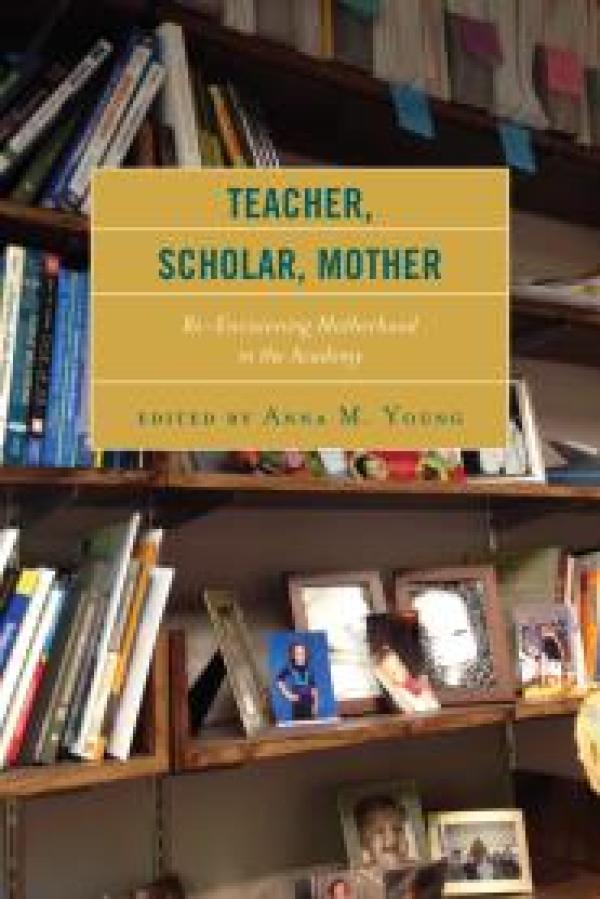
Teacher, Scholar, Mother advances a more productive conversation across disciplines on motherhood through its discussion on intersecting axes of power and privilege. This multi- and trans-disciplinary book features mother scholars who bring their theoretical and disciplinary lenses to bear on questions of identity, practice, policy, institutional memory, progress, and the gendered notion of parenting that still pervades the modern academy. (From the Publisher)