Resources

The University of Chicago made news recently because of a letter sent by its Dean of Students to inform its incoming class of freshmen that the University, given its commitment to “freedom of inquiry and expression,” does not support “trigger warnings,” cancel controversial speakers, or condone creation of “safe spaces.” Responses to this letter run the whole gamut from celebratory cheers to condemnatory curses. Some see this as the University’s honorable refusal to shut down difficult discussions of sensitive subjects; others see it as the University’s hypocritical and covert attempt to forestall student activism on campus to challenge conservative speakers or oppressive rhetoric. I have no way of knowing the “real” motivations or intentions of this letter. I do notice, however, that subsequent conversations, whether in support or in protest of the University of Chicago’s letter, tend to assume that “free speech” will necessarily trump or preclude “safe space” or “trigger warnings” without clarifying what those terms may mean or how they may be put into practice. As an educator who likes to encourage and enable students as well as myself to think again and think differently, I am all for free speech; free speech is, in fact, indispensable to classroom discussion and learning. We do not learn well if we feel like our thoughts and ideas are being suppressed; we also cannot learn if we are not allowed to make mistakes. Nobody’s commitment to Black Lives Matter, neither mine or any of my student’s, should keep white students in my class from articulating their disagreements with or dislike of James Cone’s Black Theology and Black Power. Similarly, advocates for LGBTQ rights, including myself, cannot silence students who want to push back against Marcella Althaus-Reid’s Indecent Theology. Every student in my classroom should have the space and time to express their thoughts and views, even if I think they are dead wrong; to deprive students of such is to take away from them an opportunity to hear and learn through feedbacks and responses. We must also not forget that persons from traditionally marginalized groups do make mistakes and can also be misguided in their thinking. Whether this commitment to free speech and the idea of the classroom being a safe space can coexist depends on what one means by the latter. I cannot guarantee that no one will feel uncomfortable, unsafe, or threatened in my classroom since I cannot control how one feels or deny what someone is feeling. Hearing new ideas that you have not considered before, especially if it contradicts or challenges what you have held dear deep down and for very long, can indeed be very alarming. I have also heard faculty of color and female professors saying that they themselves did not feel safe at times with their students. When students are even allowed to carry guns legally on some campuses, how can I feign the power or ability to keep everybody safe in my class? I can, however, promise that students in my courses will have a safe space to speak freely, meaning only that they will be able to say what is on their mind and in their heart, including saying, “I am feeling rather threatened!” or “I feel under attack and unsafe right now.” This kind of safe space is not one that shields students from being challenged, feeling offended, or experiencing wound or harm; it is, however, one that does not frame “free speech” and “safe space” as mutually exclusive by definition. Having a safe space to speak freely also does not, in my view and practice, necessarily cancel out the desire or the need for trigger warnings. A person does not have to run over other people verbally just because she or he has something important to say that others may find difficult to hear. I am not able to verify if it is true that persons of color, because of all the discrimination and marginalization, have developed thicker skins than average Whites, I will only say that some experiences, including oppressive and unjust ones, may also make someone more sensitive to other people’s feelings and she may hence become more thoughtful and more gracious about giving trigger warnings. Trigger warnings, when given clearly and concisely by a teacher on her own initiative in the classroom, do not function to shield students from but prepare students for difficult topics or challenging ideas. After giving a trigger warning, I have never once asked my students, “Is it okay to talk about this now?” or said to them, “You may leave the class if you do not want to hear or think any more about this.” More importantly, those of us who are teachers should remember that we have the responsibility to guide and guard the tone and the emotion of a classroom even or especially when we push for honest and genuine exchange of views and opinions. Let’s remember also that what we do may become models for our students to emulate. They, like us, need to learn how to disagree, debate, and argue passionately, thoughtfully, and respectfully. Instead of following or (even in dispute) allowing the University of Chicago’s letter to set the terms of the conversation, I see the possibility for “free speech,” “safe space,” and “trigger warnings” to exist alongside each other in my classroom and in my universe. Oh, one more thing: While a school can—and should—refuse to cancel an invited speaker with controversial viewpoints (whether the speaker is Ann Coulter or Jeremiah Wright), students and teachers can also continue their activism to speak freely against what they understand to be unjust or unacceptable. The point of activism is not to shut people up or shut people down, but to push for rethinking, reexamination, and further conversation. After all, is this not what teaching and learning is about?
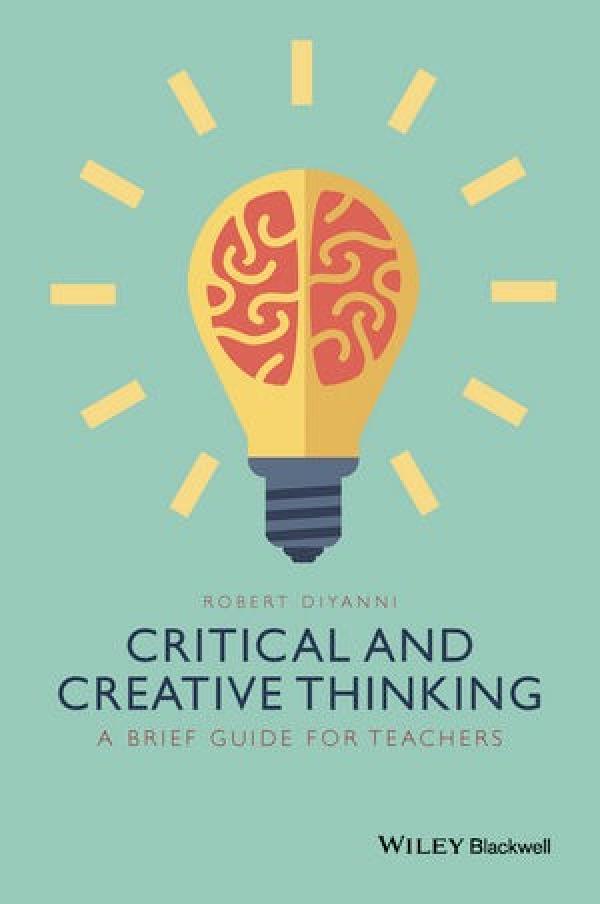
As teachers in religious studies and theology departments, one of our principal pedagogical claims is that we teach students to think critically and creatively, but we are not always clear on what this means in practical terms. This readable book by Robert DiYanni helpfully gathers research and writing from a wide variety of disciplines to help teachers define and apply critical and creative thinking for themselves. The book’s organization makes sense as it leads the reader through concepts, practical concerns, and application. Brief “interchapters” unite the flow of the book around one master of critical and creative thinking, Leonardo da Vinci. Each chapter ends with a well-crafted list of writing prompts to help the reader – both teachers and students – to apply the chapter’s concepts. For example, chapter 4 focuses on strategies and applications of critical thinking, and so the end-of-chapter prompts call on the reader to analyze arguments, evaluate scenarios, and deploy specific critical thinking strategies. Chapter 5, which examines approaches to creative thinking, provides prompts that invite imagination, innovation, and inventive solutions to problems. Essentials of critical thinking such as asking questions, seeking clarification, gathering evidence, evaluation, and reflection are discussed at length with colorful examples from notable historical events and popular culture. For instance, one chapter features a collection of headlines and other snippets of news coverage of the murder of Kitty Genovese. DiYanni invites the reader to consider what sorts of inferences and judgments various news sources made in response to this famous case (71-74). Another section examines the methods that Sherlock Holmes used in his legendary detective work (109-112). DiYanni argues, however, that critical thinking is not sufficient by itself and can even be reductive and dangerous (xi) if it is not joined by robust creative thinking. He persuasively shows that creative thinking is a necessary adjunct to critical thinking and leads to innovation and whole-minded approaches to problems. DiYanni’s coverage of creative thinking likewise draws on a wealth of examples from creative people such as choreographer Twyla Tharp and checklist-innovator Atul Gawande. DiYanni’s book thoroughly covers critical and creative thinking, but it may not live up completely to its subtitle, A Brief Guide for Teachers. There is not much by way of specific advice to teachers on how to teach students to be more critical and creative thinkers. Rather, the book reads like a textbook for a class whose subject matter is creative thinking itself. As such, the exercises in the book would have to be adjusted for application to religious studies and theology courses. Another small critique is that DiYanni argues early in the book that cultural forms and social locations, including religion, are “blocks” to critical thinking (10). While we can agree that people’s contexts can limit and define their worldview, religion professors know that it is not particularly helpful to consider religion as a hamper to thoughtfulness. These criticisms aside, this book is a helpful addition to the literature on critical and creative thinking, and its focus on application – even if not explicitly linked to pedagogical advice – provides welcome tools to promote critical and creative thinking in ourselves and our students.
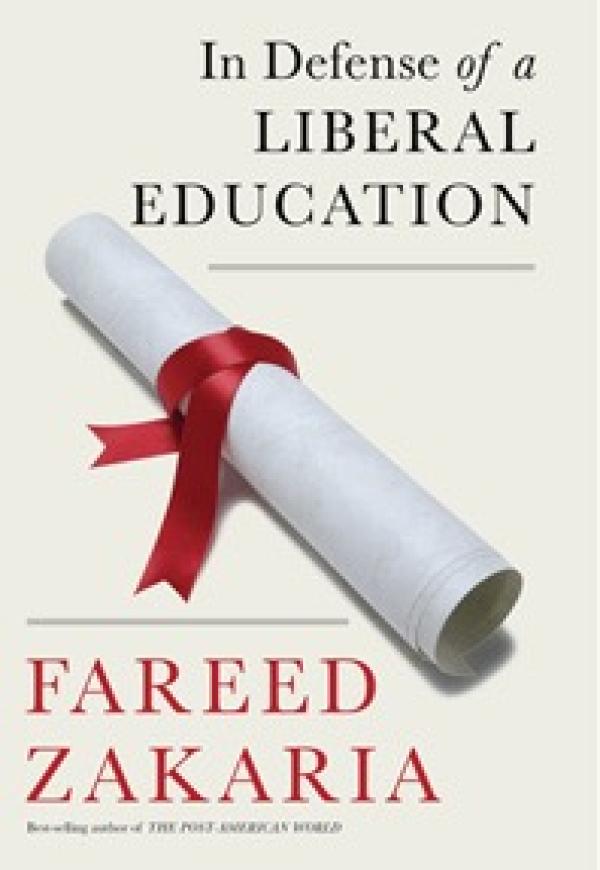
The argument of Fareed Zakaria’s book is precisely what the title indicates: a liberal education is worth defending. Zakaria begins by describing the oft heard opinion that studying the liberal arts, especially in an age of technology and global business, is a waste of time, and how in India, a skills-based education is valued much more than one centered on the study of history or philosophy. He himself intended to focus upon maths and sciences, but wound up a history major because of an elective course. The book provides a brief but helpful history of liberal arts education, focused upon the United States, then turns to what Zakaria thinks is the “central virtue” (72) of such an education: it teaches one how to write, which in turn teaches one how to think. The other two main advantages of such an education are that one learns how to speak, and how to learn. Zakaria elaborates on how such abilities are requisite for obtaining a job, and important for the modern economy. He also maintains that education should be much more accessible and affordable, and that university education, at least in the United States, should be more rigorous. Thus, while extolling the importance of a liberal education, he recognizes that it is currently deeply flawed in its implementation. We need more, and better, liberal education (105). Subsequent chapters further discuss the need for greater accessibility to higher education (Zakaria believes MOOCs can make a contribution here), and the significance of knowledge for power, especially political power. Zakaria thinks the liberal arts are crucial if we want more just societies and a fairer distribution of wealth. His final chapter is a defense of today’s youth. There have been several recent books lamenting the lack of curiosity and selfishness of young people. However, Zakaria cites surveys that indicate that concerns about being a community leader and helping others have risen among students in university, and education, poverty. and the environment are their top concerns. However, at the close of the book he grants that all of us need to spend more time thinking about the meaning of life, which is precisely what a liberal arts education encourages us to do. Zakaria’s book is informative and engaging, and I appreciate his call to make education more accessible for those facing economic hardship. Some might find that the examples and citations from capitalist icons who endorse the liberal arts undermine other aspects of Zakaria’s argument given that one hopes (and Zakaria appears to share this hope) a liberal arts education would encourage a more reflective critique of economic systems in which people are able to amass so much wealth, often at the expense of others. Such examples might also reinforce the notion that success is measured primarily by wealth, which many dimensions of a liberal arts course of study would challenge. But those interested in a history of higher education in the United States will find this a good introduction. The more positive, or at least, sympathetic, attitude towards contemporary young people evident in the last chapter is welcome in light of how anxious and debt-ridden so many of our students are.

Tat-siong Benny Liew Class of 1956 Professor in New Testament Studies College of the Holy Cross At the Annual Meeting of the Society of Biblical Literature last year, the Student Advisory Board organized an interesting session titled, “What I’m Telling My Students.” I find this a wonderful question for every

Eren Tasar Assistant Professor University of North Carolina at Chapel Hill I remember how dumbfounded I was the first time a student told me he had grown up believing Catholics were not Christian. He had never, moreover, heard of the Orthodox Church, the only form of Christianity recognized by most
Youshaa Patel Assistant Professor of Religious Studies Lafayette College Every translation is an interpretation. This statement is especially true with regard to the Quran, since, according to Muslims, a translation of the Quran is not the actual Quran - just one interpretation among many. The Arabic Quran contains the actual.
Caleb Elfenbein Assistant Professor Grinnell College More often than not, it seems, students register for courses on Islam wanting to learn “stuff.” In a moment when the ubiquity of Islam in public consciousness is matched by general illiteracy about its history and diverse forms, these expectations are tempting. Yet if.
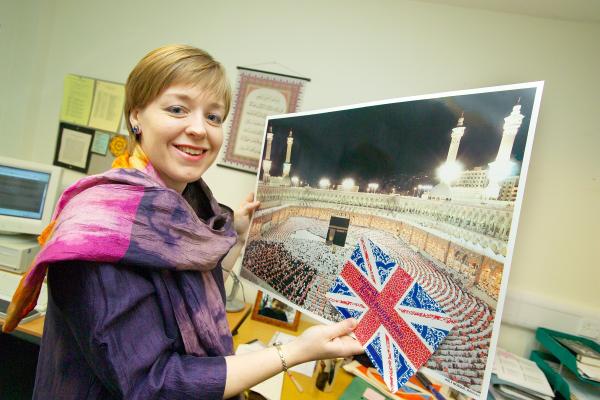
Sophie Gilliat-Ray Director Centre for the Study of Islam in the UK Cardiff University I want to pick up and develop here a theme introduced in my previous blog – the idea that students in the field of Islamic Studies – and indeed Theology and Religious Studies more broadly
Caleb Elfenbein Assistant Professor Grinnell College Last year, I began asking students in my Islam, gender, and sexuality course to write a paragraph about what they think it means to study these topics from a humanistic perspective. It’s the first thing they write for the course. This year (as with...
Andrea R. English’s Discontinuity in Learning re-links the work of Johann Friedrich Herbart with that of John Dewey. Dewey criticized Herbart’s work, causing, English argues, future critics to separate Dewey’s thought from its European predecessors (xx). English argues for continuity, that both thinkers want to identify and develop ways “for learners to recognize and respond to the other in judgments and actions” (104), through the experience of discontinuity. English’s excellent analysis of Herbart focuses on discontinuity, offering frameworks to analyze educational theories and practices that ignore discontinuity and reconnecting Anglo-American and Continental philosophies of education (xxiii-xxiv). I cannot do justice to this rich book here. I will focus on its main idea: education as discontinuity. English examines Herbart’s analysis of the educational possibilities in his contemporary’s (Kant’s) Categorical Imperative. To act so as not to treat others as things and as any other ethical person would act, one engages in moral choice. Herbart argues that educators can work with the experience of the discontinuous that emerges in encounter with the “other,” identifying where a learner already acts out of inner freedom (46) to move that learner to greater freedom, the capacity beyond “self-interested desires,” in recognition of and respect for the other (7). Discontinuity causes a pause (34) at the limits of one’s abilities and/or knowledge (xxii). This “in-between” (Dewey), “distance” (Herbart 16, 27), or “break” (English, 17) is a site of struggle (59) to transcend a limit. There, the learner can “identify and potentially change” her relation to the other (65). A teacher does not choose for the student, but designs an intellectual experience, to use Donald Finkel’s term, to scaffold the struggle (17), while, simultaneously, being open to improvisation on the design. Dewey agrees with Herbart: discontinuity is to “undergo or suffer the world” that upsets stable understandings (66), a starting-point for reflection (68). In learning, teacher and student struggle together in ongoing “critical self-relation.” For Dewey, the classroom is not just a site of moral struggle but of democratic action (89). Arriving at the social, as well as personal, “limits of thought and ability” (102), one learns, potentially, to choose for the good of all. Both the classroom and democratic society should support the deep learning that ensures freedom. For Dewey and Herbart, the goal of learning is right orientation to the other (105) through disorientation and reorientation, guided by the teacher who listens intently and generates dialogue, moving students to greater inner freedom and just action. The skilled teacher deploys “pedagogical tact” (50ff, 126ff.), discerning when to intervene in student learning and when to improvise (129) on the learning design. Neither teaching nor learning, therefore, can be determined as complete in outcomes and measured fully by evaluations. Nowadays we experience such “urgency” (55) about measures that we want to “predetermine” and “guarantee” learning (156). English argues, instead, for cherishing the discontinuous and valuing the improvisational space of the classroom in which teachers “acquaint the next generation” with their present world and prepare them for a “future yet to be discovered” (160).