Resources
This new book from the award-winning author of Psychology and Adult Learning puts the spotlight on the kind of learning that brings about significant personal change. Tennant explores the techniques, processes, and practices educators can use to promote learning that leads to change and examines assumptions about self and identity, how we are formed, and our capacity for change. Throughout the book, Tennant posits that individuals can be agents in their own self-formation and change by understanding and acting on the circumstances and forces that surround and shape them. Educators, he argues, must be open to different theoretical ideas and practices while simultaneously valuing these practices and viewing them with a critical eye. The book aims to: • promote, among educators and others with an educational dimension to their work, a more critical approach to their learning designs and practices; • equip individuals with a framework for understanding and being agents of their own self-formation and change.

Reverence is a forgotten virtue in teaching and learning. Indeed, it is a largely forgotten virtue in American society. This book argues that there is much more to teaching students than merely imparting knowledge. Good teaching involves forming character, molding destinies, creating an enduring passion for learning, appreciating beauty, caring for others, and much more. In some sense of the word, teaching is a spiritual, although not necessarily a religious, activity. When done well, it cultivates human intimacy and allows teachers to find creative self-expression in classroom community. The essays gathered here examine reverence as a way to understand some of the spiritual dimensions of classroom teaching. (From the Publisher)
A Critical Pedagogy of Embodied Education outlines the pedagogy of activism and the process of learning to become an activist. Based on empirical research conducted in Australia, it explores the embodied learning of activists as they learn to be and become activists. This book, unlike any current publication on social purpose education, explores the differences and similarities between two groups of activists: lifelong activists who have been engaged in campaigns and socials movements over many years - often a lifetime - and the learning of circumstantial activists, those protestors who come to activism due to a series of life events. The book uncovers through multiple case studies the embodied pedagogy of activists who gain knowledge through the practical experience of being in the world of activism. Their learning is often driven by emotional agency and is social, informal, and critically cognitive. Using critical pedagogy as a lens, the book not only expands our understanding of the epistemology of activism, but provides insight into adult education as an embodied practice. (From the Publisher)
The popularity of entertainment gaming over the last decades has led to the use of games for non-entertainment purposes in areas such as training and business support. The emergence of the serious games movement has capitalized on this interest in leisure gaming, with an increase in leisure game approaches in schools, colleges, universities and in professional training and continuing professional development. The movement raises many significant issues and challenges for us. How can gaming and simulation technologies be used to engage learners? How can games be used to motivate, deepen and accelerate learning? How can they be used to greatest effect in learning and teaching? The contributors explore these and many other questions that are vital to our understanding of the paradigm shift from conventional learning environments to learning in games and simulations. (From the Publisher)
New Directions for Teaching & Learning, Number 131 While issues of interpersonal boundaries between faculty and students is not new, more recent influences such as evolving technology and current generational differences have created a new set of dilemmas. How do we set appropriate expectations regarding e-mail response time in a twenty-four-hour, seven-day-a-week Internet-connected culture? How do we maintain our authority with a generation that views the syllabus as negotiable? Complex questions about power, positionality, connection, distance, and privacy underlie these decision points. This sourcebook provides an in-depth look at interpersonal boundaries between faculty and students, giving consideration to the deeper contextual factors and power dynamics that inform how we set, adjust, and maintain boundaries as educators. This is the 131st volume of this Jossey-Bass higher education series. New Directions for Teaching and Learning offers a comprehensive range of ideas and techniques for improving college teaching based on the experience of seasoned instructors and the latest findings of educational and psychological researchers. From the Publisher

This book provides comprehensive analyses of issues related to the struggle against the forces of imperial-induced privatization, not just in education, but in all of social life. It situates Critical Pedagogy in the twenty-first century and offers not only critiques but also practical applications, suggestions, and strategies on how attacks can be collectively resisted, challenged, and eradicated especially by those teaching in schools and universities. (From the Publisher)
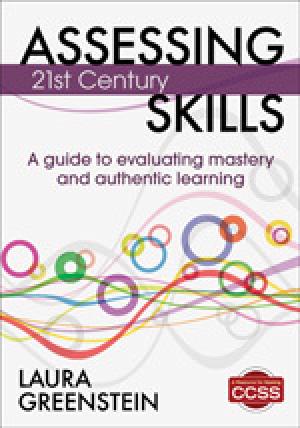
The Common Core State Standards clearly define the skills students need for success in college and the 21st century workplace. The question is, how can you measure student mastery of skills like creativity, problem solving, and use of technology? Laura Greenstein demonstrates how teachers can teach and assess 21st century skills using authentic learning experiences and rigorous, varied assessment strategies. Based on the best ideas of renowned experts in education, this book provides a framework and practical ideas for measuring • Thinking skills: critical thinking, problem solving, creativity, and metacognition • Actions: communication, collaboration, digital and technological literacy • Living skills: citizenship, global understanding, leadership, college and career readiness Included are numerous rubrics and checklists, a step-by-step model for developing your own classroom assessments, a lesson planning template, and sample completed lesson plans. Assessing 21st Century Skills gives you the tools and strategies you need to prepare students to succeed in a rapidly changing world. (From the Publisher)
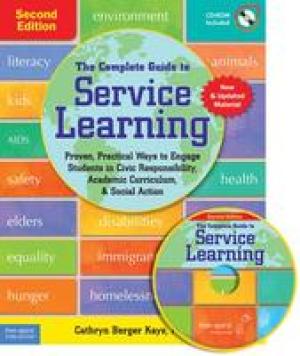
The Complete Guide to Service Learning is the go-to resource in the fast-growing field of service learning. It is an award-winning treasury of service activities, community service project ideas, quotes, reflections, and resources that can help teachers and youth workers engage young hearts and minds in reaching out and giving back. Author, and internationally known service learning expert, Cathryn Berger Kaye presents service learning—its importance, steps, essential elements, and challenges—within a curricular context and organized by theme. This new revised and updated second edition maintains the easy-to-use format of the original and is enhanced to reflect the most up-to-date information on service learning programs and pedagogy. Benefits include: • A blueprint for service learning, from getting started to assessing the experience • Integration of K–12 service learning standards new! • Inspiring quotations, background information and resources, preparation activities, real-life examples and community service project ideas that have worked for other teachers • 13 thematic chapters (including 2 new themes) covering topics commonly selected for service learning projects: • AIDS Education and Awareness • Animal Protection and Care • Elders • Emergency Readiness new! • The Environment • Gardening • Healthy Lives, Healthy Choices new! • Hunger, Homelessness, and Poverty • Immigrants • Literacy • Safe and Strong Communities • Social Change: Issues and Action • Special Needs and Disabilities • Hundreds of real-life field-tested service learning projects, including dozens of new projects • Ideas for fortifying service learning programs by incorporating global literacy and creating a culture of service new! • A CD-ROM with over 200 pages of forms and bonus materials including: • All of the planning and tracking forms from the book, many customizable  • 39 sample planning templates for all service learning themes at each grade level • 10 original essays written by experts in the field • More than 300 additional book recommendations • 22 author interviews, including new interviews with authors Laurie David, Allan Stratton, Cynthia Lord, Jordan Sonnenblick, Tony Johnston, Kathe Koja, Danica Novgorodoff, Dana Reinhardt, Janet Tashjian, Deborah Ellis, Sonia Levitin, Ellen Senisi, and more! “Bookshelf” sections describe hundreds of books that offer teachable moments about community service, responsibility, caring, and helping, as well as ways to encourage discussion and make the lesson last. Each of the more than 300 annotated book listings helps combine literature and service learning. (From the Publisher)
We live in a time of unprecedented planetary ecocrisis, one that poses the serious and ongoing threat of mass extinction. What role can critical pedagogy play in the face of such burgeoning catastrophe? Drawing upon a range of theoretical influences - including Paulo Freire, Ivan Illich, Herbert Marcuse, traditional ecological knowledge, and the cognitive praxis produced by today's grassroots activists in the alter-globalization, animal and earth liberation, and other radical social movements - this book offers the foundations of a philosophy of ecopedagogy for the global north. In so doing, it poses challenges to today's dominant ecoliteracy paradigms and programs, such as education for sustainable development, while theorizing the needed reconstruction of critical pedagogy itself in light of our presently disastrous ecological conditions. Students and teachers of critical pedagogy at all levels, as well as those involved in environmental studies and various forms of sustainability education, will find this book a powerful provocation to adjust their thinking and practice to better align with those who seek to abolish forms of culture predicated upon planetary extermination and the domination of nature. (From the Publisher)

This book presents the research-based case that Learner Centered Teaching (LCT) offers the best means to optimize student learning in college, and offers examples and ideas for putting it into practice, as well the underlying rationale. It also starts from the premise that many faculty are much closer to being learner centered teachers than they think, but don’t have the full conceptual understanding of the process to achieve its full impact. There is sometimes a gap between what we would like to achieve in our teaching and the knowledge and strategies needed to make it happen. LCT keeps all of the good features of a teacher-centered approach and applies them in ways that are in better harmony with how our brains learn. It, for instance, embraces the teacher as expert as well as the appropriate use of lecture, while also offering new, effective ways to replace practices that don’t optimizing student learning. Neuroscience, biology and cognitive science research have made it clear that it is the one who does the work who does the learning. Many faculty do too much of the work for their students, which results in diminished student learning. To enable faculty to navigate this shift, Terry Doyle presents an LCT-based approach to course design that draws on current brain research on cognition and learning; on addressing the affective concerns of students; on proven approaches to improve student’s comprehension and recall; on transitioning from “teller of knowledge” to a “facilitator of learning”; on the design of authentic assessment strategies – such as engaging students in learning experiences that model the real world work they will be asked to do when they graduate; and on successful communication techniques. The presentation is informed by the questions and concerns raised by faculty from over sixty colleges with whom Terry Doyle has worked; and on the response from an equal number of regional, national and international conferences at which he has presented on topics related to LCT. (From the Publisher)
Wabash Center Staff Contact
Sarah Farmer, Ph.D.
Associate Director
Wabash Center
farmers@wabash.edu