Resources
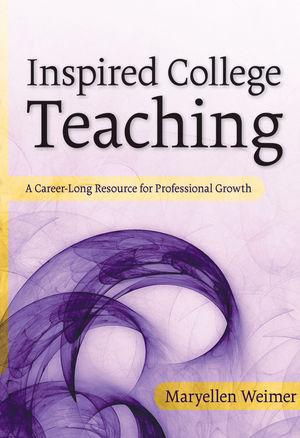
Inspired College Teaching challenges faculty to be responsible for their professional growth and development as an ongoing, career-long quest. Written by an experienced college teacher and editor of The Teaching Professor newsletter, this book explores the journey and growth of college teachers. It provides goals best positioned for beginning, mid-career, and senior faculty as well as activities faculty can use to ignite intellectual curiosity from both students and themselves. This book presents a way for faculty members to obtain and sustain teaching excellence throughout their career. (From the Publisher)
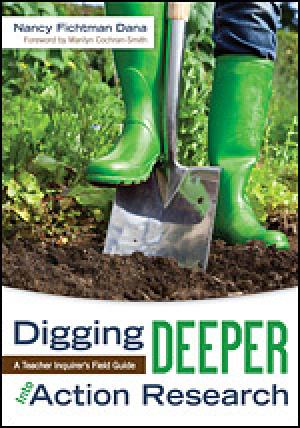
Click Here for Book Review Abstract: Take your great idea to the next level with action research How—and when—can we find time to conduct meaningful action research? Great ideas and thought-provoking questions can only blossom through methodical inquiry. Nancy Fichtman Dana steps in as your action-research coach and leads you on a journey through wonderings to real change in your classroom. From framing your question to presenting your research, this guide will encourage, challenge, and ultimately lead you through the action research process. Teachers, students, and action-research coaches alike will learn how to: • Reframe initial wonderings into pointed inquiries • Creatively analyze both qualitative and quantitative data • Draw action-research topics out of ordinary discussions with colleagues • Share findings with others to help them improve as well With real-life vignettes, self-guided worksheets, and an included DVD, Digging Deeper into Action Research is your go-to guide each time you embark on a new journey toward professional growth. (From the Publisher)
Twitter offers an engaging way to introduce students to reader-oriented interpretation of the Bible. The exercise described here introduces students to the idea that the reader has a role in the production of a text's meaning, which thus varies from reader to reader. Twitter enables us to capture the real-time thoughts of a variety of respondents to the text of Mark as it is read aloud. Students can concretely observe the effects of particular textual moments on individual respondents as well as analyze their general interpretive stances with regard to the text as a whole. Students come to grasp that the meaning of the text varies depending on the reader, setting the stage for more complex theoretical discussion of reader-response theory, the reader's role in the production of meaning, the adjudication of “allowed” and “disallowed” interpretations, and the appropriateness of “reader-response” criticisms for texts that were composed to be encountered orally.
Scholars have identified the many stories in the Bible that are oppressive to women or other minoritized groups. It is remarkable how common it is that North American undergraduate students remain blind to the oppression that is depicted and that is too often the result of commonly accepted interpretations of these texts. Three brief essays collected here, originally presented as part of a panel at the Society of Biblical Literature annual meeting (Atlanta, 2010), present various teaching strategies for exposing the oppressive elements in the biblical text and showing how the oppression operates (an aspect of ideological criticism). What are good strategies for communicating these hard points to students in a way they can hear them and work with them? Why is this important to do?
The three short essays collected in this manuscript respond to Patricia O'Connell Killen and Eugene V. Gallagher's “Sketching the Contours in the Scholarship of Teaching and Learning in Theology and Religion,” published in issue 16, no. 2 of this journal (2013). See additional responses by Charles R. Foster, Stephen Brookfield, and Pat Hutchings published in Teaching Theology and Religion
One page Teaching Tactic: students apply earlier material to assess current reading assignment.
In this article I propose a method of selecting and assigning readings in the religious studies or theology classroom, such that these readings complicate one another, rather than standing in opposition or as simple alternatives. Such a strategy emulates key pedagogical insights of twelfth-century sentence collection, an activity at the very heart of the earliest universities in Europe. It also draws support from the theories of intellectual development advanced by William G. Perry, Jr. and the Women's Ways of Knowing Collaborative. Both precedents suggest a principle of “complicating views” that can be flexibly employed in a variety of ways and diverse pedagogical contexts, as illustrated by examples from several classes. Such strategies aim to avoid reinforcing intellectual patterns of dualism or undifferentiated relativism; instead, they attempt to promote students' ability to integrate discordant voices and to appreciate diverse points of view, while also staking their own claims relative to them.
One page Teaching Tactic: students work in groups to reflect on the learning goals of the course.
Mentoring is an important but often overlooked resource in theological education and students' academic and spiritual formation. This essay profiles the mentoring practices and postures of the writing tutor and the spiritual director as exemplars of academic and spiritual mentoring. An extended probe of this analogy affirms the integration of academic and spiritual formation as a core value in theological education; identifies mentoring in theological education as a hidden treasure fostering this integration and warranting attention as a theological practice; and re-envisions the theological practice of mentoring under the traditional rubric of the “care of souls,” embracing the relational, educational, formational, spiritual, and rhetorical dimensions of this practice.
Journal Issue.
Wabash Center Staff Contact
Sarah Farmer, Ph.D.
Associate Director
Wabash Center
farmers@wabash.edu