Resources
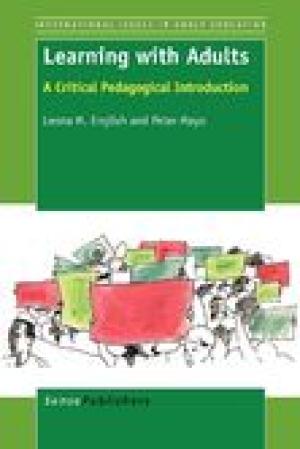
This book is written at a time when our own field of adult education is under assault from a variety of capitalist and neoconservative forces pressuring us... to turn away from the causes of criticality, lifelong learning, and education for freedom. Rather than succumb to these pressures, we have hope that our long term goals of education for life and living can and will be accomplished alongside professional and vocational education. This book offers new insight into what is a very dark moment of our human civilization. From the preface by Dr Carlos Alberto Torres, Professor, GSEIS, Director, Paulo Freire Institute, University of California at Los Angeles The book offers decidedly critical and international perspectives on various aspects of adult education, especially on state, citizenship and neoliberal policies. Critical in both content and method, it is at the same time the part of the collective work needed to advance the Belém call to action by furthering awareness and capacity in the field of adult education. Dr Katarina Popovic, Professor,Universität Duisburg-Essen, University of Belgrade & DBB International, In the midst of diminishing resources and growing inequalities, English and Mayo provide an incisive and much needed critique of adult education in ways that highlight not only its historical and philosophical roots but also its major significance to the practice of democracy. In a direct challenge to the neoliberal accountability craze, Learning with Adults offers a rigorous political reading of the field—one that systematically challenges oppressive educational policies and practices, while affirming an emancipatory vision of civic engagement. Truly an informative treatise that sheds new light on the education of adults. Dr Antonia Darder Professor & Leavey Presidential Endowed Chair in Education Loyola Marymount University Los Angeles Leona English and Peter Mayo challenge hegemonic assumptions and ideas, while offering a constructive alternative based on the principle of working with learners and not just for them. Their analysis is accessible enough for newcomers to the field, while the authors’ wide-ranging coverage and radical approach provide refreshing and challenging messages for the most experienced adult educator. Up-to-date, genuinely international and passionately committed, Learning with Adults is a great book. (From the Publisher)
Streamlined ID: A Practical Guide to Instructional Design presents a focused and generalizable approach to instructional design and development – one that addresses the needs of ID novices, as well as practitioners in a variety of career environments. Emphasizing the essentials and "big ideas" of ID, Streamlined ID presents a new perspective – one that aims to produce instruction that is sustainable, optimized, appropriately redundant, and targeted at continuous improvement. The book features an enhanced version of the classic ADDIE model (Analysis, Design, Development, Implementation, and Evaluation) that emphasizes the iterative nature of design and the role of evaluation throughout the design/development process. It clearly lays out a systematic approach that emphasizes the use of research-based theories, while acknowledging the need to customize the process to address a variety of pedagogical approaches: Instructivist, Constructivist, and Connectivist. The book opens with an overview of the basics of ID and each subsequent chapter describes major activities in the ID process with step-by-step instructions and tips for streamlining the process. Numerous job aids serve to maximize the efficiency and effectiveness of your design efforts. Each chapter highlights key concepts and provides additional exercises and assignments based on the work of Benjamin Bloom. Streamlined ID is an ideal reference guide for optimizing professional practice. (From the Publisher)

Click Here for Book Review Abstract: Practice, praxis, traineeship, internship, or practicum - these are all names for the specific arrangements where students from universities engage in real life experiences; in arrangements where they leave the secure tranquility of the university and enter into the chaotic world of work. Practicum is a very good way of learning, and it can be very interesting for all parties involved. The students appreciate it, even if it is cumbersome, frustrating, and requires a lot of work - work that is different from what they know in their previous encounters with the education system. This book asks a simple question in relation to practicum, paraphrasing Tom Paxton's song: What Did You Learn in the Real World Today? The question is asked without the irony of Paxton's original one, in order to find out what is learned in the practicum. The chapters in this book shed some light on this simple question. The question is confronted from philosophical and pedagogical perspectives, while investigating a number of cases of students' learning experiences in the real world. (From the Publisher)
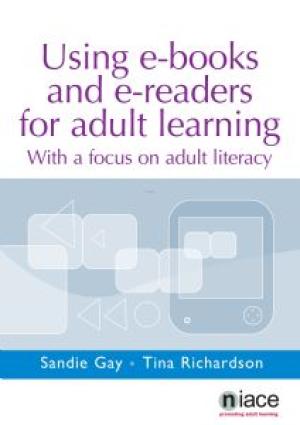
Click Here for Book Review Abstract: With e-books increasingly becoming an everyday and high-profile technology, how can they be used most effectively to help develop literacy skills, cultivate a love of reading, provide greater accessibility to texts for all, and offer portable access to a vast range of resources? Specifically written with the adult education sector in mind, this invaluable and straightforward guide will take the reader through the advantages and effective features that e-books have to offer. The text covers the necessities in e-book technologies: how to take advantage of the features that e-books offer adult learners * the options available, including dedicated e-readers, tablets, and smartphones * the costs * technical and management issues * real-world case studies of current uses and experiences in adult learning settings * current research and projects * pointers on the innovative uses of e-book technologies. The book also includes a chapter on useful links. It is a timely, original, and practical guide to a popular and increasingly accessible technology, with a specific focus on applications to adult learning. (From the Publisher.)
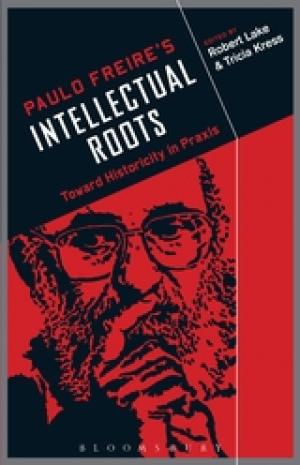
Click Here for Book Review Abstract: Paulo Freire's critical pedagogy has had a profound influence on contemporary progressive educators around the globe as they endeavor to rethink education for liberation and the creation of more humane global society. For Freire, maintaining a sense of historicity, that is, the origins from which our thinking and practice emerges, is essential to understanding and practicing education as a means for liberation. Too often, however, critical pedagogy is presented as a monolithic philosophy, and the historical and intellectual roots of critical pedagogy are submerged. Through a compilation of essays written by leading and emerging scholars of critical pedagogy, this text brings history into the present and keeps Paulo's intellectual roots alive in all of us as we develop our praxis today. (From the Publisher)
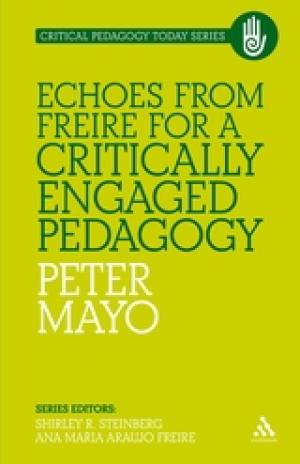
Click Here for Book Review Abstract: In this concise and accessible text, Peter Mayo outlines some of the major concepts in Freire's praxis. In pursuit of a critically engaging pedagogy, Mayo compares Freire's work with a range of other thinkers and educators, including Lorenzo Milani, Antonia Darder, John Dewey, Margaret Ledwith, Antonio Gramsci, and Henry Giroux. Chapters in the book include discussions of the State's role in education - specifically higher education; a critical analysis of the dominant discourse in education centering on 'competences' and the type of slant this discourse takes; a study of adult education through a Freirean lens; an historical view of Nicaragua's Freire-inspired literacy and popular education campaigns of 1980; a fresh perspective on the role of social movements in the contexts of social transformation; a new analysis of the relevance of Freirean concepts for transformative research, and an exploration of educators as intellectuals and social actors. The result is a compelling study of how Paulo Freire's writings continue to resonate around the world, and of how we must continue to apply and interpret them anew. (From the Publisher)

Click Here for Book Review Abstract: This provocative book's starting point is a deep and profound concern about the commodification of knowledge within the contemporary university. Acts of Knowing aims to provide readers with a means of understanding the issues from the perspective of Critical Pedagogy; an educational philosophy which believes that 'knowing' must be freed from the constraints of the financial and managerialist logics which dominate the contemporary university. Critical Pedagogy is important for three key reasons: it conceptualises pedagogy as a process of engagement between the teacher and taught; secondly that that engagement is based on an underlying humanistic view about human worth and value; and thirdly that the 'knowing' which can come out of this engagement needs to be understood essentially as exchange between people, rather than a financial exchange. Cowden and Singh argue that the conception of education as simply a means for securing economic returns for the individual and for the society's positioning in a global marketplace, represents a fundamentally impoverished conception of education, which impoverishes not just individuals, but society as a whole. (From the Publisher)
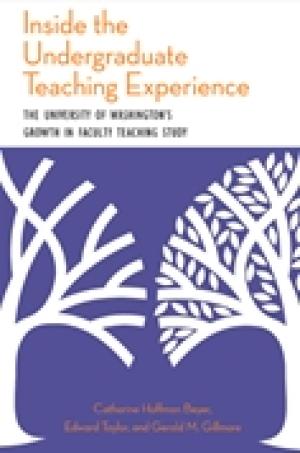
Click Here for Book Review Abstract: Shows what kind of changes college faculty make to their teaching and why they make them. The image of college faculty members as abstracted, white-haired, tweed-jacketed professors, mumbling lectures from notes that were yellowed by twenty years of repeated use is still pervasive. In this view, college faculty care only about their research and have little connection to the students sitting passively in front of them. Inside the Undergraduate Teaching Experience directly challenges this view of today’s college faculty and serves as a guide for graduate students and new faculty who seek ways—both personal and pedagogical—to become more effective teachers. Inside the Undergraduate Teaching Experience reports the results of the University of Washington’s Growth in Faculty Teaching Study (UW GIFTS), which sought to find out whether or not faculty ever change what they do in the classroom, even when there is little external pressure for them to do so. Key findings in the study were that all courses that faculty members taught were deeply embedded in their academic disciplines, even freshman-level classes; that content and critical thinking as goals for learning could not be separated; that faculty members were making changes to their teaching continuously; that such changes were motivated by the faculty member’s intentional assessment of the learning needs of her particular classes; and that most changes were aimed at helping students meet faculty members’ goals for learning. (From the Publisher)
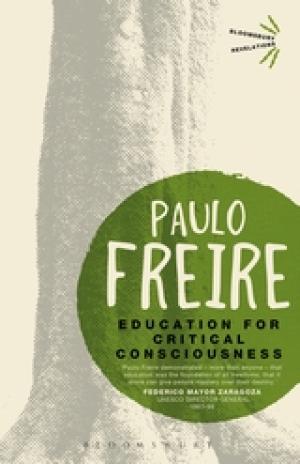
Famous for his advocacy of 'critical pedagogy', Paulo Freire was Latin America's foremost educationalist, a thinker and writer whose work and ideas continue to exert enormous influence in education throughout the world today. Education for Critical Consciousness is the main statement of Freire's revolutionary method of education. It takes the life situation of the learner as its starting point and the raising of consciousness and the overcoming of obstacles as its goals. For Freire, man's striving for his own humanity requires the changing of structures which dehumanize both the oppressor and the oppressed. Famous for his advocacy of 'critical pedagogy', Paulo Freire was Latin America's foremost educationalist, a thinker and writer whose work and ideas continue to exert enormous influence in education throughout the world today. Education for Critical Consciousness is the main statement of Freire's revolutionary method of education. It takes the life situation of the learner as its starting point and the raising of consciousness and the overcoming of obstacles as its goals. For Freire, man's striving for his own humanity requires the changing of structures which dehumanize both the oppressor and the oppressed. (From the Publisher)

Journal Issue.
Wabash Center Staff Contact
Sarah Farmer, Ph.D.
Associate Director
Wabash Center
farmers@wabash.edu