Resources
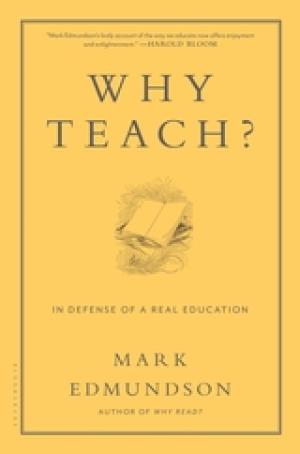
Click Here for Book Review Abstract: Mark Edmundson's essays reclaim college not as the province of high-priced tuition, career training, and interactive online courses, but as the place where serious people go to broaden their minds and learn to live the rest of their lives. A renowned professor of English at the University of Virginia, Edmundson has felt firsthand the pressure on colleges to churn out a productive, high-caliber workforce for the future. Yet in these essays, many of which have run in places such as Harper's and the New York Times, he reminds us that there is more to education than greater productivity. With prose exacting yet expansive, tough-minded yet optimistic, Edmundson argues forcefully that the liberal arts are more important today than ever. Why Teach? offers Edmundson's collected writings on the subject, including several pieces that are new and previously unpublished. What they show, collectively, is that higher learning is not some staid, old notion but a necessary remedy for our troubled times. Why Teach? is brimming with the wisdom and inspiration that make learning possible. (From the Publisher)
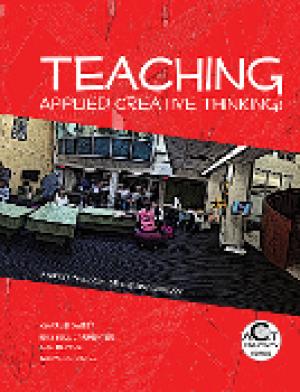
Click Here for Book Review Abstract: The authors of Teaching Applied Creative Thinking: A New Pedagogy for the 21st Century believe this book to be the first in the field about teaching creative thinking in the new millennium. While many books talk about creativity and provide the justification for adding creative thinking as a student learning outcome, this book focuses on applying creativity to the teaching and learning process. The authors ask, “does anyone truly believe the world’s problems are going to be solved by students with only a high proficiency in common core competencies?” With student learning outcomes as a goal, we must rethink teaching and learning to include creativity. Posed for the 21st-Century learner, their new paradigm, Mentor-from-the-Middle, replicates scholarly inquiry by developing a scholarly frame of mind. The teacher assumes new roles in this paradigm of scholar, mentor, facilitator, coach, model, and critical reflector. These roles in turn combine to help transform the learner into an active creative thinker. "The authors’ goals in writing this book are to fill a void, to transform teaching, to create a new model, and to develop a new approach to teaching and learning. In the old world, before the coming of Google, the transfer of knowledge was the work of the teacher; now knowledge is available at the tip of our fingers. But the Google cannot solve the world’s problems. We will always need great teachers to transform and synthesize knowledge into skills, to teach creative thinking, to apply learning, and to create a love for learning that lasts a lifetime. The authors discuss new brain research, advanced technologies, the teaching environment, and pedagogy. They synthesize this knowledge in a wonderful way to encourage the reader to think deeply about how this research might affect the teacher and the learner. (From the Publisher)
Kalwant Bhopal and Patrick Danaher examine 'race', identity and gender within education and explore the difficulties of relating these concepts to the experience of students in higher education. In drawing together the experience of local and international students in the UK and in Australia, they examine the ways identities are understood and conceptualized within higher education in local contexts and on a global level. They consider the complexity of 'race', gender and identity in relation to education within the context that education continues to be dominated by predominantly white, middle class values and perspectives. Identity and Pedagogy in Higher Education examines the extent to which education as a vehicle for change in the light of the controversial debates surrounding race and gender inequalities. (From the Publisher)
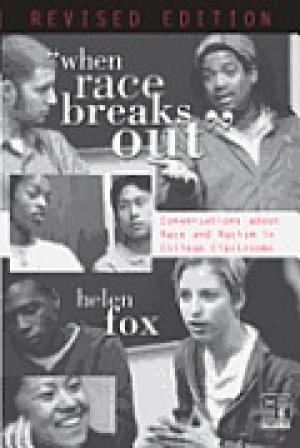
When Race Breaks Out is a guide for instructors who want to promote more honest and informed conversations about race and racism. Based on the author's personal practice and interviews with students and faculty from a variety of disciplines, this book combines personal memoirs, advice, teaching ideas, and lively stories from college classrooms. A unique ¬´ insider's guide to the main ideas, definitions, and opinions about race helps instructors answer students' questions and anticipate their reactions, both to the material and to each other. An annotated bibliography of over 150 articles, books, and videos with recommendations for classroom use is also included. (From the Publisher)
This study replicated and extended Wanzer et al.'s (2006) typology of appropriate and inappropriate teacher humor and advanced explanations for student interpretations of teacher humor. Three explanations were advanced for why teacher humor may be perceived as inappropriate by students. First, disposition and incongruity-resolution theories were used to explain the cognitive and affective elements of teacher humor, second, student communication predispositions were advanced as an explanation, and the third explanation was teacher communication predispositions. ..PAT.-Unpublished Manuscript
Abstract In several enigmatic passages, Paulo Freire describes the pedagogy of the oppressed as a ‘pedagogy of laughter’.The inclusion of laughter alongside problem-posing dialogue might strike some as ambiguous, considering that the global exploitation of the poor is no laughing matter. And yet, laughter seems to be an important aspect of the pedagogy of the oppressed. In this paper, I examine the role of laughter in Freire’s critical pedagogy through a series of questions: Are all forms of laughter equally emancipatory? Certainly a revolutionary pedagogue can laugh, but should he or she, and what are the political (if not revolutionary) implications of this laughter? In order to shed new light on Freire’s fleeting yet provocative comments, I turn to Jacques Rancière for his emphasis on the aesthetics of politics, and PauloVirno who connects joke telling with critical theory. Overall, I argue that we need to take Freire’s gesture toward a pedagogy of laughter seriously in order to understand the aesthetics of critical pedagogy and the fundamental need for a redistribution of the sensible that underlies educational relations between masters and pupils.
Several studies have examined the pedagogical implications and cautions concerning the use of humor in teaching. Humor has been associated with a host of positive physiological and psychological effects. Researchers have identified that educators who use humor in their instruction are more positively rated by their peers and their students; others have suggested that humor may enhance learning. Although much of this evidence has been anecdotal, the present study assesses the impact of curriculum-specific humor on retention and recall, as well as student evaluations of the course and the instructor. The appropriate use of humor in a classroom setting is discussed and cautions against tendentious humor are addressed.
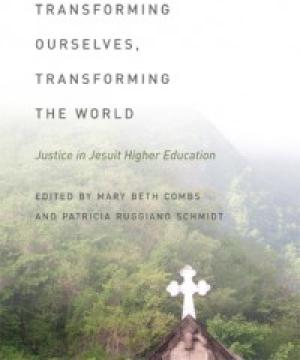
Click Here for Book Review Abstract: Transforming Ourselves, Transforming the World is an insightful collection that articulates how Jesuit colleges and universities create an educational community energized to transform the lives of its students, faculty, and administrators and to equip them to transform a broken world. The essays are rooted in Pedro Arrupe’s ideal of forming men and women for others and inspired by Peter-Hans Kolvenbach’s October 2000 address at Santa Clara in which he identified three areas where the promotion of justice may be manifested in our institutions: formation and learning, research and teaching, and our way of proceeding. Using the three areas laid out in Fr. Kolvenbach’s address as its organizing structure, this stimulating volume addresses the following challenges: How do we promote student life experiences and service? How does interdisciplinary collaborative research promote teaching and reflection? How do our institutions exemplify justice in their daily practices? Introductory pieces by internationally acclaimed authors such as Rev. Dean Brackley, S.J.; David J. O’Brien; Lisa Sowle Cahill; and Rev. Stephen A. Privett, S.J., pave the way for a range of smart and highly creative essays that illustrate and honor the scholarship, teaching, and service that have developed out of a commitment to the ideals of Jesuit higher education. The topics covered span disciplines and fields from the arts to engineering, from nursing to political science and law. The essays offer numerous examples of engaged pedagogy, which as Rev. Brackley points out fits squarely with Jesuit pedagogy: insertion programs, community-based learning, study abroad, internships, clinical placements, and other forms of interacting with the poor and with cultures other than our own. This book not only illustrates the dynamic growth of Jesuit education but critically identifies key challenges for educators, such as: How can we better address issues of race in our teaching and learning? Are we educating in nonviolence? How can we make the college or university “greener”? How can we evoke a desire for the faith that does justice? Transforming Ourselves, Transforming the World is an indispensable volume that has the potential to act as an academic facilitator for the promotion of justice within not only Jesuit schools but all schools of higher education. (From the Publisher)
Wabash Center Staff Contact
Sarah Farmer, Ph.D.
Associate Director
Wabash Center
farmers@wabash.edu