Home » Resources » Scholarship on Teaching » Knowledge, Pedagogy, and Postmulticulturalism: Shifting the Locus of Learning in Urban Teacher Education
Scholarship
March 29, 2017
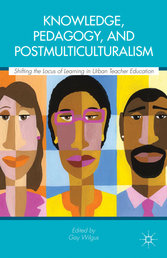
Knowledge, Pedagogy, and Postmulticulturalism: Shifting the Locus of Learning in Urban Teacher Education
- Author
- Wilgus, Gay, ed.
- Publisher
- Palgrave Macmillan, New York
- ISBN
- 9781137275899
- Table of Contents
-
Preface
Introduction
ch. 1 Discovering Inquiry-based Learning Through Oral History Projects (Megan Blumenreich)
ch. 2 'I'm not just gonna settle for anything:' Inciting Teacher Efficacy through Critical Pedagogies (Vicki Garavuso)
ch. 3. Intertextuality, Music and Critical Pedagogy (Charles Malone)
ch. 4. Transforming Classrooms: Teacher Education, Social Studies (Catherine Franklin)
ch. 5. Incorporating Teacher Candidates' Prior Beliefs and Funds of Knowledge in Theories of Child Development (Amita Gupta)
ch. 6. Prioritizing the Social in Academic Writing: The Experiences of Ethnically, Linguistically and Generationally Diverse Early Childhood Teacher Candidates (Gay Wilgus)
ch. 7. Special Education Teacher Preparation: Growing Disability Studies in the Absence of Resistance (Linda Ware)
ch. 8. Postmulticulturalism: Cultivating Alternative Canons, a Critical Vernacular and Student-Generated Understandings of their 'Lived-Situatedness' (Gay Wilgus)
Appendix A: Writing Background Survey Appendix B: Interview Questions
Knowledge, Pedagogy, and Postmulticulturalism opens for examination the research and experimental pedagogies of a teacher education faculty at a large, urban, public university, where teacher candidates from working-class and ethnic and linguistic minority backgrounds are prepared to work with learners from similar backgrounds. The pedagogies discussed have been expressly designed to elicit the funds of knowledge and community cultural wealth of these teacher education candidates. The research in this volume calls attention to the distinctive, complex perspectives that individuals from historically marginalized groups bring to the university classroom, and demonstrates how these valuable perspectives can be brought front and center in the university's teacher education curriculum. It counters contemporary trends of discouraging and preventing students and teachers from critically and intellectually engaging with issues of which knowledges are taught, and how. (From the Publisher)