Resources
Ten years ago, Mary Belenky, Blythe Clinchy, Nancy Goldberger, and Jill Tarule wrote Women's Ways of Knowing, a book The New York Times Book Review called "a framework for future research on women, knowledge, and identity." In the decade that followed, their theory of women's psychology, development, and ways of knowing has been applied in several fields, from the social sciences to the humanities, women's studies, education, psychology, and law. But even as it was embraced by readers, Women's Ways of Knowing also became the center of a fierce debate within academic circles. Now, in 14 illuminating new essays, the original authors and invited contributors explore how the theory introduced in Women's Ways of Knowing has developed and shifted over the years and how it has been received, applied, used, and abused. The authors, and others, respond to critics of the original theory. The essays also expand the original argument beyond gender and knowing to address the complicating factors of race, class, and culture. (From the Publisher)
Like its preceding editions, this fourth edition of Race, Class, and Gender in the United States: An Integrated Study undertakes a study of race, gender, and sexuality within the context of class. With 28 new readings and 5 revised readings, this edition also contains an entirely new section entitled "'Us' and 'Them': Becoming an American." This section examines the ways in which the concept of "citizen" has been constructed in the United States over time and studies the role that issues of race, class, and gender have played in determining who is included inand excluded from - this category. (From the Publisher)
Adult educators are increasingly faced with the task of creating and facilitating learning activities for participants from diverse backgrounds. They need to take into account the needs of both male and female learners, learners of different ethnic and racial groups, and learners from different social backgrounds in creating an inclusive adult learning environment. The developing body of literature on multicultural concerns in adult education, on feminist theory and on critical and feminist pedagogies offer some insights in this regard. This publication aims to: (1) synthesise some of the work related to inclusivity and diversity that has already been done in the field of adult education; and (2) examine aspects of the wider literature base on multicultural education and feminist theory and pedagogy that can offer insights specifically for creating inclusive adult learning environments. (From the Publisher)
There appears to be a significant gap between faculty expectations for incoming college students and these same students perceptions of their abilities. Incoming college students are not very confident of their critical thinking abilities, yet faculty expect students to enter college already being able to critically evaluate information and to reach conclusions based on a critical analysis of the data. The current study challenges the preconception that critical thinking cannot be taught and delineates a model for critical thinking that can be employed regardless of one’s discipline. Outcome data strongly suggests critical thinking can lead to both proximal and distal increases in student success.
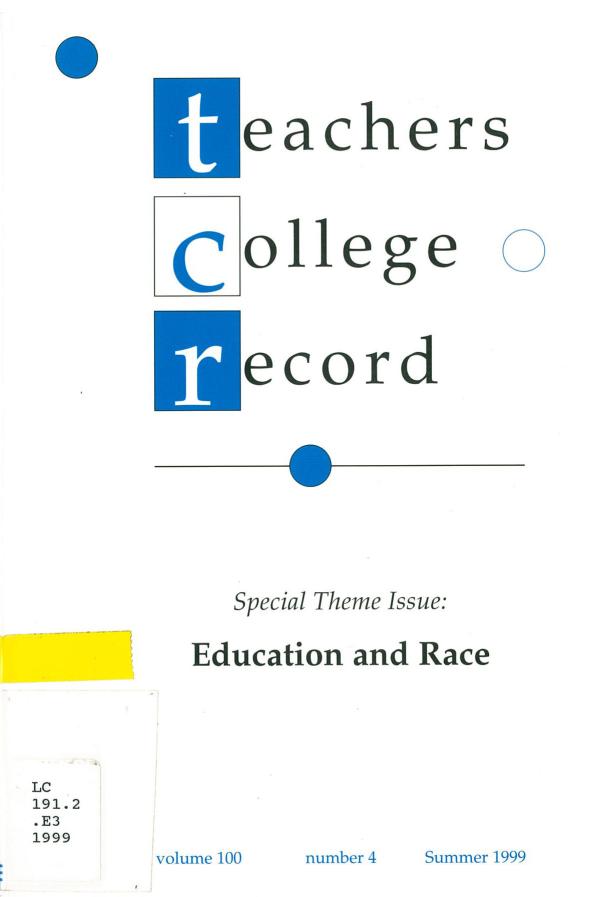
Journal Issue.
Reports on the challenges of United States accredited schools of Christian theology in teaching master's-level students with little or no preparation, either academically or personally. Theological ignorance of many incoming students; Poor undergraduate training; Remediation efforts done by seminaries.