Resources
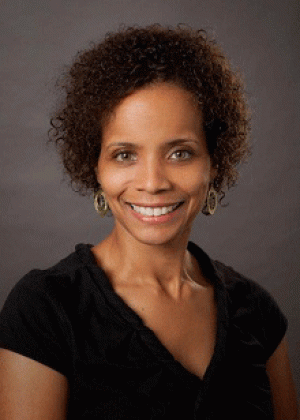
Leah Gunning Francis, Ph.D. Associate Dean for Contextual Education and Assistant Professor of Christian Education Eden Theological Seminary Now I get it. For the past three months, I couldn’t figure out why a jury would believe that an 18 year old unarmed man would charge – head first – toward a police officer who is shooting at him. Soon after Michael Brown was killed on August 9, several local officials intimated that Brown was charging at Officer Darren Wilson and left no other recourse but to kill him. Why would a person with no history of mental illness or of
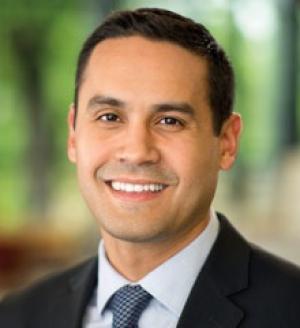
Eric Barreto, Kate Blanchard and Roger Nam I’ve started wondering recently if scholarship boils down to the courage to say something aloud, the courage to say something in the midst of a chorus full of others saying similar or different things. This same description could well be applied to...
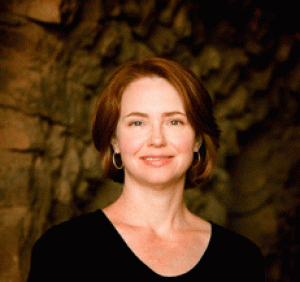
Miriam Y. Perkins, Ph.D. Associate Professor of Theology and Society Emmanuel Christian Seminary When Michael Brown was shot and killed in Ferguson, Missouri, I was reading the sermons of Martin Luther King, Jr.[1] “The tension in this city is not between white people and Negro people. The tension is at bottom between justice and injustice, between the forces of light and the forces of darkness.” “… noncooperation and boycotts are not ends themselves; they are merely means to awaken a sense of moral shame in the opponent. The end is redemption and reconciliation.” “Noncooperation with evil is as much a
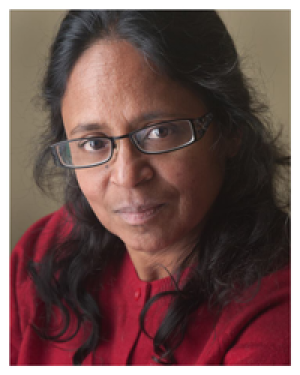
Dr. Himanee Gupta-Carlson Assistant Professor SUNY Empire State College Three stories capture my take on how race matters. Story #1 opens in a grocery parking lot. I park my car and open the door. Trying to remember what I need to buy, I do not notice the pick-up truck beside me as I step out. Then, I hear a male voice bellowing at me to close my door and stop ruining his truck. Hurriedly, I close the door. I apologize and check his vehicle for damages. The man shouts a little louder, glares at me, and revs up his engine...
Roger Nam Last week, 640,621 high school seniors took the Korean university entrance exam, officially translated into English as the “Collegiate Scholastic Ability Test.” Let me give you a little insight into the life of a high school senior in South Korea.
Maureen H. O'Connell, Ph.D. Associate Professor of Theology & Chair of Department of Religion LaSalle University If there is one thing I’ve learned from my 20 students in a new course, “Religion and Racism in America” this semester it’s this: how we go about engaging racism in the classroom may be just as important, if not more, than what sources we use to do so. 1. Racism is not an intellectual reality, but an experiential one. Critical race theorist George Yancy is right (not that I ever doubted him!). Racism is an embodied experience and not simply a sociological phenomenon, no...
Kate Blanchard I recently found myself on a Friday night amid a group of twenty-somethings, mostly women, who were celebrating their periods. Yes, you read that correctly. The students of the women’s resource center on campus decided to host a “menarche party” in honor of their monthly bleeding. They wore...
Jocelyn McWhirter, Ph.D. Associate Professor of Religious Studies Albion College The time: November 9–10, 1938. The place: Germany. The casualties: More than 7,000 Jewish shops along with 1,574 synagogues damaged or destroyed. One hundred Jews murdered; 30,000 imprisoned in concentration camps. They were the first victims of a racial purge that went on to claim more than 6 million lives. Now, 76 years after Kristallnacht, I am preparing to lead the Holocaust Studies Service-Learning Project (HSSLP). The HSSLP was founded in 1999 by students in a first-year seminar on the Holocaust. They wanted to take their learning out of the..
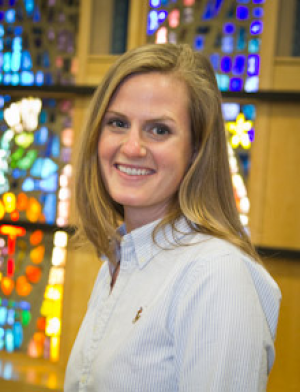
Mara Brecht, Ph.D. Assistant Professor of Theology St. Norbert College Teaching race is a boulder. And up the mountain I push it. When I teach race, I feel like Sisyphus because I never seem to get anywhere. The questions repeat and the anxieties recur each semester. It’s always the same: I know what parts of assigned texts will provoke students. I’m prepared for the discomfort, the tears, and the under-the-breath comments. I can even hear the conversations before they happen: White students indignantly protest Peggy McIntosh’s essay on white privilege: “But I had to earn what I have!” They respond...
Eric D. Barreto The Onion is a paragon of satirical news. Unfortunately, too many of us are not in on the joke. Literally Unbelievable is a website that captures those priceless moments when beguiled individuals post “news” items from The Onion as if they were a reputable source of information...