Resources

Jeffrey T. Kenney Walter E. Bundy Professor of Religious Studies DePauw University Many Islamicists, specialists in Islam, talk about the challenge of teaching Islam in a post-9/11 world, a world where the War on Terror (WOT), political chaos in the Middle East (exacerbated by the WOT), and global jihadi violence.

Nancy Lynne Westfield Associate Professor of Religious Education Drew Theological School Regardless of how many times pedagogical guru Parker Palmer is asked, he refuses to comply. Dr. Palmer, in his writings, speeches, and workshops, resists reducing the mystical adventure of critically reflective teaching to “tips, tricks, and techniques.” While I

Youshaa Patel Assistant Professor of Religious Studies Lafayette College These days, Islam is no stranger to controversy. Although we may deplore the mainstream media’s deliberate sensationalization of Muslim conflicts, as professors we can also exploit conflict in the classroom to help our students achieve their learning objectives. Many of my.

Cláudio Carvalhaes Associate Professor McCormick Theological Seminary At the heart of education, the most important “instrument” of our lives, the house we inhabit, is the very core of our selves: our bodies. Fully! It is in and through our bodies that we learn and are able to unlearn. The immense.

Theological school deans are not just theological leaders for their institution, they must be EDUCATIONAL leaders. That is, they must implement sound educational practices related to curriculum, instruction, supervision, assessment, and administration. There is a variety of ways to assess...

Meena Sharify-Funk Associate Professor Wilfrid Laurier University “Women and Islam.” It is a subject that is surrounded by strongly held and divergent opinions, values, and beliefs, as well as by misconceptions, over generalizations, and yes, political agendas. In the 21st Century, there are many competing projects attempting to define who

Tat-siong Benny Liew Class of 1956 Professor in New Testament Studies College of the Holy Cross If you spend much time in the Northwest of California, especially if you are someone who likes to hike, alongside trail maps at visitor centers you will see posters that instruct you how to

Sophie Gilliat-Ray Director Centre for the Study of Islam in the UK Cardiff University I ended my last blog entry by noting the value of inter-religious relationships formed among students learning about Islam in the higher education environment. Continuing with this theme, one of the consequences of this mixed-faith, or...
Nancy Lynne Westfield Associate Professor of Religious Education Drew Theological School Michael Callahan, brilliant Drew Theological School student, said in his response to a previous blog post, “Silence grants its own power to the one who wields it.” I love this idea! We are crisply aware of the power of..
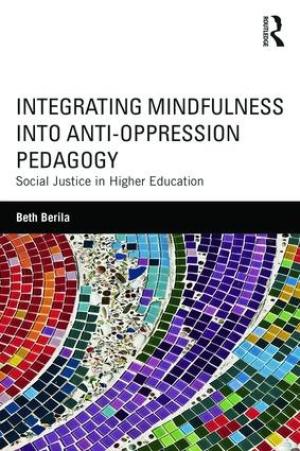
In the classroom, faculty often rely on a singular way of knowing -- allowing minds to enter the classroom while leaving bodies, spirits, emotions, and experiences outside the doors of the lecture hall or meeting space. Professor of ethnic and women’s studies at St. Cloud State University, Beth Berila imagines something more effective and embodied. After receiving tenure, she enrolled in a yoga teacher training program. She realized the contemplative practices of yoga and meditation could better her teaching, particularly in the area of social justice. Mindfulness could create a space for interrupting oppression and begin “the dynamic process of unlearning” that which may contribute to oppression (x). In each of seven chapters, Berila presents a theoretical framework, reflection and application for classroom learning, practices to cultivate mindfulness, and extensive bibliographic references. Berila’s project aims to recognize oppression and unlearn its destructive internalization for both the oppressed and the oppressor. Mindfulness, Berila argues, can dismantle privilege as well as dislodge internalized oppression. The practices she incorporates into her teaching prompts readers to reflect on their own educational techniques as potentially contemplative and communal spaces for learning. She offers introspective activities like pranayama (a form of breathing), journaling, and mindful awareness of the body. She also offers corporate activities that invite interaction and group discussion. Through both the introverted and extroverted approaches she acknowledges the possibility of triggering dissonance, trauma, and resistance. Berila is a skilled teacher and astute author; she knows well the risk and rewards of the activities she engages. The practices she advocates are new, thought-provoking, and stimulating. Berila is not unaware of the critiques that can be made of pedagogy shaped by mindfulness. She addresses particular concerns directly and then nudges the critics to consider the positive benefits of this method: building empowered communities, fostering compassion, changing oppressive systems, claiming full human dignity and equality for all people, and prompting institutional change. Accomplishing this requires attention to the knee-jerk reaction of shenpa, the Buddhist term for “the negative gut reaction” (109) behind our charged reactions. Disrupting that shenpa is one of the aims of mindfulness and here Berila offers techniques for navigating the complexity of reactions that can occur within individuals and classrooms when that charge occurs. Integrating Mindfulness into Anti-Oppression Pedagogy would be great summer or sabbatical reading when time allows deep contemplation. Her work invites reflection on those moments we wish we had handled differently in the classroom while offering helpful steps forward for future instruction. While integrating mindfulness does not require a teacher to be a master practitioner, Berila prompts small steps we can all take toward integrating body and spirit, emotion and experience into a deeper embodiment that moves beyond our mechanized minds. Plan to read this fascinating book twice. Once in a time and space where you can “pause and breathe” (29), allowing the content to become embodied. And then second, with pen in hand and syllabus in the other, ready to take note of how to incorporate these practices into your next semester of teaching.