Resources

Journal Issue.
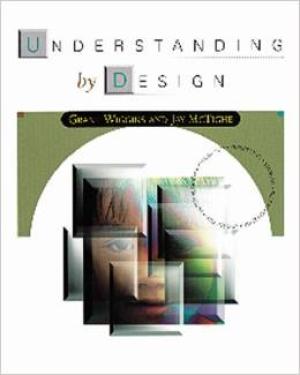
What is understanding and how does it differ from knowledge? How can we determine the big ideas worth understanding? Why is understanding an important teaching goal, and how do we know when students have attained it? How can we create a rigorous and engaging curriculum that focuses on understanding and leads to improved student performance in today's high-stakes, standards-based environment? Authors Grant Wiggins and Jay McTighe answer these and many other questions in this second edition of Understanding by Design. Drawing on feedback from thousands of educators around the world who have used the UbD framework since its introduction in 1998, the authors have revised and expanded their original work to guide educators across the K16 spectrum in the design of curriculum, assessment, and instruction. With an improved UbD Template at its core, the book explains the rationale of backward design and explores in greater depth the meaning of such key ideas as essential questions and transfer tasks. Readers will learn why the familiar coverage- and activity-based approaches to curriculum design fall short, and how a focus on the six facets of understanding can enrich student learning. With an expanded array of practical strategies, tools, and examples from all subject areas, the book demonstrates how the research-based principles of Understanding by Design apply to district frameworks as well as to individual units of curriculum. Combining provocative ideas, thoughtful analysis, and tested approaches, Understanding by Design, Expanded 2nd Edition, offers teacher-designers a clear path to the creation of curriculum that ensures better learning and a more stimulating experience for students and teachers alike. (From the Publisher)
Recommends theoretically grounded and empirically supported strategies to improve the development and assessment of students’ thinking skills – with bibliography. Idea Paper no. 37, from the series developed by the Center for Faculty Evaluation and Development, Kansas State University.
Reviews the importance of departmental evaluation of teaching and provides an overview of options for putting an evaluation process in place. References and appendices with real examples of evaluative forms and processes. Idea Paper no. 36, from the series developed by the Center for Faculty Evaluation and Development, Kansas State University.
Describes the seven areas that should be considered when evaluating teaching: subject matter mastery, curriculum development, course design, delivery instruction, assessment of instruction, availability to students, and administrative requirements. Idea Paper no. 21, from the series developed by the Center for Faculty Evaluation and Development, Kansas State University.
Compares the “percentage” grading system to the “class-curve” system, to derive a set of goals or criteria for grading systems, which are then employed to evaluate three additional illustrative grading systems. Idea Paper no. 19, from the series developed by the Center for Faculty Evaluation and Development, Kansas State University.
Guidelines for writing good multiple-choice exam questions that can evaluate higher levels of learning (such as integrating material from several sources, critically evaluate data, contrast and compare information), as well as provide diagnostic information. Idea Paper no. 16 , from the series developed by the Center for Faculty Evaluation and Development, Kansas State University.
Asserts that while prospective distance educators are flocking to certification programs, some academics question their value. Although certification programs, which can differ significantly in nature and intensity, go well beyond simple technology training, many newly certified distance educators have found that the certification does not necessarily lead to job security or even employment.