Resources

Click Here for Book Review Abstract: Reflective Teaching in Higher Education is the definitive textbook for reflective teachers in higher education. Informed by the latest research in this area, the book offers extensive support for those at the start of an academic career and career-long professionalism for those teaching in higher education. Written by an international collaborative author team of higher education experts led by Paul Ashwin, Reflective Teaching in Higher Education offers two levels of support: - practical guidance for day-to-day teaching, covering key issues such as strategies for improving learning, teaching and assessment, curriculum design, relationships, communication, and inclusion; and - evidence-informed 'principles' to aid understanding of how theories can effectively inform teaching practices, offering ways to develop a deeper understanding of teaching and learning in higher education. Case studies, activities, research briefings and annotated key readings are provided throughout. (From the Publisher)

Click Here for Book Review Abstract: A timeless book of lessons on mentorship, teaching, and learning from New York Times bestselling author Tim Gunn, host of the Emmy Award–nominated Project Runway and the reality show Under the Gunn. Tim Gunn, America’s favorite reality TV cohost, is known for his kind but firm approach in providing wisdom, guidance, and support to the scores of design hopefuls on Project Runway. Having begun his fashion career as a teacher at Parsons The New School for Design, Tim knows more than a thing or two about mentorship and how to convey invaluable pearls of wisdom in an approachable, accessible manner. While Gunn’s Golden Rules showcased Tim “as life coach,” imparting lessons based on his personal experiences, Tim Gunn: The Natty Professor will focus on Tim “as teacher.” Divided into sections on common themes—leadership, curiosity, diversity, understanding, empathy—this practical, timely book takes us on a journey through life lessons and uses Tim’s own personal experiences, from the classroom to the therapist’s office, to illustrate larger concepts. Each chapter will end with a “life assignment,” where Tim challenges you to apply the lessons you’ve learned in practical mentoring or teaching situations. (From the Publisher)
Journal Issue.

Click Here for Book Review Abstract: In this volume, the culmination of a lifetime's work as an educator, Marshall Gregory lays out a pedagogical theory and ethical vision for teaching. He argues that teachers across the arts and sciences can reach for teaching excellence by relying on more than good will, good intentions, sincerity, enthusiasm, and trial and error. They can think, individually and collectively, about the educable capacities of the students they teach and about the ultimate aim of their teaching: not to merely impart information or train their students in a discipline, but to develop their students' abilities for thought, reflection, questioning, and engagement to their fullest extent. Drawing on over forty-five years of teaching and thirty-five years of training teachers to think about pedagogy, Gregory speaks to any teacher wanting to more fully ground the what of teaching in the how and why. (From the Publisher)
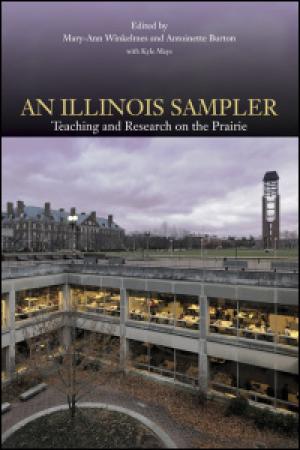
Click Here for Book Review Abstract: How world-class research makes its way into lecture halls and seminar rooms Major research universities expect faculty to conduct significant research but also to excel as teachers. Too often those outside the classroom assume that these two functions have little in common when in fact the best teachers conduct exciting and innovative research that provides students the opportunity to learn by doing. An Illinois Sampler presents personal accounts from faculty members at the University of Illinois at Urbana-Champaign and other contributors, about their research and how it enriches and energizes their teaching. Contributors from the humanities, engineering, social and natural sciences, and other disciplines explore how ideas, methods, and materials merge to lead their students down life-changing paths to creativity, discovery, and solutions. As faculty introduce their classes to work conducted from the Illinois prairie to the farms of Africa, from densely populated cities to dense computer coding, they generate an atmosphere where research, teaching, and learning thrive inside a feedback loop of education across disciplines. Aimed at alumni and prospective students interested in the university's ongoing mission, as well as current faculty and students wishing to stay up to date on the diverse work being done around them, An Illinois Sampler offers a rare glimpse into the impact of cutting-edge research on undergraduate education in a rapidly changing world. The book also showcases the best, the most ambitious, and the most effective teaching practices developed and nurtured at one of the world's premier research universities. "The late Ernie Boyer inspired his readers when he wrote about the 'scholarship' of teaching. Years later, the engagement of faculty in the scholarly assessment of what students know and can do and in the exploration of ways in which these outcomes might be improved remains a formidable challenge. This is especially the case in complex research universities. In this timely volume and in fields as diverse as dance, geology, music, medicine, kinesiology, mathematics, engineering, and microbiology we have firsthand accounts of what faculty members are doing to make a better tomorrow. The narratives are as inspiring as they are practical and deserve to be shared and read by those who care about the quality of American universities."--Stanley Ikenberry, President Emeritus of the University of Illinois "The land-grant model is discovery of new knowledge, teaching students, and engaging the broader community. Something is lost when you try to separate the three concepts because they are mutually enriching--discovery comes in part by engaging the community, discovery by faculty and students strengthens education, etcetera. In this time of accountability and scarce resources, the academy must better explain this integration of effort, particularly in connection with the allocation of faculty time and compensation to research and engagement. The stories of scholar-educators from the University of Illinois, one of the great land-grant universities of the country, wonderfully illustrate how this all works."--Peter McPherson, President Emeritus of Michigan State University and President of the Association of Public and Land-grant Universities (From the Publisher)
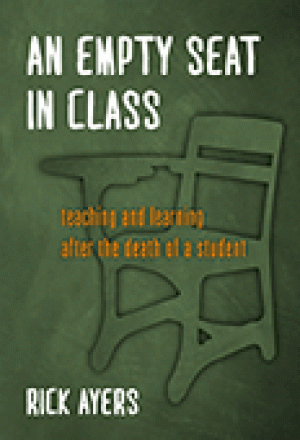
Click Here for Book Review Abstract: The death of a student, especially to gun violence, is a life-changing experience that occurs with more and more frequency in America’s schools. For each of these tragedies, there is a classroom and there is a teacher. Yet student death is often a forbidden subject, removed from teacher education and professional development classes where the curriculum is focused instead on learning about standards, lesson plans, and pedagogy. What can and should teachers do when the unbearable happens? An Empty Seat in Class illuminates the tragedy of student death and suggests ways of dealing and healing within the classroom community. This book weaves the story of the author’s very personal experience of a student’s fatal shooting with short pieces by other educators who have worked through equally terrible events and also includes contributions from counselors, therapists, and school principals. Through accumulated wisdom, educators are given the means and the resources to find their own path to healing their students, their communities, and themselves. (From the Publisher)
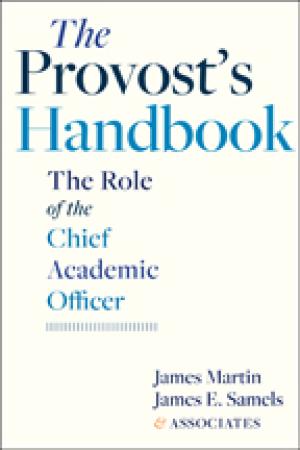
As the chief academic officer, the provost plays the central role in the contemporary university or college. He or she leads the faculty and serves as their key representative to the administration while simultaneously acting as the administration’s spokesperson to the academic faculty. How has this essential leadership position evolved over the past few decades, and what are the best practices to adopt for succeeding in specific operational areas? In seventeen essays written by some of the most successful chief academic officers in the United States, The Provost’s Handbook outlines key topics related to the changing environment of higher education while explaining what constitutes effective leadership at the college and university level. How, for example, does the provost lead in a time of disruption and shifting needs? What skills should he or she nurture in new faculty? What role should data and institutional research play in decision making? How can a provost navigate the often stormy situations of shared governance? These questions—and many more challenges presented by this role—are addressed in this essential volume. Assembled by James Martin and James E. Samels, accomplished authors and scholars of leadership in higher education, The Provost’s Handbook is destined to become the go-to resource for deans, presidents, trustees, and chief academic officers everywhere. (From the Publisher)
Click Here for Book Review Abstract: This innovative resource provides teachers with a road map for designing a comprehensive writing curriculum that meets Common Core standards. The authors zero in on several “big ideas” that lead to and support effective practices in writing instruction, such as integrating reading, writing, speaking, and listening; teaching writing as a process; extending the range of students’ writing; spiraling and scaffolding a writing curriculum; and collaborating. These “big ideas” are the cornerstones of best researched-based practices as well as the CCSS for writing. The first chapter offers a complete lesson designed around teaching narrative writing and illustrating tried and true practices for teaching writing as a process. The remaining chapters explore a broad range of teaching approaches that help students tackle different kinds of narrative, informational, and argumentative writing and understand complexities like audience and purpose. Each chapter focuses on at least one of the uncommonly good ideas and illustrates how to create curricula around it. Uncommonly Good Ideas includes model lessons and assignments, mentor texts, teaching strategies, student writing, and practical guidance for moving the ideas from the page into the classroom. Book Features: - Presents no-nonsense information about teaching writing in the era of CCSS, including ways in which the CCSS are misinterpreted. - Focuses on “the core of the core,” the bedrock on which effective teaching approaches rest. - Incorporates the voices and practices of many talented teachers of writing, including ELA teachers from urban, rural, and suburban schools, as well as ELL teachers. - Addresses teachers as respected, dedicated professionals whose experiences and good judgment are the linchpins of any reform. (From the Publisher)
Click Here for Book Review Abstract: It is difficult to imagine a college class today that does not include some online component—whether a simple posting of a syllabus to course management software, the use of social media for communication, or a full-blown course offering through a MOOC platform. In Teaching Online, Claire Howell Major describes for college faculty the changes that accompany use of such technologies and offers real-world strategies for surmounting digital teaching challenges. Teaching with these evolving media requires instructors to alter the ways in which they conceive of and do their work, according to Major. They must frequently update their knowledge of learning, teaching, and media, and they need to develop new forms of instruction, revise and reconceptualize classroom materials, and refresh their communication patterns. Faculty teaching online must also reconsider the student experience and determine what changes for students ultimately mean for their own work and for their institutions. Teaching Online presents instructors with a thoughtful synthesis of educational theory, research, and practice as well as a review of strategies for managing the instructional changes involved in teaching online. In addition, this book presents examples of best practices from successful online instructors as well as cutting-edge ideas from leading scholars and educational technologists. Faculty members, researchers, instructional designers, students, administrators, and policy makers who engage with online learning will find this book an invaluable resource. (From the Publisher)
Nine contributors to the Wabash Center's “Race Matters” blog (https://www.wabashcenter.wabash.edu/category/race-matters-in-the-classroom/) provide short teaching tactics they have used to help students engage difference in meaningful ways.