Resources
One page Teaching Tactic: in groups, students perform roles of different theorists as they discuss case studies in ministry.
One page Teaching Tactic: a series of student pairings discuss questions about religious identity in a World Religions Course.

Vygotsky in Twenty-first Century Society is an ensemble of novel perspectives about the legacy of Lev Vygotsky and Alexander Luria. The book illustrates how well the legacy of their work is being applied and continued in contemporary research, and how cultural historical theory has been constructed and re-constructed. Together, these collected essays inform a broader discussion of how a developmentally-oriented cultural paradigm can guide learning and teaching in social and educational policy and in group or individual counseling. Readers will find discussions of issues in human development that have previously been overlooked. This book is important and timely in addressing these issues and fault-lines, particularly for advancing both equity and scientific understandings. (From the Publisher)

Journal Issue.
Journal Issue.
Journal Issue.
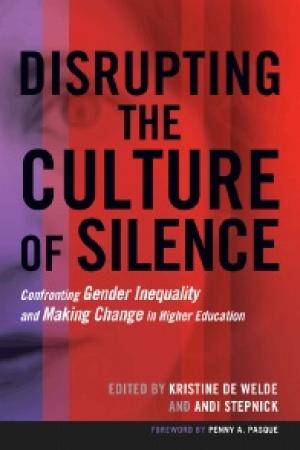
Click Here for Book Review Abstract: What do women academics classify as challenging, inequitable, or “hostile” work environments and experiences? How do these vary by women’s race/ethnicity, rank, sexual orientation, or other social locations? How do academic cultures and organizational structures work independently and in tandem to foster or challenge such work climates? What actions can institutions and individuals–independently and collectively–take toward equity in the academy? Despite tremendous progress toward gender equality and equity in institutions of higher education, deep patterns of discrimination against women in the academy persist. From the “chilly climate” to the “old boys’ club,” women academics must navigate structures and cultures that continue to marginalize, penalize, and undermine their success. This book is a “tool kit” for advancing greater gender equality and equity in higher education. It presents the latest research on issues of concern to them, and to anyone interested in a more equitable academy. It documents the challenging, sometimes hostile experiences of women academics through feminist analysis of qualitative and quantitative data, including narratives from women of different races and ethnicities across disciplines, ranks, and university types. The contributors’ research draws upon the experiences of women academics including those with under-examined identities such as lesbian, feminist, married or unmarried, and contingent faculty. And, it offers new perspectives on persistent issues such as family policies, pay and promotion inequalities, and disproportionate service burdens. The editors provide case studies of women who have encountered antagonistic workplaces, and offer action steps, best practices, and more than 100 online resources for individuals navigating similar situations. Beyond women in academe, this book is for their allies and for administrators interested in changing the climates, cultures, and policies that allow gender inequality to exist on their campuses, and to researchers/scholars investigating these phenomena. It aims to disrupt complacency amongst those who claim that things are “better” or “good enough” and to provide readers with strategies and resources to counter barriers created by culture, climate, or institutional structures. (From the Publisher)
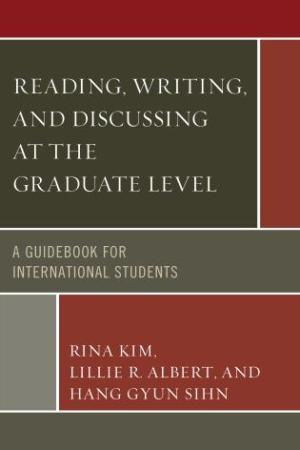
Click Here for Book Review Abstract: The purpose of this book is to help international students navigate the academic issues they will encounter while attending graduate school in the United States. This book provides guidelines for conquering the obstacles that international graduate students often face, such as developing independent ideas based on required readings, participating in classroom discussions effectively, organizing academic papers, and effectively managing academic work and social relationships. This book is an invaluable tool for international graduate students and their instructors and mentors. (From the Publisher)
Click Here for Book Review Abstract: Graduating from Syracuse University with a degree in computer science, Jose Vilson left campus with no job and a few hundred dollars to his name, propelling him (eventually) to his calling: teaching middle school children math in a public school in Washington Heights / Inwood, Manhattan. From his own background as a boy growing up on the drug-tainted, community-centered projects of the Lower East Side of Manhattan, this book takes the reader on the coming-of-age story of a naïve young man struggling to mature through the first few years of his career, balancing the lows of murder, poverty, and academic failure to the highs of growth and eventual triumph. His career takes a twist when he starts a blog with incisive commentary on the state of education on his eponymous blog TheJoseVilson.com, taking prominent figures and institutions like NYC Mayor Michael Bloomberg, Secretary of Education Arne Duncan, and The New York Times to task. (As of this letter, the site is banned from most NYC Department of Education computers, yet read by central offices.) In his collection of multifaceted essays, he provokes discussion on issues of race, gentrification, and the teaching profession from the eyes of a Black-Latino educator with a mix of research and first-hand experience. This education book is not to be missed! (From the Publisher)
Click Here for Book Review Abstract: Higher education is a high stakes process involving engagement with curricula and often entails coping with the onslaught of assessments and examinations. This process creates a level of intensity that impacts on the student experience in higher education. It is, therefore, important to consider not only the motivational aspects of learning but also quality of life issues, as they have profound effects on students. Quality of life affects the way students interact with their formal education, and has wide-reaching effects on future careers and their ability to coordinate everyday events. Integrating these two concepts, student motivation and quality of life, brings together the explicit elements that underpin learning in the higher education context, creating links between the affective and social aspects of the student life. This synthesis is integral to improving student retention and quality of life and has important ramifications for educationalists, administrators, pastoral care and academic support service personnel, and students themselves. Some highlights of the book include: - Applied Positive Psychology in Higher Education - Internationalisation and Quality of Life: A Taiwanese Perspective - The Computer Assisted Learning for the Mind (CALM) Website: Teaching Skills to Increase Resilience - The Oxford University Peer Support Programme: Addressing the Wellbeing of Students - Higher Education and Student Stress: Reclaiming Light, Liberty and Learning - Improving academic quality of life through attribution- and motivation-focused counselling (From the Publisher)