Resources

This collection of essays written by seventeen Generation X academics passionately, provocatively, and eloquently demonstrates the personal issues, conflicts, and triumphs that are definitive of this generation. These essays define the voice of an often overlooked and ignored demographic. (From the Publisher)
Click Here for Book Review Abstract: Dynamic changes are underway in American higher education. New providers, emerging technologies, cost concerns, student debt, and nagging doubts about quality all call out the need for institutions to show evidence of student learning. From scholars at the National Institute for Learning Outcomes Assessment (NILOA), Using Evidence of Student Learning to Improve Higher Education presents a reframed conception and approach to student learning outcomes assessment. The authors explain why it is counterproductive to view collecting and using evidence of student accomplishment as primarily a compliance activity. Today's circumstances demand a fresh and more strategic approach to the processes by which evidence about student learning is obtained and used to inform efforts to improve teaching, learning, and decision-making. Whether you're in the classroom, an administrative office, or on an assessment committee, data about what students know and are able to do are critical for guiding changes that are needed in institutional policies and practices to improve student learning and success. Use this book to: • Understand how and why student learning outcomes assessment can enhance student accomplishment and increase institutional effectiveness • Shift the view of assessment from being externally driven to internally motivated • Learn how assessment results can help inform decision-making • Use assessment data to manage change and improve student success Gauging student learning is necessary if institutions are to prepare students to meet the 21st century needs of employers and live an economically independent, civically responsible life. For assessment professionals and educational leaders, Using Evidence of Student Learning to Improve Higher Education offers both a compelling rationale and practical advice for making student learning outcomes assessment more effective and efficient. (From the Publisher)

Click Here for Book Review Abstract: A highly practical guide for new instructors teaching in any setting Regardless of the context, teaching is a tall task—and for those teaching adults, unique challenges await. Teaching Adults: A Practical Guide for New Teachers is chock-full of ideas that can be read quickly and implemented immediately in formal and informal settings, in classrooms and workplaces; in short, wherever adults are learning. Written with straightforward language that eschews jargon, yet grounded in theory, research, and practice in adult education, the book will benefit readers who have not previously been exposed to these ideas as well as more experienced teachers who seek new ways to reach adult learners. The book will serve as a resource to revisit from time to time as readers face new challenges and questions in teaching adults. Readers will delve into to a variety of topics, including: • A general teaching framework, including the author's four keys to effective teaching • An in-depth exploration of the primary components of effective teaching • An examination of the unique challenges involved with teaching adults, including how to best create a positive learning environment, overcoming resistance to learning, motivation techniques, and dealing with difficult or disruptive learners The book elucidates the techniques required to connect with adult learners and provide instruction that is specifically tailored to the unique learning needs of these students. (From the Publisher)
Click Here for Book Review Abstract: Grounded in current research and practical experience, Student Learning in College Residence Halls: What Works, What Doesn't, and Why shows how to structure the peer environment in residence halls to advance student learning. Focusing on the application of student learning principles, the book examines how neurobiological and psychosocial development influences how students learn in residence halls. The book is filled with examples, useful strategies, practical advice, and best practices for building community and shaping residential environments that produce measureable learning outcomes. Readers will find models for a curriculum-based approach to programming and for developing student staff competencies, as well as an analysis of what types of residential experiences influence student learning. An examination of how to assess student learning in residence halls and of the challenges residence halls face provide readers with insight into how to strategically plan for the future of residence halls as learning centers. The lack of recent literature on student learning in college residence halls belies the changes that have taken place. More traditional-age students are enrolled in college than ever before, and universities are building more residence halls to meet the increased demand for student housing. This book addresses these developments, reviews contemporary research, and provides up-to-date advice for creating residence hall environments that achieve educationally purposeful outcomes. • Discover which educational benefits are associated with living in residence halls • Learn how residential environments influence student behavior • Create residence hall environments that produce measureable learning outcomes • Monitor effectiveness with a process of systematic assessment Residence halls are an integral part of the college experience; with the right programs in place they can become dynamic centers of student learning. Student Learning in College Residence Halls is a comprehensive resource for residence hall professionals and others interested in improving students' learning experience. (From the Publisher)
Click Here for Book Review Abstract: From wired campuses to smart classrooms to massive open online courses (MOOCs), digital technology is now firmly embedded in higher education. But the dizzying pace of innovation, combined with a dearth of evidence on the effectiveness of new tools and programs, challenges educators to articulate how technology can best fit into the learning experience. Minds Online is a concise, nontechnical guide for academic leaders and instructors who seek to advance learning in this changing environment, through a sound scientific understanding of how the human brain assimilates knowledge. Drawing on the latest findings from neuroscience and cognitive psychology, Michelle Miller explores how attention, memory, and higher thought processes such as critical thinking and analytical reasoning can be enhanced through technology-aided approaches. The techniques she describes promote retention of course material through frequent low‐stakes testing and practice, and help prevent counterproductive cramming by encouraging better spacing of study. Online activities also help students become more adept with cognitive aids, such as analogies, that allow them to apply learning across situations and disciplines. Miller guides instructors through the process of creating a syllabus for a cognitively optimized, fully online course. She presents innovative ideas for how to use multimedia effectively, how to take advantage of learners’ existing knowledge, and how to motivate students to do their best work and complete the course. For a generation born into the Internet age, educational technology designed with the brain in mind offers a natural pathway to the pleasures and rewards of deep learning, (From the Publisher)
Click Here for Book Review Abstract: Learn to talk about race openly, honestly, and productively Most people avoid discussion of race-related topics because of the strong emotions and feelings of discomfort that inevitably accompany such conversations. Rather than endure the conflict of racial realities, many people choose instead to avoid the topic altogether, or remain silent when it is raised. Race Talk and the Conspiracy of Silence: Understanding and Facilitating Difficult Dialogues on Race puts an end to that dynamic by sharing strategies for smoothing conversations about race in a productive manner. A guide for facilitating and participating in difficult dialogues about race, author Derald Wing Sue – an internationally recognized expert on multiculturalism, diversity, and microaggressions – explores the characteristics, dynamics, and meaning behind discussions about race as well as the hidden "ground rules" that inhibit honest and productive dialogue. Through emotional and visceral examples, this book explains why conversations revolving around racial issues are so difficult, and provides guidelines, techniques, and advice for navigating and leading honest and forthright discussions. Readers will develop a stronger ability to build rapport with people unlike themselves, and discover how not talking about race impacts society as a whole. • Overcome and make visible the fears associated with race talk • Learn practical ideas for talking openly about race • Facilitate and navigate discussion with expert strategy • Examine the hidden rules that govern race talk • Understand the benefits of successful conversations Discussions about race do not have to result in disastrous consequences, and can in fact be highly beneficial to all parties involved. It's important that people have the ability to converse openly and honestly with their students, colleagues, children, and neighbors, and Race Talk provides the path for achieving this goal. (From the Publisher)

Click Here for Book Review Abstract: Out of over 40 years of experience in adult or worker education, David Greene brings us tools to develop consciousness and leadership for social change. Based on the power of our huge working class to understand this economic system and to organize, this book aims to empower educators, students and other workers with science applied to solving the serious social problems we face today. We are confronted with the issues of low-wage, part-time and temporary jobs, inadequate housing, health care, and transportation, inequality and injustice, at the same time as the greatest concentration of wealth in human history. The disparity of wealth and control has never been greater. The only way out of this deepening crisis is through education. To change this we need understanding that is based on the clearest reflection of the real world. Unfit to Be a Slave employs the tools of theory and informed practice, to guide us to create spaces to share experience, study history’s lessons and develop consciousness. As a collective and organized force we can transform our communities, our countries and our world. Mythologies that tell people, ‘Things don’t change,’ ‘We can’t do anything,’ or ‘It has always been this way,’ prevent poor and working class populations from taking necessary action on behalf of their own lives and families. Unfit to Be a Slave is meant to be a guide to education for social change. (From the Publisher)

Click Here for Book Review Abstract: Returning seven years later to their original pieces from this landmark book, over 20 leading scholars and activists revisit and reframe their rich contributions to a burgeoning scholarship on Whiteness. With new reflective writings for each chapter, and valuable sections on relevant readings and resources, this volume refreshes and enhances the first text to pay critical and sustained attention to Whiteness in education, with implications far beyond national borders. Contributors include George Sefa Dei, Tracey Lindberg, Carl James, Cynthia Levine-Rasky, and the late Patrick Solomon. Courageously examining diverse perspectives, contexts, and institutional practices, contributors to this volume dismantle the underpinnings of inequitable power relations, privilege, and marginalization. The book’s relevance extends to those in a range of settings, with abundant and poignant lessons for enhancing and understanding transformative social justice work in education. Revisiting The Great White North? offers terrific grist for examining the persistence of Whiteness even as it shape-shifts. Chapters are comprehensive, theoretically rich, and anchored in personal experience. Authors’ reflections on the seven years since publication of the first edition of this book complexify how we understand Whiteness, while simultaneously driving home the need not only to grapple with it, but to work against it. (From Publisher)
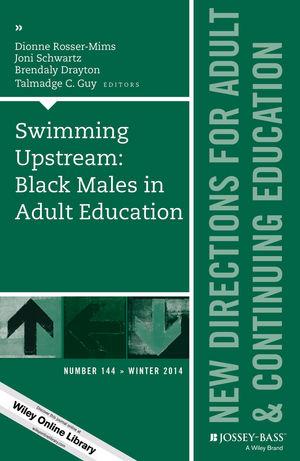
Click Here for Book Review Abstract: Here is an introduction to salient topics and issues affecting Black males as they engage in adult basic education programs, pursue employment, and obtain higher education. The chapters include academic research as well as program descriptions and personal narratives with a concern for the “lived experiences” and the voices of the men. While not exhaustive, this volumne does hope to challenge commonly held stereotypes, interactions, and policies. It is designed to raise questions about the unique experiences of this specific population and to explore the sociocultural dynamics that impact their education. This is the 144th volume of the Jossey Bass series New Directions for Adult and Continuing Education. Noted for its depth of coverage, it explores issues of common interest to instructors, administrators, counselors, and policymakers in a broad range of education settings, such as colleges and universities, extension programs, businesses, libraries, and museums. (From the Publisher)
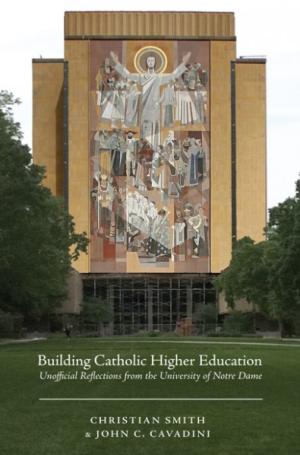
Click Here for Book Review Abstract: American Catholic universities and colleges are wrestling today with how to develop in ways that faithfully serve their mission in Catholic higher education without either secularizing or becoming sectarian. Major challenges are faced when trying to simultaneously build and sustain excellence in undergraduate teaching, strengthen faculty research and publishing, and deepen the authentically Catholic character of education. This book uses the particular case of the University of Notre Dame to raise larger issues, to make substantive proposals, and thus to contribute to a national conversation affecting all Catholic universities and colleges in the United States (and perhaps beyond) today. Its arguments focus particularly on challenging questions around the recruitment, hiring, and formation of faculty in Catholic universities and colleges. (From the Publisher)