Resources
A short essay written by a student in the 1990s who regards herself as extrovert, describing the particular qualities and experiences associated with her personal style. Posted on Mark Unno’s website, who teaches Buddhism at the University of Oregon.
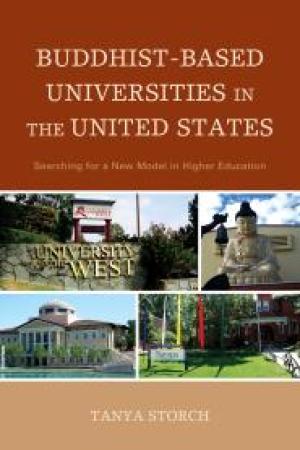
Click Here for Book Review Abstract: Buddhist-Based Universities in the United States: Searching for a New Model in Higher Education investigates in depth four American Buddhist universities, namely, the Dharma Realm Buddhist University, the University of the West, the Soka University of America, and the Naropa University, all of which offer degrees in liberal arts and professional fields, and at the same time educate their students in the philosophy and practices of Buddhism. Buddhist universities in the United States are unique because there are no comparable universities based on the philosophy and practices of other Asian religions also popular in the United States, such as Hinduism, Confucianism, or Sikhism. Even the Jewish community has created only two universities in which professional skills and liberal arts are taught from the position of the moral-philosophical principles of Judaism. This book presents the institutional history and academic programs of four Buddhist universities in America and analyzes Buddhist-based pedagogical principles, as well as teaching and learning techniques, which can be very useful for other colleges and universities in the United States. (From the Publisher)
Journal Issue. Full text is available online.

Click Here for Book Review Abstract: Service-learning in higher education combines students' academic coursework with their voluntary work, enhancing students' learning and benefiting the community. The key to unlocking the connections between the theory and practice of service-learning is critical reflection, which is examined in this book along with students' academic reflective writing and assessment. The power and dynamics of service-learning are explored through the construction of a theoretical paradigm and the assertion that it can be extended further to critical pedagogy. Critical Perspectives of Service-Learning in Higher Education takes a refreshingly critical and innovative look at service-learning, employing theoretical and empirical work to shed new light on this approach to education. (From the Publisher)
Click Here for Book Review Abstract: Lifelong learning, the arts, and community cultural engagement in the contemporary university maps the work of adult educators, teachers, researchers and graduate students from North America, Europe and Africa who use the arts in their university classroom teaching, their research and in service. It is written specifically for graduate students, and educators working in higher education, communities, schools, and practitioners who want to learn how to better integrate the arts in their practice to critically and creativity communicate, teach, make meaning, uncover, and involve. The book contextualises the place and role of the arts in society, adult education, higher education and knowledge creation, outlines current arts-based theories and methodologies and provides examples of visual and performing arts practices to critically and creatively see, explore, represent, learn and discover the potential of the human aesthetic dimension in higher education teaching and research. (From the Publisher)

Click Here for Book Review Abstract: In Class Not Dismissed, award-winning professor Anthony Aveni tells the personal story of his six decades in college classrooms and some of the 10,000 students who have filled them. Through anecdotes of his own triumphs and tribulations—some amusing, others heartrending—Aveni reveals his teaching story and thoughts on the future of higher education. Although in recent years the lecture has come under fire as a pedagogical method, Aveni ardently defends lecturing to students. He shares his secrets on crafting an engaging lecture and creating productive dialogue in class discussions. He lays out his rules on classroom discipline and tells how he promotes the lost art of listening. He is a passionate proponent of the liberal arts and core course requirements as well as a believer in sound teaching promoted by active scholarship. Aveni is known to his students as a consummate storyteller. In Class Not Dismissed he shares real stories about everyday college life that shed light on serious educational issues. The result is a humorous, reflective, inviting, and powerful inquiry into higher education that will be of interest to anyone invested in the current and future state of college and university education. (From the Publisher)
Click Here for Book Review Abstract: The case for a flexible work schedule for faculty has been repeatedly made, with one policy recommendation being part-time positions for tenure-track/tenured faculty (PTTT). Despite some of the benefits of this approach for both faculty and institutions, the PTTT concept is the least implemented policy for faculty flexibility and is poorly understood. This report offers the first comprehensive treatment of PTTT, suggesting that this mode of flexibility enhances recruitment, retention, and engagement of faculty, while offering value-added productivity, planning potential, and faculty loyalty for the institution. Herbers provides data that explore how a PTTT policy can lead to faculty success and satisfaction across the lifespan of a career, and likewise offers analogies and examples of well-established practices that administrators across institution types can adapt to create their own policies. Administrators and faculty will find the author’s policy recommendations, best practices, and solutions to common challenges to be a roadmap for stimulating change in their institutions. This is the 5th issue of the 40th volume of the Jossey-Bass series ASHE Higher Education Report. Each monograph is the definitive analysis of a tough higher education issue, based on thorough research of pertinent literature and institutional experiences. Topics are identified by a national survey. Noted practitioners and scholars are then commissioned to write the reports, with experts providing critical reviews of each manuscript before publication. (From the Publisher)
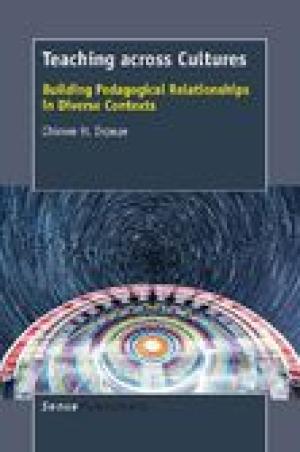
Click Here for Book Review Abstract: Teaching across Cultures: Building Pedagogical Relationships in Diverse Contexts captures the tensions and complexities, as well as the transformational potentials, of teaching across multiple cultural contexts. The book evolved from cumulative self-studies that examined one teacher educator’s teaching practice, the cultural impact on that practice, and how she facilitated transformative teaching and learning. While every act of teaching occurs across cultures, such as institutional culture, invisible cultures, and classroom cultures, among others, educators who teach as cultural outsiders have to navigate the tensions, complexities, and contradictory realities of cross-cultural teaching. The tensions can be reduced or managed through responsive pedagogy, relationship building, and teaching in the third space. These transformational approaches not only help to identify and close the perpetual gaps in teaching and learning, but they also position effective teaching within a pedagogical common ground that values student voices, facilitates pedagogical flexibility, and uses diversity as a teaching tool. In a world of ubiquitous and interactive learning environments, both the physical and virtual spaces play a vital role in teaching and teacher-student relationships. The book points to the necessity of teacher educators’ learning through diverse, professional networks and, more importantly, through self-study. It is only through this introspective examination of one’s teaching and students’ learning, as well as taking an ontological attitude toward teaching, can educators achieve success in diverse contexts. (From the Publisher)

Higher education systems around the world are undergoing fundamental change and reform due to external pressures—including internationalization of higher education, increased international competition for students, less reliance on public funding, and calls to create greater access opportunities for citizens. How are higher education systems evolving structurally as a result of these and other pressures? In light of these changes, how can higher education be a positive force for democratizing societies? This book examines the emerging trends taking place in higher education systems around the world, focusing on the most salient political and social forces that underlie these trends. Each chapter provides a case study of a country, exploring its cultural and political history, the political and social developments that have affected its higher education system, and the result of these changes on the higher education system. In a fast-changing, knowledge-intensive, democratic society, Democratizing Higher Education explores how higher education systems can be developed to provide access, affordability, participation, and quality life-long learning for all. (From the Publisher)
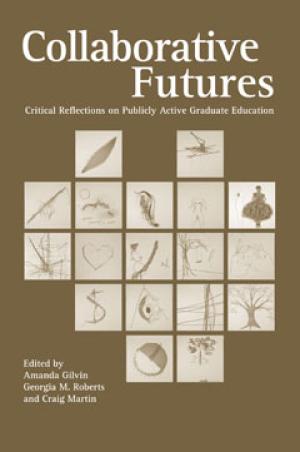
Collaborative Futures places graduate education at the center of ongoing efforts to legitimize publicly engaged scholarship within the academic profession. It is indispensable reading not only for graduate students seeking inspiration, resources, and usable frameworks for their engaged scholarship, but for the faculty who are called upon to mentor them and for university administrators seeking encouraging answers to questions about the future of graduate education. Given the erosion of the tenure system and the casualization of teaching labor, graduate programs and professional organizations in many fields now recognize the imperative to prepare doctoral students for careers wholly or partially outside academe. This book powerfully indicates both the need and the means to change institutional cultures and forge a publicly active path for graduate education. (From the Publisher)