Resources
Journal Issue.

Journal Issue.

Journal Issue.

The Schooled Heart addresses a basic question about the nature of the university: should moral education figure among the university's purposes? This volume offers an affirmative response to that question. A central purpose of the university is the moral formation of students—what Beaty and Henry call the schooling of the heart. (From the Publisher)
Synthesizing the best current thinking about learning, course design, and promoting student achievement, this is a guide to developing college instruction that has clear purpose, is well integrated into the curriculum, and improves student learning in predictable and measurable ways. The process involves developing a transparent course blueprint, focused on a limited number of key concepts and ideas, related tasks, and corresponding performance criteria; as well as on frequent practice opportunities, and early identification of potential learning barriers. Idea-based Learning takes as its point of departure the big conceptual ideas of a discipline that give structure and unity to a course and even to the curriculum, as opposed to a focus on content that can lead to teaching sequences of loosely-related topics; and aligns with notions of student-centered and outcomes-based learning environments. Adopting a backwards design model, it begins with three parallel processes: first, identifying the material that is crucial for conceptual understanding; second, articulating a clear rationale for how to choose learning outcomes based on student needs and intellectual readiness; and finally, aligning the learning outcomes with the instructional requirements of the authentic performance tasks. The resulting syllabi ensure cohesion between sections of the same course as well as between courses within a whole curriculum, assuring the progressive development of students’ skills and knowledge. Key elements of IBL include: * Helping students see the big picture * Building courses around one or more authentic performance tasks that illuminate the core concepts of the discipline * Clearly identifying performance criteria for all tasks * Incorporating practice in the competencies that are deemed important for students’ success * By placing the onus of learning on the student, liberating faculty to take on the role of learning coaches * Designing tasks that help students unlearn simplistic ideas and replace them with improved understandings Edmund Hansen expertly guides the reader through the steps of the process, providing examples along the way, and concluding with a sample course design document and syllabus that illustrate the principles he propounds. (From the Publisher)
Learning in a Musical Key examines the multidimensional problem of the relationship between music and theological education. Lisa Hess argues that, in a delightful and baffling way, musical learning has the potential to significantly alter and inform our conception of the nature and process of theological learning. In exploring this exciting intersection of musical learning and theological training, Hess asks two probing questions. First, What does learning from music in a performative mode require? Classical modes of theological education often founder on a dichotomy between theologically musical and educational discourses. It is extremely difficult for many to see how the perceivedly nonmusical learn from music. Is musicality a universally human potential? In exploring this question Hess turns to the music-learning theory of Edwin Gordon, which explores music's unique mode of teaching/learning, its primarily aural-oral mode. This challenge leads to the study's second question: How does a theologian, in the disciplinary sense, integrate a performative mode into critical discourse? Tracking the critical movements of this problem, Hess provides an inherited, transformational logic as a feasible path for integrating a performative mode into multidimensional learning. This approach emerges as a distinctly relational, embodied, multidimensional, and non-correlational performative-mode theology that breaks new ground in the contemporary theological landscape. As an implicitly trinitarian method, rooted in the relationality of God, this non-correlational method offers a practical theological contribution to the discipline of Christian spirituality, newly claimed here as a discipline of transformative teaching/learning through the highly contextualized and self-implicated scholar into relationally formed communities, and ultimately into the world. (From the Publisher)
AAR Teaching Religious Studies Series (Oxford University Press) Teaching Undergraduate Research in Religious Studies offers an introduction to the philosophy and practice of Undergraduate Research in Religious Studies and takes up several significant ongoing questions related to it. This volume emerges from sustained conversations about the pedagogy of Undergraduate Research by a group of teacher-scholars in the discipline, and it seeks to extend those conversations. For those new to Undergraduate Research, this book provides an overview of fundamental issues and pedagogical questions and practical models for application in the classroom. For seasoned mentors, it acts as a dialogue partner on emerging issues and offers insight into pertinent questions in the field based on the experience of recognized experts. Individual chapters focus on select theoretical and practical topics including the nature of collaboration between faculty and students, what it means for undergraduate students to make an "original contribution" in their research, how to identify and shape a research project that is appropriate and manageable, the types of institutional and professional support systems needed to adequately support and reward faculty who participate in this kind of pedagogy, and procedures for adequate and appropriate assessment. Student perspectives highlight the importance of Undergraduate Research to student learning. (From the Publisher)
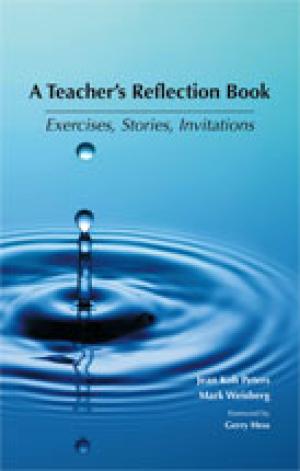
In university teachers’ hectic lives, finding space to reflect, restore, renew, and recommit can seem impossible. Jean Koh Peters and Mark Weisberg believe regular reflection is critical and have designed A Teacher’s Reflection Book to help teachers and other professionals find that space. Growing out of the authors’ extensive experience facilitating retreats and leading teaching and learning workshops, the book builds on their discoveries in those settings, supporting and promoting teachers’ self-directed development. Inviting that development, A Teacher’s Reflection Book is a cornucopia of stories, exercises, and examples that will inspire teachers to make reflection a cornerstone of their daily lives. With its multiple suggestions and strategies, it offers something for every reader, and is responsive to teachers’ needs at all stages of their careers. The book’s six chapters offer readers several perspectives from which to reflect. Some sections offer glimpses of teachers in the midst of their daily teaching lives, while others step away, inviting readers to reflect on what it means to have a vocation as a teacher. The book explores how we listen, a crucial yet rarely taught skill, essential for reflecting, as well as for learning and teaching. And it invites teachers to reflect on their students: who they are, and what and how they learn. For those latter reflections, the authors turn the focus on fear, which so pervades university life and which can distort learners’ and teachers’ perspectives and responses. Throughout this book, readers will visit several classrooms and listen to the evocative voices of several thoughtful students. (From the Publisher)

This book offers ideas that secondary teachers, university content faculty, and teacher educators can use to challenge traditional literacy practices and demonstrate creative, innovative ways of incorporating new literacies into the classroom, all within a strong theoretical framework. Teachers are trying to catch up to the new challenges of the twenty-first century. It is a superheroic feat that must be achieved if education is to stay relevant and viable. There is a lot of zip, bam, whap, and wow in the fast-paced, social networking, technological world, but not so much in the often laboriously slow-paced educational world. Where is the balance? How do teachers and students learn together, since one group has seasoned wisdom with limited technological know-how and the other uses all the cool new tools, but not in the service of learning? These are some important issues to consider in finding the balance in an unstable, fast-moving, ever-changing world. This book is practical and useful to literacy teachers, teacher educators, and university faculty by bringing together the expertise of composition/rhetoric researchers and writers, literacy specialists, technology specialists, and teachers who are on the cutting edge of new literacies. (From the Publisher)
One page Teaching Tactic: to introduce and discuss course content on the first day of class, students work in groups to list what they know about the topic.
Wabash Center Staff Contact
Sarah Farmer, Ph.D.
Associate Director
Wabash Center
farmers@wabash.edu