Resources
Effective pedagogy in the capstone course or integrative seminar — a 1000 word response to a Call for Papers.
Effective pedagogy in the capstone course or integrative seminar — a 1000 word response to a Call for Papers.
Effective pedagogy in the capstone course or integrative seminar — a 1000 word response to a Call for Papers.
One page Teaching Tactic: using debate to introduce a topic.
One page Teaching Tactic: students increase comprehension of reading by learning to analyze the structure of a text.
A five-year research project of seminary students from various cultural backgrounds revealed that the slight majority of contemporary seminary students studied are oral learners. Oral learners learn best and have their lives most transformed when professors utilize oral teaching and assessment methods. After explaining several preferences of oral learners, suggestions for effective teaching are provided in this article in order to improve both teaching and assessment of oral learners. Applications are provided for face-to-face and online learning contexts.
This article employs George Lakoff and Mark Johnson's work on metaphor (1980) to examine the current use of the term “learning outcomes” within higher education. It argues that “learning outcomes” is an ontological metaphor (education becomes focused on results that one can understand and measure) that resonates with contemporary academic capitalism. Yet because metaphors highlight some things and conceal others, thinking about teaching and disciplines using “learning outcomes” hides other dimensions of academic capitalism and obscures unquantifiable and highly complex aspects of education. Finally, the article explores ways in which an emphasis upon outcomes has consequences for the field of Religious Studies.
This essay explores new ways of engaging diversity in the production of knowledge in the classroom using coloniality as an analytical lens. After briefly engaging some of the recent literature on coloniality, focusing on the epistemic dimension, the author uses the example of teaching a course on religion, culture, and theology, where he employs this analysis, to develop a new pedagogical approach as a step towards an intercultural, de-colonial theological education.

Journal Issue.
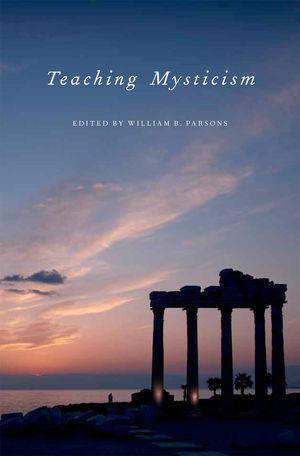
AAR Teaching Religious Studies Series (Oxford University Press)s The term ''mysticism'' has never been consistently defined or employed, either in religious traditions or in academic discourse. The essays in this volume offer ways of defining what mysticism is, as well as methods for grappling with its complexity in a classroom. This volume addresses the diverse literature surrounding mysticism in four interrelated parts. The first part includes essays on the tradition and context of mysticism, devoted to drawing out and examining the mystical element in many religious traditions. The second part engages traditions and religio-cultural strands in which ''mysticism'' is linked to other terms, such as shamanism, esotericism, and Gnosticism. The volume's third part focuses on methodological strategies for defining ''mysticism,'' with respect to varying social spaces. The final essays show how contemporary social issues and movements have impacted the meaning, study, and pedagogy of mysticism. Teaching Mysticism presents pedagogical reflections on how best to communicate mysticism from a variety of institutional spaces. It surveys the broad range of meanings of mysticism, its utilization in the traditions, the theories and methods that have been used to understand it, and provides critical insight into the resulting controversies. (From the Publisher)
Wabash Center Staff Contact
Sarah Farmer, Ph.D.
Associate Director
Wabash Center
farmers@wabash.edu