Resources
As societal expectations about attending college have grown, professors report increasing numbers of students who are unprepared for the rigors of postsecondary education—not just more students with learning disabilities (whose numbers have more than tripled, but students (with and without special admission status who are academically at-risk because of inadequate reading, writing and study skills. This book provides professors and their graduate teaching assistants—those at the front line of interactions with students—with techniques and approaches they can use in class to help at-risk students raise their skills so that they can successfully complete their studies. The author shares proven practices that will not only engage all students in a class, but also create the conditions—while maintaining high standards and high expectations—to enable at-risk and under-prepared students to develop academically, and graduate with good grades. The author also explains how to work effectively with academic support units on campus. Within the framework of identifying those students who need help, establishing a rapport with them, adopting inclusive teaching strategies, and offering appropriate guidance, the book presents the theory teachers will need, and effective classroom strategies. The author covers teaching philosophy and goals issues of discipline and behavior motivation and making expectations explicit classroom climate and learning styles developing time management and study skills as well as the application of "universal design" strategies. The ideas presented here—that the author has successfully employedover many years—can be easily integrated into any class. (From the Publisher)
How do we educate our students about cultural diversity and cultural differences, and eliminate cultural ignorance, stereotyping, and prejudice? What are the conceptual issues involved in reaching this goal? How can we integrate these perspectives in disciplinary and diversity courses, and the curriculum? This book is a resource for answering these questions. Within the framework of current scholarship and discussion of essential concepts, it offers practical techniques, and empirically proven "best practices" for teaching about diversity. The book opens with a conceptual framework, covering such issues as distinguishing teaching to a diverse audience from teaching about diversity and contrasting the incorporation of culture across the curriculum with tokenistic approaches. Subsequent chapters identify classroom practices that can optimize students' learning, especially those from culturally diverse backgrounds; describe feminist principles of education that that promote learning for all students; and address principles of effective on-line instruction for diverse populations. The book is intended for faculty integrating diversity into existing courses, and for anyone creating courses on diversity. The ideas and suggestions in the text can be incorporated into any class that includes a discussion of diversity issues or has a diverse student enrollment. The contributors offer pragmatic and tested ways of overcoming student misconceptions and resistance, and for managing emotional responses that can be aroused by the discussion of diversity. The editors aim to stimulate readers' thinking and inspire fresh ideas. The book further provides teachers ofdiversity with a range of effective exercises, and attends to such issues as teacher stress and burnout. This book can also serve to inform and guide department chairs and other administrators in the design and implementation of diversity initiatives. (From the Publisher)

Journal Issue.
AAR Teaching Religious Studies Series (Oxford University Press) The academic study of death rose to prominence during the 1960s. Courses on some aspect of death and dying can now be found at most institutions of higher learning. These courses tend to stress the psycho-social aspects of grief and bereavement, however, ignoring the religious elements inherent to the subject. This collection is the first to address the teaching of courses on death and dying from a religious-studies perspective. The book is divided into seven sections. The hope is that this volume will not only assist teachers in religious studies departments to prepare to teach unfamiliar and emotionally charged material, but also help to unify a field that is now widely scattered across several disciplines. (From the Publisher)
AAR Teaching Religious Studies Series (Oxford University Press) Emile Durkheim's work on religion occupies a central place in religious studies classrooms today. At the undergraduate level, Durkheim is widely taught in large Introduction to Religion courses and in upper division seminars in "theory and method." His work is also taught in graduate Religious Studies departments of all stripes, from those grounded in the social sciences to those rooted in phenomenology and history of religions. This diverse classroom use within religious studies is reproduced in neighboring disciplines, where Durkheim's work on religion is regularly introduced in courses in sociology, anthropology, history, and philosophy, as well as in such interdisciplinary programs as Jewish studies and women's studies. This volume is designed as a resource for teachers and students of Durkheim on religion, providing practical advice about productive ways to approach central texts and difficult pedagogical issues. It represents diverse points of views and a range of disciplines. The essays in Part One address large issues arising from the whole of Durkheim's work on religion, such as what material to assign in what sorts of courses, and on how to present the material to students of varying background and motivation. Part Two turns to context, with essays assessing the available English translations of the Elementary Forms of Religious Life, and exploring how to teach the historical, critical, and biographical framework of Durkheim's work on religion. Part Three takes up questions of how to incorporate Durkheim's work in courses concerned with ethics, gender studies, and social theory. (From the Publisher)
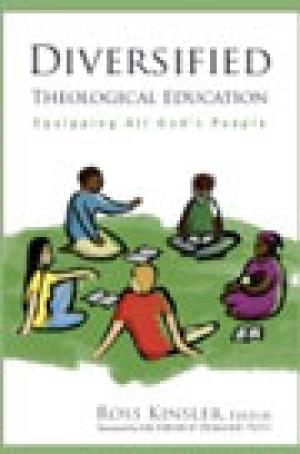
The central concern of Diversified Theological Education, which includes Theological Education by Extension, is access. TEE and DTE models have made enormous progress in the urgent task of equipping all God's people for ministry. Ross Kinsler has compiled in this anthology important case studies of the diverse means of contemporary theological education. (From the Publisher)
Drawing on data from a sample of approximately 17,000 male and female students that represent 200 institutions, The Gender Gap in College examines the impact of college experiences, peer groups, and faculty on a comprehensive array of student outcomes. Author Linda Sax’s approach is unique because she directly examines the interaction between gender and a variety of college experiences, a major inquiry which addresses the fundamental “individualization” question: do women and men respond differently to a given educational experience? The areas covered in the book include academic achievement, self-concept, life goals, career development, physical and emotional health, political and social attitudes, and satisfaction with college. (From the Publisher)
From the Publisher Written for anyone who works with graduate students to support their teaching efforts in American research universities, this book draws on the extensive experience of professional educators who represent a variety of programs throughout the United States. They understand the common constraints of many TA development classes, workshops, and programs, as well as the need for motivating and sophisticated techniques that are, at the same time, practical and focused. Their contributions to this book have proven to be effective in developing the sophisticated communication skills required by TAs across the disciplines.
Project Overview Introduction Project Background and Methodology Project Panel Members The Nine Ministerial Duties The Matrix: Duties and Tasks of a Catholic Priest Rubric Key One - Celebrates Liturgy and Sacraments Two - Provides Pastoral Care and Spiritual Guidance Three - Teaches the Faith Four - Leads Parish Administration Five - Practices a Ministry of Presence with Parish Groups Six - Participates in the Life of the Diocesan Church Seven - Engages with Diverse Publics Eight - Engages in Professional Development Nine - Engages in Personal Development The Use of an Assessment Portfolio in Seminary Formation Sample Elements of a Seminarian Portfolio Appendix The Successful Priest - Skills and Knowledge The Successful Priest - Behaviors and Attributes Resources for Priests Defining the Current Context of the Ministry
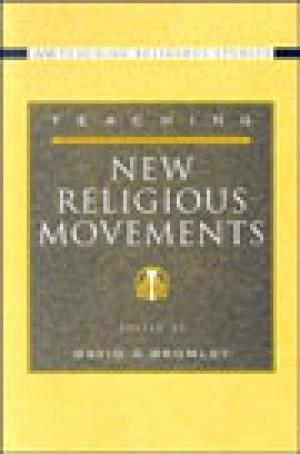
AAR Teaching Religious Studies Series (Oxford University Press) Since its inception around 1970, the study of New Religious Movements (NRMs) has evolved into an established multidisciplinary field. At the same time, both the movements and the scholars who study them have been the subjects of intense controversy. In this volume, a group of senior NRM scholars who have been instrumental in the development of the field will offer pivotal essays that present the basics of NRM scholarship along with guidance for teachers on classroom use. The book is organized topically around subjects that are both central to the study of NRMs and likely to be useful to non-specialists. Part I contains examinations of the definitional boundaries of the area of study, varying disciplinary perspectives on NRMs, unique methodological/ethical problems encountered in the study of NRMs, and the controversies that have confronted scholars studying NRMs and the movements themselves. Part II examines a series of topics central to teaching about NRMs: the larger sociocultural significance of the movements, their distinctive symbolic and organizational features, the interrelated processes of joining and leaving NRMs, the organization of gender roles in NRMs, media and popular culture portrayals of the movements, the occurrence of corruption and abuse within movements, and violence by and against NRMs. Part III provides informational resources for teaching about NRMs, which are particularly important in a field where knowing the biases of sources is crucial. With its interdisciplinary approach, the volume provides comprehensive, accessible information and perspectives on NRMs. It is an invaluable guide for instructors navigating this scholarly minefield. (From the Publisher)
Wabash Center Staff Contact
Sarah Farmer, Ph.D.
Associate Director
Wabash Center
farmers@wabash.edu