Resources
Designing and Assessing Courses and Curricula reflects the most current knowledge and practice in course and curriculum design and connects this knowledge with the critical task of assessing learning outcomes at both course and curricular levels. This thoroughly revised and expanded third edition of the best-selling book positions course design as a tool for educational change and contains a wealth of new material including new chapters, case examples, and resources. (From the Publisher)
Becoming an authentic teacher appears to be a developmental process that relies on experience, maturity, self-exploration, and reflection. It is the purpose of this volume to explore a variety of ways of thinking about authenticity in teaching, from the perspective of both scholars and practitioners. This volume addresses five overlapping and interrelated aspects of teaching that impact a teacher's authenticity: * self-awareness and self-exploration * awareness of others (especially students) * relationships with students * awareness of cultural, social, and educational contexts and their influence on practice * critical self-reflection on teaching Authenticity is one of those concepts, like soul, spirit, or imagination, that are easier to define in terms of what they are not than what they are. We can fairly easily say that someone who lies to students or pretends to know or who deliberately dons a teaching persona is not authentic. But do the opposite behaviors guarantee authentic teaching? Not necessarily... This is the 111th volume of the quarterly journal, New Directions for Adult and Continuing Education.(From the Publisher)
On Teaching and Learning takes the ideas explored in renowned educator Jane Vella’s best-selling book Learning to Listen, Learning to Teach to the next level and explores how dialogue education has been applied in educational settings around the world. Throughout the book, she shows how to put the principles and practices of dialogue education into action and uses illustrative stories and examples from her extensive travels. Dialogue education values inquiry, integrity, and commitment to equity—values that are also central to democracy. Learners are treated as beings worthy of respect, recognized for the knowledge and experience they bring to the learning experience. Dialogue education emphasizes the importance of safety and belonging. It is an approach that welcomes one’s certainties and one’s questions. (From the Publisher)
Developing Learner-Centered Teaching offers a step-by-step plan for transforming any course from teacher-centered to the more engaging learner-centered model. Filled with self-assessments and worksheets that are based on each of the five practices identified in Maryellen WeimerÕs Learner-Centered Teaching, this groundbreaking book gives instructors, faculty developers, and instructional designers a practical and effective resource for putting the learner-centered model into action. (From the Publisher)

Journal Issue.
A 15,000 word article from AAUP (American Association of University Professors), addressing faculty recruitment,  tenure and advancement, sexual harassment, academic freedom, and protections against personal liability. “In the end, if you apply institutional policies consistently and fairly, you will be in a solid position to defend decisions.”
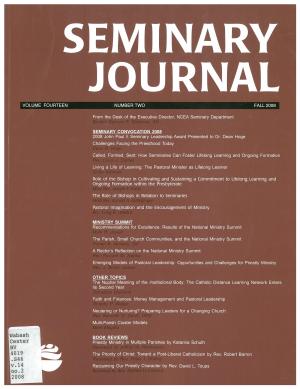
Journal Issue.
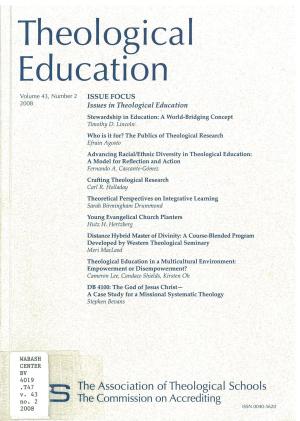
Journal Issue. Full text is available online.
Wabash Center Staff Contact
Sarah Farmer, Ph.D.
Associate Director
Wabash Center
farmers@wabash.edu