Resources
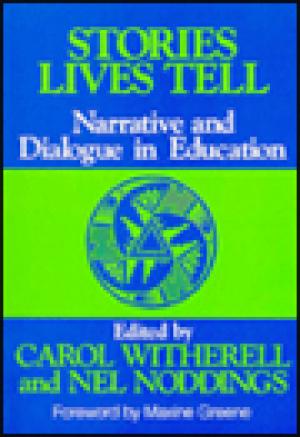
This book speaks of a fresh approach to knowing and teaching. The editors have succeeded in combining a philosophical framework for the centrality of narrative and dialogue in education and human services with lively accounts from practitioners working in a variety of disciplines and levels. Rich with life histories and stories, this book is organized around three themes: that story and narrative are primary tools in teaching and the helping professions; that education means taking seriously both the quest for life's meaning and the call to care for persons; and that the use of narrative and dialogue can serve as a model for teaching and learning across boundaries of disciplines, professions, and cultures. (From the Publisher)
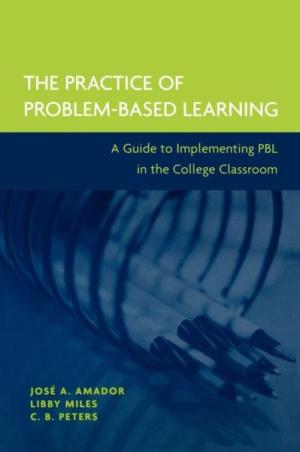
This book is a guide for the development and implementation of problem-based learning (PBL) in college-level courses. It provides practical advice from real professors, includes examples of PBL in action through every stage from problem development to implementation, and integrates cross-disciplinary experiences into the practice of PBL in the college classroom. Its nuts-and-bolts approach makes it valuable to faculty, graduate teaching assistants, and faculty development professionals interested in learning how to do PBL, as well as to those already using PBL who would like to learn more about what other practitioners do in their classrooms. Readers will learn what really is and isn’t PBL and why some choose to use it, what is its effect on the learning landscape, and how to overcome tricky issues such as class size, student resistance, controlling classroom chaos, conservative colleagues, assessment, and student evaluations. Extensive examples and resources for further study are included, making it a concise, yet comprehensive guide to launching a successful problem-based learning course on your own. (From the Publisher)
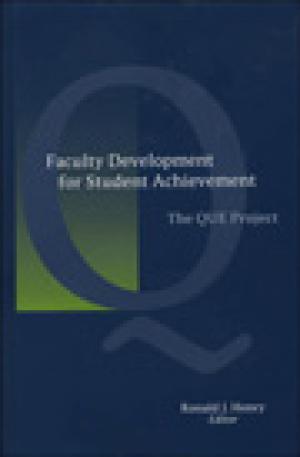
This book describes a seven-year project—Quality in Undergraduate Education (QUE)—that produced important changes in departments and in the teaching of individual faculty in 21 two- and four-year institutions across four states. Rather than a blow-by-blow report of the project, it focuses on the problems that led to the development of QUE: concern about low levels of student learning in postsecondary institutions and demands by state legislatures that funds for postsecondary institutions be tied to assessment of student learning. The story is told first from the organizational perspective in national and local campus meetings, and then from the point of view of faculty in five chapters, one for each discipline of biology, chemistry, English, history, and mathematics. This description of QUE is intended as a model for administrators and faculty seeking to meet the challenges of increasingly diverse students as well as the increasingly divergent ways to earn a degree. (From the Publisher)
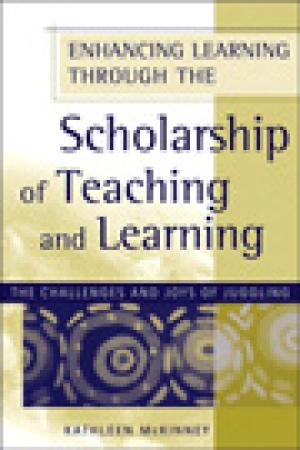
The Challenges and Joys of Juggling There has been growing demand for workshops and materials to help those in higher education conduct and use the scholarship of teaching and learning. This book offers advice on how to do, share, and apply SoTL work to improve student learning and development. Written for college-level faculty members as well as faculty developers, administrators, academic staff, and graduate students, this book will also help undergraduate students collaborating with faculty on SoTL projects. Though targeted at those new to the field of SoTL, more seasoned SoTL researchers and those attempting to support SoTL efforts will find the book valuable. It can be used as an individual reading, a shared reading in SoTL writing circles, a resource in workshops on SoTL, and a text in seminars on teaching. Contents include: * Defining SoTL * The functions, value, rewards, and standards for SoTL work * Working with colleagues, involving students, writing grants, integrating SoTL into your professional life, and finding useful resources * Practical and ethical issues associated with SoTL work * Making your SoTL public and documenting your work * The status of SoTL in disciplinary and institutional contexts * Applying the goals of SoTL to enhance student learning and development. (From the Publisher)
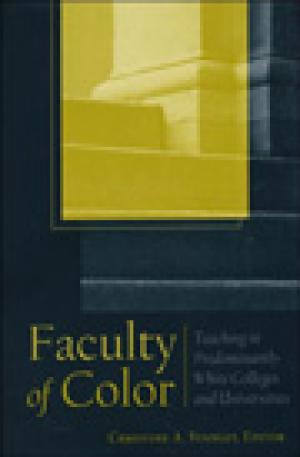
Combining an overview of current research literature and 23 engaging narratives, Faculty of Color invites deeper dialogue on the experiences of faculty of color teaching in predominantly white institutions. By raising issues for commentary and investigation, the book challenges its readers to adopt effective strategies for the recruitment and retention of faculty of color in higher education. The authors represent a variety of disciplines and share firsthand experiences that range from teaching, recruitment, research, mentoring, institutional climate, and administration, to relationships with colleagues as well as students. Through their stories, they are able to offer useful insights into * Teaching styles and how they affect promotion decisions * The impact of mentoring relationships * Collegiality in the campus and university setting * Separating self-identity from group membership * Managing service activities * Understanding and dealing with racism Faculty of Color is intended for senior administrators and policymakers, faculty development professionals, current faculty, and future faculty of color who are contemplating academia. Each chapter offers a variety of recommendations designed to guide predominantly white colleges and universities in working to ensure that their institutions continue to change in substantive ways. (From the Publisher)
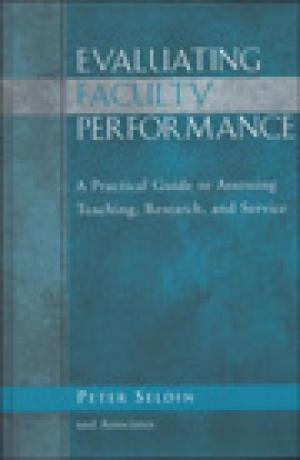
Written by experts in teaching and administration, this guide offers practical, research-based information for faculty members and administrators in search of new approaches for assessing and improving faculty potential. By recognizing that faculty evaluation can be a difficult, time-consuming, and costly process, the authors of Evaluating Faculty Performance have distilled existing evaluation practices into useful recommendations for strengthening the overall system. Offering numerous suggestions for improving evaluation methods, assessing program weaknesses, and avoiding common problems, the book * Examines compelling reasons for developing effective and systematic faculty assessment processes * Discusses how to create a climate for positive change by favoring performance counseling over performance evaluation * Identifies the essential elements and best practices in assessment, while also revealing what not to do in evaluating performance * Explains the value of the professional portfolio in assessment teaching, and offers advice on how to complete a portfolio * Outlines key issues, dangers, and benchmarks for success in straightforward language Included are field-tested forms and checklists that can be used to measure faculty performance in teaching, research, and service. The suggestions for improving faculty assessment are clear and practicable—sensible advice for strengthening a process that is of increasing importance in higher education. (From the Publisher)
Teaching Reflectively in Theological Contexts explores the dynamics, principles, contradictions and tensions of teaching within theological contexts. It offers practical suggestions on modeling pastoral leadership, building trust with learners, negotiating the dynamics of team-teaching, questioning received truth, teaching through discussions, working with diversities, and building a culture of reflective teaching. (From the Publisher)
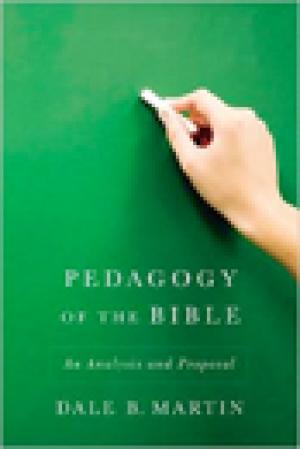
For generations, most seminary teaching of the Bible has focused on the historical-critical method. While this method has been the assumption in almost every seminary curriculum, the actual effects of this approach to Scripture have hardly been examined. From studying the biblical studies courses at ten different seminaries and divinity schools, Dale Martin learned what faculties were doing and what students were hearing. This book presents his discoveries, offering the best-ever inside look into the teaching of the Bible for ministry. Going beyond mere description, Martin argues for a new emphasis on interpreting Scripture within the context of church history and theology. Such a reading would be more theological, more integrated into the whole theological curriculum, and more theoretical (as it would focus on whats at stake in interpretation); however, Martin surprisingly argues, it would be more practical at the same time. (From the Publisher)

The new edition of this bestselling book builds on the author’s extensive administrative and consulting experience as well as scholarship on faculty rewards. It includes additional discussion of important foundational issues as well as practical forms and ideas gleaned from disciplinary groups and campuses throughout the nation. Like the first edition of Peer Review of Teaching, this new edition is offered in the hope that providing examples and suggestions will not reduce the important work of peer review to mere forms or rigid procedures, but will empower faculty to articulate criteria and standards, perform the reviews systematically and thoughtfully, and realize that engaging in peer review is an approachable and worthwhile professional task. Updated to reflect the emphasis on student learning as the ultimate goal of college teaching, it incorporates new ideas and references from the literature. The most notable change in this edition is a discussion of peer review within special contexts for teaching, such as clinics, studios, and practice settings. The turn to active engagement in learning has also led to increased use of problem-based learning, the case study method, and other approaches that traditional forms for peer review do not address. Similarly, the explosion of the use of instructional technology calls for an articulation of new approaches to evaluating web-based instruction. (From the Publisher)
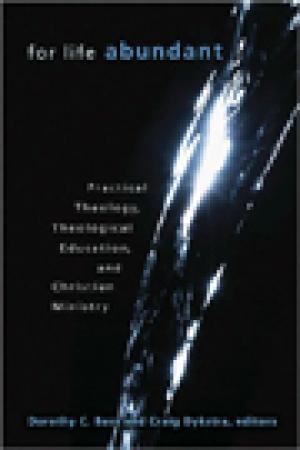
What does it mean to lead a truly "life-giving way of life"? What kinds of learning and teaching will best prepare ministers to foster such a way of life in their congregations? How might teachers of practical theology best understand and undertake their task to educate and form ministers? Respected scholars and ministers explore such questions in For Life Abundant, probing and clarifying the significance of practical theology in the classroom, in the wider academy, and in actual ministry settings. (From the Publisher)
Wabash Center Staff Contact
Sarah Farmer, Ph.D.
Associate Director
Wabash Center
farmers@wabash.edu