Resources
Those of us who care about the young and their education must find ways to remember what teaching and learning are really about. We must find ways to keep our hearts alive as we serve our students. Poetry has the power to keep us vital and focused on what really matters in life and in schooling. Teaching with Fire is a wonderful collection of eighty-eight poems from such well-loved poets as Walt Whitman, Langston Hughes, Billy Collins, Emily Dickinson, and Pablo Neruda. Each of these evocative poems is accompanied by a brief story from a teacher explaining the significance of the poem in his or her life's work. This beautiful book also includes an essay that describes how poetry can be used to grow both personally and professionally. Teaching With Fire was written in partnership with the Center for Teacher Formation and the Bill & Melinda Gates Foundation. Royalties from this book will be used to fund scholarship opportunities for teachers to grow and learn. (From the Publisher)
Sam Pickering has been teaching, guiding, performing, and inspiring for more than forty years. As a young English teacher at Montgomery Bell Academy in Tennessee, his musings on literature and his maverick pedagogy touched a student named Tommy Schulman, who later wrote the screenplay for Dead Poets Society. Letters to a Teacher is a welcome reminder that teaching is a joy and an art. In ten graceful yet conversational letters addressed to teachers of all types, Pickering shares compelling, funny, always elucidating anecdotes from a lifetime in the classrooms of school and universities. His priceless, homespun observations touch on topics such as competition, curiosity, enthusiasm, and truth. More than a how-to guide, Letters to a Teacher is an invitation into the hearts and minds of an extraordinary educator and his students, and an irresistible call to reflection for the teacher who knows he or she must be compassionate, optimistic, respectful, firm, and above all dynamic. This is an indispensable guide for teachers and laymen alike. (From the Publisher)
"My mother still wants me to get a 'real' job. My father, who is retired after forty-four years in the merchant marine, has never read my work. When I visited recently, the only book in his house was the telephone book." "I do not know that my mother's mother ever acknowledged my college education except to ask me once, 'How can you live so far away from your people?'. Thus write two of the twenty women from working-class backgrounds whose voices are heard in this unique collection of essays. Each of the women has lived through the process of academic socialization - as both student and teacher - and each has thought long and deeply about her experience from an explicitly feminist perspective. Among the questions the contributors explore, What are the issues - pedagogical, theoretical, and personal - that affect the professional and private lives of these women? How do they resolve tensions between their roles as middle-class professionals and their roots in working-class families? How do class and gender intersect in the academy? (From the Publisher)
These autobiographical and analytical essays by a diverse group of professors and graduate students from working-class families reveal an academic world in which "blue-collar work is invisible." Describing conflict and frustration, the contributors expose a divisive middle-class bias in the university setting. Many talk openly about how little they understood about the hierarchy and processes of higher education, while others explore how their experiences now affect their relationships with their own students. They all have in common the anguish of choosing to hide their working-class background, to keep the language of home out of the classroom and the ideas of school away from home. These startlingly personal stories highlight the fissure between a working-class upbringing and the more privileged values of the institution. (From the Publisher)
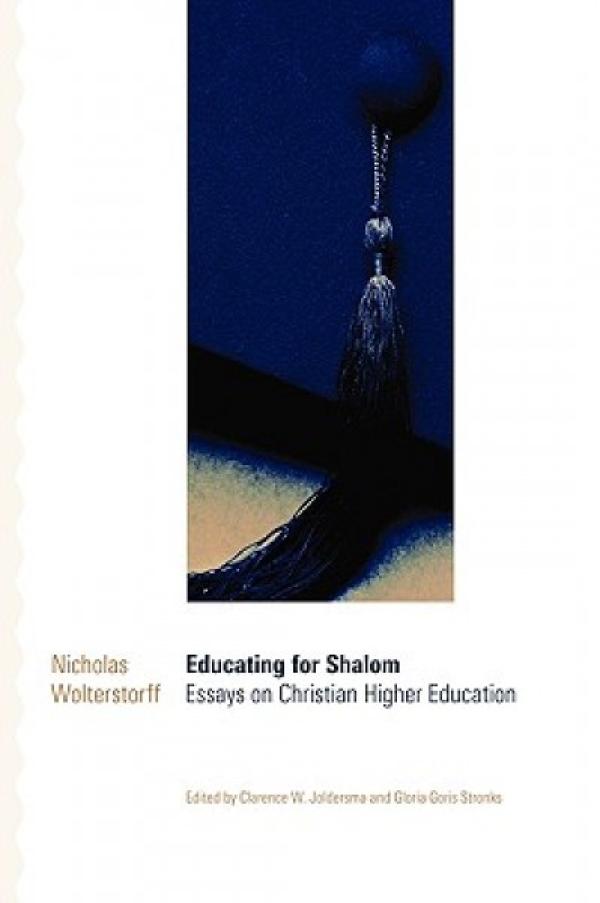
In addition to his notable work as a premier Christian philosopher, Nicholas Wolterstorff has become a leading voice on faith-based higher education. This volume gathers the best of Wolterstorff's essays from the past twenty-five years dealing collectively with the purpose of Christian higher education and the nature of academic learning. Integrated throughout by the biblical idea of shalom, these nineteen essays present a robust framework for thinking about education that combines a Reformed confessional perspective with a radical social conscience and an increasingly progressivist pedagogy. Wolterstorff develops his ideas in relation to an astonishing variety of thinkers ranging from Calvin, Kuyper, and Jellema to Augustine, Aquinas, and Kant to Weber, Habermas, and MacIntyre. In the process, he critiques various models of education, classic foundationalism, modernization theory, liberal arts, and academic freedom. (From the Publisher)

Radical Presence is a book about our lives as well as our work, suggesting that the "secrets" of good teaching are the same as the secrets of good living. (From the Publisher)
Conventional wisdom has it that education is the great equalizer in a society. Notwithstanding, access to higher education and terminal degrees have not proven synonymous with the establishment of legitimacy for many voices. Academics and scholars of color continue to confront barriers constituent of the racialized, gendered, and class(ed) baggage characterizing dominant social relations. In I've Got a Story to Tell different members of academe struggle with the institutionalized constructs that pose real challenges to the transformation and democratization of higher education. (From the Publisher)
Inquiry and Reflection shows how stories of schooling can elucidate difficult, and unexamined problems facing teachers. While professional texts tend to raise issues of power and its distribution and questions of culture and ideology, often the manner of presentation is abstract, and pre-service teachers have difficulty making connections. Yet literary, film, and video materials illuminate problems and suggest ideas to which teachers can actively respond. This book offers teacher educators a variety of resources for articulating a critical pedagogy and suggests an alternative to the technical, job training approach to teacher education by providing a unique educational curricula that illuminates issues of power, ideology, and culture. (From the Publisher)
From the Publishers Despite the intimidating reference to pedagogy in the title, the anthology is true to the encompassing notion of feminism as a foundation from which theories and disciplines can emanate in order to voice a variety of experience. The American, British, and Australian scholars provide compelling essays on identity, friendship, motherhood, hunger, the media, parenting, childcare, shame, and the silencing influences of legal systems and the academy. Unusual for this type of collection is a lone wolf contribution about learning to be a man--the "other half" viewpoint by which feminism marks its progress.