Resources
"Becoming an effective teacher can be quite painful and exhausting, taking years of trial and error. In The Art of Teaching, writer and critic Jay Parini looks back over his own decades of trials, errors, and triumphs, in an intimate memoir that brims with humor, encouragement, and hard-won wisdom about the teacher's craft." Here is a godsend for instructors of all levels, offering valuable insight into the many challenges that educators face, from establishing a persona in the classroom, to fostering relationships with students, to balancing a teaching load with academic writing and research. (From the Publisher)
Richard T. Hughes's highly praised book on the relationship between Christian faith and secular learning originally published as "How Christian Faith Can Sustain the Life of the Mind" is now available in a revised edition that brilliantly incorporates recent interest in the topic of vocation.While the vocational dimensions of the earlier book were implicit, this revised edition makes them explicit. In the first of two completely new chapters, Hughes recounts his own vocational journey, telling how he drew on Christian theology to discover his talents and how best to use them. The second new chapter focuses on the vocation of Christian colleges and universities, including the purpose and goals of churchrelated education. The story offered here provides a compelling argument that faith, properly pursued, nourishes the openness and curiosity that make a life of the mind possible. (From the Publisher)
Journal issue. Full text is available online.
The Way of the Teacher, written by educator J. M. Haile, is for the dissatisfied teacher: one who conscientiously performs the job but who feels that students are not benefiting as much as they should; one who wants to continue growing in the profession but who needs guidance and encouragement; one who aspires to master teaching and inspire students. Such teachers can be found at every institution of learning, in every discipline, and at every level of experience. The intent is to help teachers improve. But no quick fixes are offered here: this book is not about the mechanics of teaching or learning. Instead, in The Way of the Teacher Haile tries to illuminate certain issues that teachers should resolve in their own minds, if they are to master the profession. The most unusual feature of the presentation is its structure: rather than a formal academic monograph, the book is small, of few words, and to the point. The aim is not to convince, but to stimulate: the book is not a map, but a sign post. Nearly every page contains a highly charged phrase that challenges teachers to think more deeply about what they do; e. g., "Let's stop teaching the courses, and start teaching the students." The Way of the Teacher combines the author's years of experience in the classroom with recent advances in educational psychology and cognitive science. In the book, Haile deftly reaches across established disciplines to explore those difficulties that are common to most teaching and learning situations. The book reflects deep thinking about the plight of the student, who is often unsure of what learning really is, and the plight of the teacher, who is often unsure of what teaching really should be. (From the Publisher)
"In Teaching as a Sacramental Act, Moore asserts that Christian vocation, and the teaching vocation in particular, can be best understood as sacramental, mediating the grace of God through ordinary creation for the sanctification of human life and the well-being of all creation. She develops her argument through three important factors: a historical-theological analysis of the Christian sacraments and sacramentality; a phenomenological study of teaching events; and a description of six sacramental movements and corresponding teaching practices as informed by Jewish-Christian traditions and Eucharistic practices." Teaching as a Sacramental Act is ideal for students, pastors, Christian educators, spiritual directors, and pastoral caregivers who want to rethink and reshape the teaching ministry of the church. (From the Publisher)

In the burgeoning field of whiteness studies, What White Looks Like takes a unique approach to the subject by collecting the ideas of African-American philosophers. George Yancy has brought together a group of thinkers who address the problematic issues of whiteness as a category requiring serious analysis. What does white look like when viewed through philosophical training and African-American experience? In this volume, Robert Birt asks if whites can "live whiteness authentically." Janine Jones examines what it means to be a "goodwill white." Joy James tells of beating her "addiction" to white supremacy, while Arnold Farr writes on making whiteness visible in Western philosophy. What White Looks Like brings a badly needed critique and philosophically sophisticated perspective to central issue of contemporary society. (From the Publisher)
In Black Sexual Politics, one of America's most influential writers on race and gender explores how images of Black sexuality have been used to maintain the color line and how they threaten to spread a new brand of racism around the world today. In the tradition of her award-winning book, Black Feminist Thought, Patricia Hill Collins now turns her critical eye to race, gender, and sexuality in relation to black men and women. (From the Publisher)

Blea provides a synthesis of the women's history of Native Americans, Asians, African Americans, and Latinas, and she examines the similarities and differences among these women. From each she extracts suggestions on ways to promote racial and ethnic tolerance. (From the Publisher)
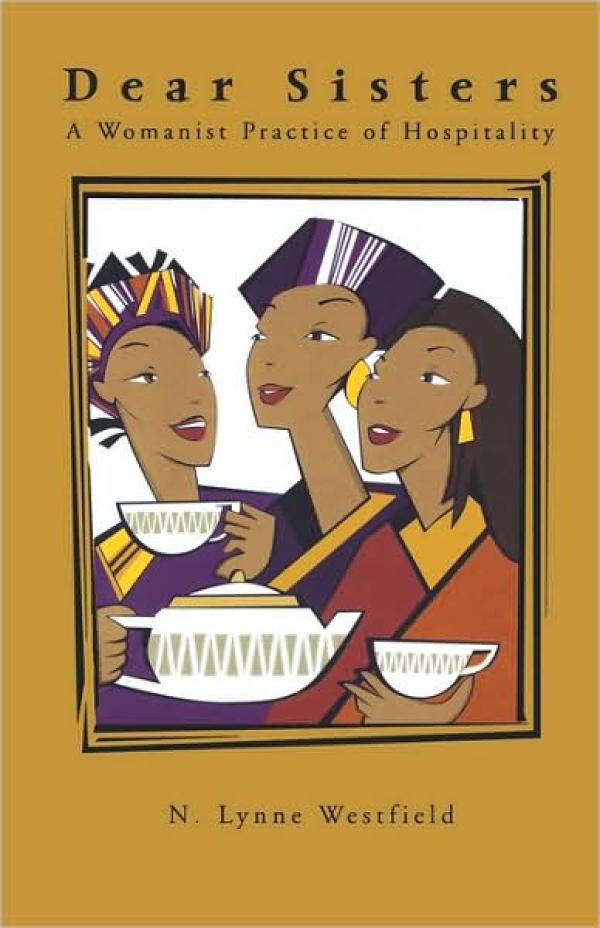
From the Publishers What allows African American women not just to survive, but to become resilient? N. Lynne Westfield finds an answer to this question as she examines the Dear Sisters' Literary Group. As a Womanist scholar, Westfield reflects on the ways in which the hospitality of the group relates to the long-standing African American tradition of concealed gatherings, the Christian tradition of hospitality, and Christian education.

The long-awaited reprint of one of SPD's most popular titleS, this book features a new foreword by Gloria E. Anzaldua, as well as an updated bibliography. It also includes the original 1981 foreword (Toni Cade Bambara), the original preface (Cherrie L. Moraga) and the original introduction (Anzaldua & Moraga). (From the Publisher)