Resources
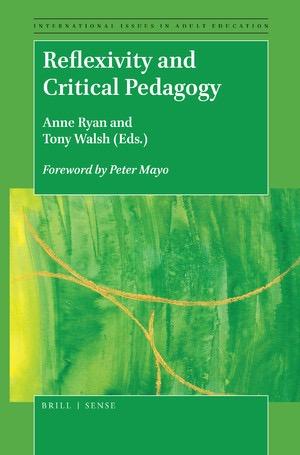
There are these two young fish swimming along and they happen to meet an older fish swimming the other way, who nods at them and says "Morning, boys. How's the water?" And the two young fish swim on for a bit, and then eventually one of them looks over at the other and goes "What the hell is water?” David Foster Wallace, This Is Water Upon reading this volume, I was repeatedly reminded of the late David Foster Wallace’s speech, “This is Water” (Little, Brown, and Co., 2009). Foster’s commencement speech hones in on some underlying themes of life many of those in higher education hope to instill in our students. Most importantly, I think, is the lesson that the most powerful influences on us are often those in which we are continually swimming but which we often cannot see. We must learn the practice of “seeing” the water we swim in. The practice is imperfect, messy, and will not make you particularly fun at parties, but it is vital for any transformative learning to occur. We can do this in a myriad of ways, such as those laid out in this volume, by practicing reflexivity. What is reflexivity? The editors, influenced by Foucault’s concepts of discourse, knowledge, and power, define reflexivity as “encompassing a critical assessment of the significance of environment, power, and context as well as subjectivity in the delineation and construction of knowledge” (1). Reflexivity implies “a responsibility to critically examine our world, and how we position ourselves, and are positioned in that world” (1). Reflexivity is not narcissistic navel-gazing; it involves an intimate interrogation and critical examination of the personal, political, and professional. It is a practice. Contributor David McCormack describes reflexivity as the “practitioner’s attempt to turn their awareness to whatever is happening at any given moment at a personal, interpersonal, organizational, and societal perspective and to use that to illuminate the interpersonal dimension in their work” (122). The self is not freestanding – it always has a context. Why is reflexivity critical to education? Education must be reflexive in order to avoid being merely indoctrination. Education can make space for reflexivity, can give educators and students an opportunity to analyze not just “what works” but also to interrogate for whom does it work and to what end. Learners need spaces to confront dominant narratives and cultures, and educational spaces can provide just that. Contributors to this volume are primarily affiliated with the Department of Adult and Community Education at Maynooth University in Ireland. Each was invited to “challenge traditional thinking in education” (10). The chapters of this volume exemplify a myriad of ways reflexivity can be practiced in educational spaces. Despite this variety, each of these contributions emphasize the critical imaginative element among practitioners, a willingness to see things as possibly otherwise. Whether the reflexive practice happens within discursive analysis, writing, theater-making, transformative learning, systems theory, defining citizenship, facilitative work, or narrative inquiry, it requires imaginative capacity and a willingness of the practitioner to critically examine the very bedrock of their experience and the systematic assumptions underlying their everyday reality. This book would be especially helpful for educators and administrators hoping to equip their students with theoretical tools and practical exercises aimed at “bringing to light dynamics of power which privilege conformity” and “revealing the normally occluded dynamics of dominant discourse”(6). It is also a resource for those who see themselves occupying hybrid spaces: those who acknowledge a multiplicity of knowledges and competing and intersecting realities and experiences, who interrogate and trespass boundaries, and, overall, who strive to “see” the water in which they swim.
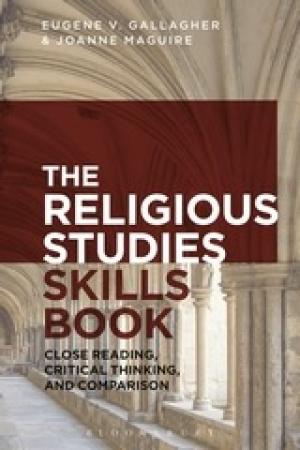
Gallagher and Maguire wrote The Religious Studies Skills Book for undergraduate students taking religious studies courses. Recipients of the American Academy of Religion’s Award for Excellence in Teaching and longtime Wabash Center affiliates, Maguire and Gallagher draw on the breadth of their experiences as scholar-teachers to craft an accessible book that covers the basics – and more. They dispel myths, like the assumption that teaching about religions in public universities is unconstitutional, and they clarify common confusion, including the distinction between studying theology and religious studies. They also offer insights into what makes the study of religion so compelling and worthwhile: Students of religion are in a field unlike any other. The field has interdisciplinary breadth and global and historical depth that can’t be found elsewhere on campus. Many students come to the academic study of religion expecting personal spiritual development. Although that might be an accidental outcome of exposure to ideas in any course, teachers tend to be strongly interested in developing students’ skills and knowledge, goals achieved in part by reading, observation, and discussion that brackets personal judgement and biases . . . If a single introductory course in religious studies teaches nothing else, it will at least show you that there are many other ways to understand the world. (69-70) I quote this passage at length because it exemplifies one of the two most important features of this book: the authors write to and for students. They do this from the first to the last page. I never felt like they overlooked the student to speak to a colleague. Midway through, I flipped back to the title page and wrote, “How many of us write for this audience? They’re taking students seriously!” It’s refreshing, and it is one aspect of the book that would make me want to assign it. The book’s other great strength is how the authors model what they expect students to learn. Most chapters include explicit examples. The chapter on comparison offers lengthy examinations of how comparison works using excerpts from sacred texts (Matthew and Science and Health with Key to the Scriptures) and scholarly ones (definitions of religion). In some places, the authors anticipate students’ observations, and in others, they expand their scope. For example, they note fairly obvious similarities between the gospel and Science and Health, and then they expand the comparison through a series of questions about authorial intent. In addition to the explicit examples, Gallagher and Maguire build an argument through the arrangement of the book’s chapters and draw on evidence from scholarship on teaching and learning. The companion website provides more general information and additional exercises, too. My main concern is how the book can reach its intended audience. Ideally, students in introductory courses would read and absorb the Skills Book. Realistically, the motivated majors in a third-year seminar will be carrying copies with dog-eared pages, and, years from now, graduate students learning how to teach will be lucky to find a copy with some dedicated major’s marginalia.
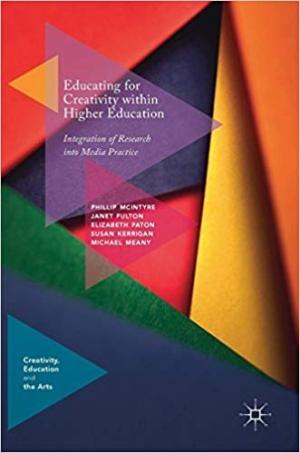
As our students encounter work in what is more and more a gig economy, the authors of this book have been thinking about the implications of such employment for those entering the workforce and also for those who wish to pursue creative endeavors either as full-time or part-time work. The authors focus on creativity as a locus for student and worker resilience and adaptation to changes in global economics. The first several chapters outline various theories of creativity. It is particularly useful that the authors elaborate on many varied theories of creativity within different academic disciplines and contexts. Chapter 1 includes thinking about creativity within a global context, and how different social, cultural, and political situations affect the development of ideas of what constitutes creativity, who is creative, and how they come to be creative. The authors consider the nature of creative development within both collectivist and individualist views of society. They also consider several religious contexts for the development of creativity, including thinking about humans as divine conduits, both as described in sacred texts (such as the story of Moses) and as the Muses working through artists. One strength of the early chapters is seeing the deep theory of creativity in a number of fields. In chapters 3 and 4, the authors turn not just to describing theories, but to challenging them, saying that some might misidentify creativity. The authors probe the sociology and social systems that allow certain types of creativity to become dominant in various societies, and which types of creativity are recognized by their societies. The confluence approaches and systems model, which comprise the central chapters of the book, looks at a number of ways in which creativity can fit or allow a person to thrive within a system. The authors highlight various features such as intrinsic motivation, domain relevant skills (such as knowledge of field and necessary technical skills), and creativity relevant skills. An overwhelming strength of this book is how the reader can look through the authors’ lenses of multiple disciplines and access their background research, ideas, and the main voices in their fields for others to know, which helps readers understand how these ideas apply in various contexts. In chapters 5 and 6, the authors turn from a descriptive project to a constructive one, considering how systems approaches can provide guidance for thinking about effective ways to develop creativity in higher education that will provide students and workers with the necessary tools to adapt to new work situations as our economies evolve. The authors then tease out implications and impacts of such a model and its adaptability to other contexts. All these confluence systems are deeply interactive, and recognize the context in which the person has lived and operates. It is here that the book best provides help to scholars and practitioners in theological and religious studies. While the book is written within the context of media studies, it is clear in the second half of the book where these systems approaches could apply to someone who wishes to either research or serve a religious community, and the authors have begun that work of thinking how this model can work in other contexts. In its last chapters, the book provides multiple ideas about how one’s context can positively shape the ability to develop and foster community.
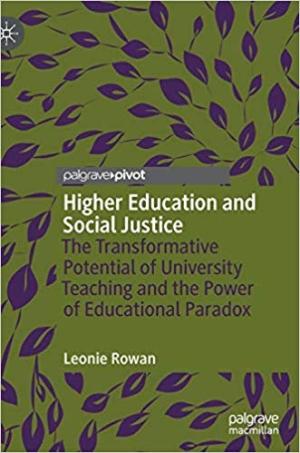
At a recent workshop on “Diversity, Civility, and the Liberal Arts,” I found myself in the company of faculty and staff teams from small colleges and universities around the United States who find themselves, like Leonie Rowan, “motivated by a desire to create university contexts in which diverse learners feel themselves to be included, valued, and safe” (1). This desire names the telos, or end, towards which critical, liberative pedagogy aims – freedom. Unlike the Aristotlean defense of the liberal arts as education suitable for free persons (read: male, property-owning citizens), Rowan’s notion of freedom extends to all learners, especially those whose participation in higher education has been constrained by the unjust dynamics of the sociohistorical contexts in which they happen to be born. Rowan argues that education can be transformational when the decision-making processes in higher education – from curriculum and syllabus design to admissions policies and the student support portfolio – begin with the question: “For whose freedom – in whose interests – do we, now, labor?” (4). It is an important question that suggests that not all student-centric approaches lead to models of student-as-customer and higher education as a private good. For readers who have followed debates about diversity and inclusion in higher education since at least the 1990s, the terrain Rowan is covering and the companions along the way will likely be familiar – notably, the relationship centered, liberative philosophies of Paulo Freire, bell hooks, and Parker Palmer. Like many social currents today, it is difficult to avoid a sense of déjà vu when reading about education and “its fundamentally constructed and negotiated nature” (16) and the need for academics to embrace “the idea that language is a site of struggle” (18). The key move Rowan makes is the attempt to get underneath these now familiar discursive moves in order to understand “what it actually, really, feels like to study within a university classroom” (15). In so doing, she sides with social justice theorists like Nancy Fraser whose notion of participative parity juxtaposes classical questions of social justice as distributive justice with questions related to recognition and representation: “do people have the opportunity to participate in an environment on an equal footing” (14)? The middle chapters demonstrate how pedagogical decisions that flow from notions like participative parity have the potential to transform student engagement. Empirical evidence for this potential is drawn largely from Rowan’s own classroom experience educating future teachers from diverse backgrounds in an Australian university. The data sets consist of student course and instructor evaluations as well as brief “doorstop” interviews with students, most of which confirm what she highlights in the scholarly literature about student engagement and diverse learners. These chapters would, in the end, make much better stand-alone scholarship of teaching and learning articles, offering insights from her own successes and failures to create the type of classroom space she desires. In a telling example of the challenges of actualizing this type of space from chapter four – for me, the strongest section of the book – Rowan describes what she refers to as “one of the most appalling lessons I have ever taught” (115). She acknowledges that in her attempt to empower diverse learners with a lens for critically interpreting past discrimination against First Nations people, she inadvertently opened the door to “inappropriate and offensive language.” The effect was immediate: the goal of a charged but hospitable environment (one of Palmer’s educational paradoxes) devolved into something “destructive and frightening.” Despite her extensive background and skills as a facilitator of difficult dialogues, she acknowledges that this episode created fissures in the class that could not be overcome – indeed, “several of the participants never returned to the class again” (115). What is most striking about this example in the context of her overall argument is the short shrift she gives it. Offered under the heading “A Summary and a Pause,” she relates this anecdote in the space of a page or two, as a kind of aside. Yet, for me, this anecdote is at the heart of her project, illustrative of the pitfalls of liberative pedagogies that fail to adequately acknowledge the priority of her other pedagogical concern: relationships. She concludes the anecdote with an apology to all the students involved, and in this gesture – as well as the telling of the anecdote itself – Rowan reveals herself to be the kind of caring, reflective, intentional pedagogue needed to hold educational paradoxes in creative tension and to resist conflating “giving students an opportunity to have their individual voices” and “anything goes” (116). Yet, the reader is left wondering what she would do differently next time? The evidence she has gathered from years of student evaluations and the practical wisdom she has accumulated teaching these topics semester after semester surely has something important to say about how this might be handled, whether in forms of restorative practice for that particular class or decisions she made the next time to create a more “sufficiently hospitable” (116) environment before introducing similar content. Given her primary data sets for the rest of her argument, it may also have been instructive to hear how students processed that experience in their evaluations. This particular example points to a challenge that has become more acute in recent years as attempts to create participative parity in college classrooms and curriculum have sparked various forms of resistance by those who perceive this type of parity as a threat. While Rowan acknowledges this challenge, the lack of engagement with recent scholarship on concepts like white fragility risks limiting the liberative early insights of luminaries like hooks, Freire, and Palmer. Emerging research on best practices for engaging straight white males as social justice allies on college campuses reveals something about the educational paradox faculty face when introducing issues of social justice in their classrooms – environments that help some diverse learners feel valued and safe may have the opposite effect on other diverse learners (e.g., Vianden 2018). Rowan alludes to this paradox when she coins the term “furiety,” which she refers to as an approach that recognizes, on the one hand, multiple dimensions of diversity including individual differences within traditional categories (e.g., race) and, on the other hand, “a commitment to intellectually charged activities approached through pedagogical variety” (87). Furiety opens a way into a deeper analysis of the example above. More importantly, for those of us who struggle daily to live into the question “For whose freedom – in whose interests – do we, now, labor,” Rowan’s further development of the term may encourage us to respond with greater integrity: “All of my students.”

How do you help students get the point you’re trying to teach? More often than not most of us try the direct approach: “Just tell them!” But a paradox in learning is that often students do not learn what they are told as well as when they discover it for themselves (there are two contrasting schools of pedagogy here: direct instruction vs. discovery learning). The issue at heart is that to by-pass the process of how one acquires learning is to inhibit learning. As I am fond of saying, “Teaching-by-telling doesn’t work because it does other people’s thinking for them.” One way to help students acquire a concept is to use Entry Points to help them approach the concept indirectly and through multi-faceted dimensions of learning. Here are the characteristics of Entry Points: ● Entry points are used to develop learning experiences aimed directly at developing understanding of key concepts (theses are usually identified in the learning objectives). ● Entry points “validate” instantiations of the target entry point. (E.g., an aesthetic entry point activity must tap into and apply the aesthetic dimension and align with an aesthetic learning outcome; an analytical entry point must help "advance rehearse" an analytical learning outcome, etc.) ● Entry point-based learning experiences require students to engage actively, and think with, and about, concepts in novel ways. Rich learning experiences employ a range of entry points to the content (i.e., introductory or “messing about” experiences that invite students with varying backgrounds, experiences, and expertise to work thoughtfully with the content). Joseph Piro provides a great example of the use of entry points in his article, "Teaching Rembrandt," Humanities (November/December 2007) Volume 28 Number 6). First, he provides a rationale for the function of the teaching in using this particular entry point: "Being an “agent of civilization” is one of the many roles ascribed to teachers. If we are to have any expectations of producing a well-educated, well-prepared generation of deep-thinking, resourceful leaders, then it is essential to give students an opportunity to review, respond to, and ultimately revere the power of the human imagination—past and present. There may be no better way to promote this than to study, understand, and exult in masterpieces." In the examples given in the article we can see a variety of concepts addressed through this entry point: A springboard into the Protestant Reformation, Counter-Reformation, the Thirty Years’ War, and other events in seventeenth-century Europe. The importance and significance of Biblical themes. The philosophical concept of aesthetic: beauty. Entry points can be used at any point in the lesson, not just the beginning. Remember that the function of the entry point is to lead into concepts-attainment. I have used the following with students as entry points for segments for concepts attainment in the learning process: ● A video clip of ballet dancers to understand the concept of triangles and homeostasis ● Playing with clay to understand Aristotle’s form-matter hypothesis ● Playing the game Cranium to understand the concept of multiple intelligences ● A slide show of paintings and sculptures to understand different philosophies of aesthetic interpretation ● A short movie to understand “postmodern” concepts followed by a film critic's critique ● Creating a board game to understand group dynamics and the “rules about rules.” As you prepare for your next teaching experience, take time to consider how you want your students to “enter the learning experience” by creating an entry point that leads to the learning outcome.
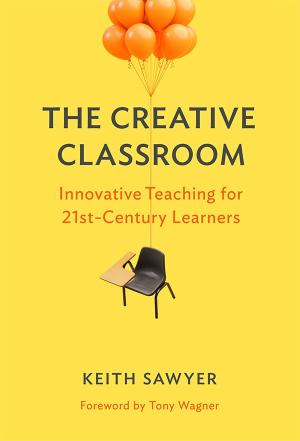
The Creative Classroom presents an original, compelling vision of schools where teaching and learning are centered on creativity. Drawing on the latest research as well as his studies of jazz and improvised theater, Sawyer describes curricula and classroom practices that will help educators get started with a new style of teaching, guided improvisation, where students are given freedom to explore within structures provided by the teacher. Readers will learn how to improve learning outcomes in all subjects—from science and math to history and language arts—by helping students master content-area standards at the same time as they increase their creative potential. This book shows how teachers and school leaders can work together to overcome all-too-common barriers to creative teaching—leadership, structure, and culture—and collaborate to transform schools into creative organizations. (From the Publisher)
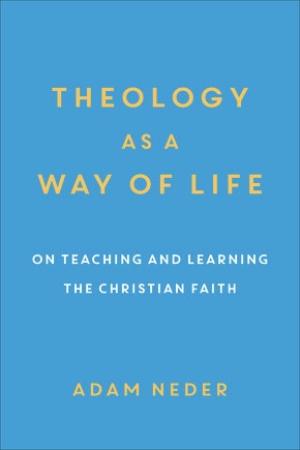
What difference does Jesus Christ make for the way we teach the Christian faith? If he is truly God and truly human, if he reveals God to us and us to ourselves, how might that shape our approach to teaching Christian theology? Without a compelling theological vision of theological instruction and without a clear awareness of its unique goals, challenges, and temptations, our teaching will be out of joint with the subject matter, and we will waste valuable opportunities. Drawing on the work of Søren Kierkegaard, Karl Barth, and Dietrich Bonhoeffer, Adam Neder offers a clear and creative theological and spiritual reflection on the art of teaching the Christian faith. This concise and engaging book offers a wealth of fresh insights and practical suggestions. While addressed to teachers in academic contexts, the approach is broad enough to include anyone involved in teaching and learning Christianity. (From the Publisher)
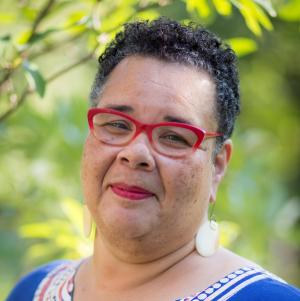
“With A Little Help From My Friends” was composed by John Lennon and Paul McCartney in 1967. The familiar song pronounces the power and necessity of friendship: What would you think if I sang out of tune, would you stand up and walk out on me? lend me your ears and I'll sing you a song and I'll try not to sing out of key. Oh, I get by with a little help from my friends mm, I get high with a little help from my friends mm, gonna try with a little help from my friends . . . The week after graduation, I got a call from a dear colleague. He was working on his syllabus for the upcoming summer semester. Having been in conversation for twenty years, he and I “get by with a little help” from each other. My colleague is a brilliant, multi-disciplinary scholar. Unlike me, he reads deeply across several academic fields - both domestic as well as international literature. He brings that expansive knowledge to our collaboration. I bring to our collaboration my scholarly knowing and, more important, my know-how in creativity, imagination, and the ability to make unorthodox connections in pedagogy, cultural politics, and beyond. Our phone conversation was “as usual.” My friend began by describing the focus of his upcoming summer course as well as the theory he was emphasizing in the course. He quickly summarized the required readings. He reminded me that it was a summer intensive, so he needed assistance in making good use of the time format. I asked if he needed to talk about assignments or learning activities. He said both. I took a few deep breaths, considered his topic, then intentionally imagined the graduate students in his course. Half of the enrolled students would be students of many races born in the USA, who will likely go on to serve communities close to home. The other half would be international, coming from countries in Asia, Africa, and the Caribbean, who might either serve white churches in the USA, or return home after graduation. My friend waited patiently as I thought. After my long pause, I asked, “Are you ready?” He said yes. I launched in by asking questions of clarification as if I were a student in his course. During that part of our conversation, he could hear the gaps in the course objectives and learning outcomes and he began to strategize ways to narrow the gaps and more directly address the student’s likely curiosity. Then, I brainstormed out loud about possible classroom activities that could take him and students out into the community near the theological school. We talked about possible resource persons to be brought into the classroom to make vivid the need for praxis-thinkers and doers. Once I got all my initial ideas spoken, I stopped. I asked if he wanted more. He said yes, so I continued until my imagination had run its course. Next, we turned to possible assignments as well as ways to elicit questions from students which would help them to bridge theory with community. By the end of our conversation, my friend had more than enough material to finish designing his summer intensive. The course was going to be brilliant! Our conversation was so well choreographed because of our reciprocity. I assist him with course development, and he helps me with editing and thinking more deeply about my publications. He has read and commented on almost everything I have published. I strengthen his work and he strengthens my work. We know our work is better because of the input of the other. “lend me your ears and I'll sing you a song and I'll try not to sing out of key.” Beyond the necessity of collaboration to strengthen and deepen our work, I would suggest networking is an under-utilized aspect of teaching and friendship. A little over a year ago, an alum from my school called me and asked if she could put me in touch with a friend of hers who was working on a new project. I said yes, only because of the respect I have for the former student. I was not, at that time, looking for any new projects nor was I looking for a consultant. Now, two years later, the person she put me in touch with, who is neither an educator nor a theologian, has become a consultant for our seminary and we are doing innovative programming in new areas. Had the consultant “cold called” me, I would have brushed him off. When a person I knew and trusted asked me to give time for a conversation, it was because of her influence that I paid attention and opened doors. Making use of our networks is opening ourselves to possibilities beyond ourselves. Making use of our networks entails that many of us must come-to-grips with the cachet and influence of our roles. So many of us undervalue our social position and make little use of the societal, intellectual, and material capital which we are afforded in our positions as teacher/scholars. We are people with juice! Making use of that juice for other people is part of our jobs. A new friend, who I met a year ago, told me that she drives her son to New Haven each morning for school. Since the commute is almost an hour, she stays in New Haven and writes at a local coffee shop, then picks up her son from school and returns home in the late afternoon. She is a professional writer so writing in a coffee shop is OK. I frowned at the thought of her working daily in a public coffee shop. The next day I phoned a colleague at Yale University. I asked him to take my writer friend to lunch because I thought they would enjoy each other’s company. I also asked him to give her whatever he could. I told my writer friend to expect a call from this Yale professor and accept the lunch invitation. They had lunch, and she now has access to the Yale University library where she works each day. He got a new and needed conversation partner for writing, editing, and publishing. All I did was recognize that I knew a guy who could help my friend, then I made the phone call. “Oh, I get by with a little help from my friends” The project I direct called the Social Justice Leadership Project was sponsoring a weeklong conference on our campus for spiritual writers about improving writing and getting published. We believe that public theology is, in part, about getting new voices into the market place. The weeklong conference has several worship services built into the schedule. I called a friend and asked her to plan and lead the worship services. She agreed, but asked why I did not do them myself. I said because you will do them better. The participants at the conference marveled that, during worship, we focused contemplatively upon the lives and prophetic witness of Toni Morrison, Mary Oliver, and James Cone. My friend, by way of liturgy, juxtaposed the ancient prophet Habakkuk’s text which reads in 2🔢 And the LORD answered me: “Write the vision; make it plain on tablets, so he may run who reads it” – with the lives of the prophets Morrison, Oliver and Cone. The final movement in every worship service was then to challenge the conference participants to align with these great persons in their own work of writing the vision. By the feedback and reports, the worship experiences for the aspiring faith writers had mystical, transformative qualities. “mm, I get high with a little help from my friends” So much of scholarship is constructed upon the flimsy falsehood of individualism, isolation, and self-aggrandizement. We make a mistake when we keep our work and our wants in isolation – hiding our light under a bushel. Our fears of having our ideas stolen, or having people turn down a request, or of opening up to the possibility of ridicule and shame must be overcome. Our work as scholar/teachers is best done in community, in conversation, with other people. Yes, I could tell you of a few incidents when my ideas have been stolen or simply attributed to someone else. But, these derisory experiences do not keep me from the joy and accomplishments which can only be realized through collaborating, networking, and using my cachet to facilitate the ideas and dreams of others in my community. My greatest successes have been due to the love, support and generosity of people who have helped me elevate my work, rise to the challenges of certain projects, and who have seen greater possibility in me than I saw in myself. This is the pay-off of collaboration, networking and friendship. This is the marvelous of being part of an intellectual community. Nancy Lynne Westfield Drew Theological School

Students are always already being "formed" in our online classes, whether we mean to have incorporated "formation" into our course designs or not. In this ineluctable process of formation, do the communities of inquiry designed into our online classes align with the norms and values of the communities into which we mean to form our learners? By "formation" in this post, I do not particularly mean "spiritual formation," but I also do not exclude it. If "spiritual formation" involves the practices and conditions for becoming transformed into the community of disciples to Jesus Christ so too is the instructor of (say) Hebrew Bible, Church History, or Theology also forming learners toward the norms and practices of their respective disciplinary communities. Even before that, however, we are already forming learners into a prior community: the communities of inquiry fostered in our course designs. Some readers will already know that from a constructivist perspective learning always involves a creative synthesis, accomplished in the learner, of the experiences and insights she brings to the learning moment, with the new information she encounters there. Crafting within herself this new thing, she is changed in the process of constructing for herself new enduring understandings; that is, she is transformed. Moreover, again from a constructivist standpoint, this creative enterprise of making meaning happens most reliably in collaboration with other learners and in the generation of public projects; that is, the learner is transformed among and via community. Learning, then, is always a matter of transformation in and into community. What, then, will be the norms, practices, and ideology of this learning community, or community of inquiry? To what extent will these be intentional or accidental? How well or poorly will they align with the communities into which we mean our learners to be formed: the community of disciples, or of biblical scholars, or of chaplains, or historians, or theologians? For example, one enduring understanding that I mean for learners to absorb in my Hebrew Bible courses is that biblical studies grounds its claims in publicly available evidence and explicit lines of reasoning, rather than in private revelation or sectarian dogma. Documentary hypotheses for the composition of the Pentateuch are not "alternative dogmas" to an unassailable sectarian claim that Moses authored the first five books of the Bible. An archaeological conclusion that Jericho had no fortifications during any possible time in which one can posit an emergence of Israel in the land is not an "alternative dogma" to an appeal to tradition that Joshua made the walls to tumble down. In this context, with what sort of cognitive dissonance do I set a learner if I refuse to make transparent my rubrics for assessing his exegesis paper? ("It just feels like a B minus.") If my appeal is to the inscrutable and unquestionable authority of my disciplinary expertise and teaching experience, I signal a very different kind of norms for the community of biblical scholars to that which I have been at pains to illustrate in my course design. Do my syllabus and other communication documents direct learners toward institutional policies regarding accommodations for medical issues, disabilities, neurodivergence, and so on? An explicit commitment to reasonable accommodation signals a community norm of inclusion. If I want my learners to imagine the community of disciples as one marked by radical inclusion, then the community of inquiry fostered in my online class is the place to start. Do you find that your institutional policies regarding accommodation are difficult to locate, or hard to understand, or implicitly overridden by instructor whim? It may be time to escalate the matter (to a dean of students or academic dean, to a faculty council, even to a student council). Accommodation in the online class is at least as challenging as in the face-to-face class. How does one accommodate "extra time" for a collaborative assignment that begins and ends over the course of a week? Have I crafted my course documents (syllabus, assignment instructions, feedback) such that they are legible to a "reading" computer program used by a cognitively or visually impaired learner (or my audio-visual resources for the hearing-impaired learner)? It's a tough standard by which to evaluate my online course design, but one that takes seriously the facts that 1) I explicitly describe to learners the ideals of the disciplinary community in which my class seeks to form them, and 2) my course design is forming them into some kind of community of inquiry with its own values . . . intended or not, planned or accidental.

My journey into online education was indirect. I started out as a missionary-graduate student who was working on a Master of Arts degree from overseas. My first distance learning class was on cassette tape, but soon after our school developed online courses in which the primary interaction was through listservs. A few years later we saw the emergence of learning management systems (LMS) such as Embanet, WebCT, and Blackboard. Remember those days? In spite of the primitive digital medium we used, the courses worked. I attained both a broad and deep level of knowledge of Christian thought in these courses because our professor grounded his assignments and email discussions on good educational theory. At the time I hadn’t studied the literature of educational theory, but as my own post-missionary career began to overlap significantly with online education, I was determined to gain a better understanding of what kind of theory leads to effective online courses. While combing through the literature, I noticed that there seemed to be a philosophical connection between constructivism and distance learning. I kept digging to find out the reason behind this affinity between the two; at one point, I pulled philosophical layers back to Jean-Jacques Rousseau. What I found was that there have always been advocates for “learning by doing” and there have always been those who have regarded experiential learning as anathema. Emerging from the cross-fire, however, was John Dewey and his integration of the scientific method with social science research during the Progressivism period in the early 20th century. In Experience and Education (1938), Dewey described what happens when one’s life experiences intersect with new concepts or skills. He called this intersection the “learning situation” (pp 42-43). His book did not provide a diagram, but I imagine that if Dewey had sketched out this phenomenon it would have looked something like this: Note that the horizontal axis represents the continuity of past, present, and future experiences. The vertical axis represents a continuum of interactions ranging from personal reflection to interaction with people, places, and events. The two axes can move up and down and side to side depending on the connecting point between experience and interaction, but where the two meet is where the learning situation occurs. The metacognition swirl is a bit anachronistic, but I wanted the diagram to indicate the place where deeper reflection about one’s learning experience might take place. This simple “learning situation” as described by Dewey illustrates well the dynamic between student experiences and learning new concepts and skills. As I considered how to translate the learning situation into online education, I wanted to design courses that made use of learners’ past experiences and current contexts as resources for learning. Steve and Mary Lowes (2010) also contributed to my thinking for how to see the individual contexts of students separated by time and space as unique and relevant learning laboratories. (See also Bronfenbrenner 1979). The thought world of experiential learning and my applications of it to online course design and facilitation led me to the next step of my quest when McGaughy, McDonald, and I (2018) completed a qualitative research project based on the following research question: “In what ways does the interaction of past experiences and present community impact learning online?” We selected an online course used for study abroad programs at our institution, and through a triangulation of course evidence and a survey, we looked for common themes that addressed experiences of the students and their learning environment online. Three salient themes emerged: flexibility, travel, and communication. The theme flexibility represented both time and space. Students in the online program were empowered to study when and where it was most beneficial to their learning experiences. Although flexibility did not describe how experiences directly impacted learning, the participants’ descriptions of their flexible study times and locations shed light onto the intersection of context and learning. Travel tied directly into the research question. Participants reported how previous travels helped them relate to the topics of their online course. They also mentioned how encounters with people overseas opened their minds to intercultural communication concerns as well as recognizing variations of worldview. Expressions like “really made me think” and “my eyes were opened” related evidence for real-world experiences that had a direct impact on learning. Communication provided the bridge between the online medium and context of the student. As participants discussed matters related to communication, they would reflect on discussion boards, interactions with their professor, as well as face-to-face conversations with people at their sites. Interactions with students online led to “new insights” and “different points of view.” Conversations with people outside of class in their context also contributed to students’ learning new ideas and perspectives. This study provided evidence of Dewey’s learning situation in an online course, and the implications for distance education are important. As we imagine how to design, create, and facilitate online courses, we need to eradicate from our minds the mythological student who has been closed off from human contact and is unable to make cognitive connections between what they are learning and how it applies in their contexts. Rather, imagine our students as individuals who are surrounded by a learning laboratory, but also connected to a network of classmates in a shared digital learning space. Students who take courses online deserve creative course designs that maximize the online tools as well as point them to real-time, face-to-face learning experiences. As we envision the road ahead in the age of education without walls, consider these words of Dewey, “. . . it is not of new versus old education nor of progressive against traditional education but a question of what anything whatever must be to be worthy of the name education” (1938, p 90). Works cited: Bronfenbrenner, U. (1979). The ecology of human development. Cambridge, MA: Harvard University Press. Dewey, J. (1938). Experience and education. New York: Touchstone. Lowe, S. D., & Lowe, M. E. (2010). Spiritual formation in theological distance education: An ecosystems model. Christian Education Journal, 3, 7(no. 1), 85-102. Westbrook, T. P., McGaughy, M., & McDonald, J. (2018). An investigation into the implications of Dewey’s “Learning Situation” for Online Education. NET: An eJournal of Faith-Based Distance Learning, 2.