Resources
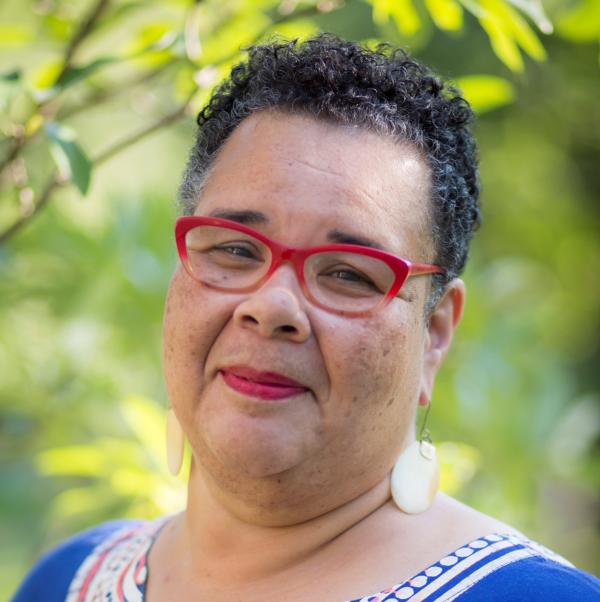
“With A Little Help From My Friends” was composed by John Lennon and Paul McCartney in 1967. The familiar song pronounces the power and necessity of friendship: What would you think if I sang out of tune, would you stand up and walk out on me? lend me your ears and I'll sing you a song and I'll try not to sing out of key. Oh, I get by with a little help from my friends mm, I get high with a little help from my friends mm, gonna try with a little help from my friends . . . The week after graduation, I got a call from a dear colleague. He was working on his syllabus for the upcoming summer semester. Having been in conversation for twenty years, he and I “get by with a little help” from each other. My colleague is a brilliant, multi-disciplinary scholar. Unlike me, he reads deeply across several academic fields - both domestic as well as international literature. He brings that expansive knowledge to our collaboration. I bring to our collaboration my scholarly knowing and, more important, my know-how in creativity, imagination, and the ability to make unorthodox connections in pedagogy, cultural politics, and beyond. Our phone conversation was “as usual.” My friend began by describing the focus of his upcoming summer course as well as the theory he was emphasizing in the course. He quickly summarized the required readings. He reminded me that it was a summer intensive, so he needed assistance in making good use of the time format. I asked if he needed to talk about assignments or learning activities. He said both. I took a few deep breaths, considered his topic, then intentionally imagined the graduate students in his course. Half of the enrolled students would be students of many races born in the USA, who will likely go on to serve communities close to home. The other half would be international, coming from countries in Asia, Africa, and the Caribbean, who might either serve white churches in the USA, or return home after graduation. My friend waited patiently as I thought. After my long pause, I asked, “Are you ready?” He said yes. I launched in by asking questions of clarification as if I were a student in his course. During that part of our conversation, he could hear the gaps in the course objectives and learning outcomes and he began to strategize ways to narrow the gaps and more directly address the student’s likely curiosity. Then, I brainstormed out loud about possible classroom activities that could take him and students out into the community near the theological school. We talked about possible resource persons to be brought into the classroom to make vivid the need for praxis-thinkers and doers. Once I got all my initial ideas spoken, I stopped. I asked if he wanted more. He said yes, so I continued until my imagination had run its course. Next, we turned to possible assignments as well as ways to elicit questions from students which would help them to bridge theory with community. By the end of our conversation, my friend had more than enough material to finish designing his summer intensive. The course was going to be brilliant! Our conversation was so well choreographed because of our reciprocity. I assist him with course development, and he helps me with editing and thinking more deeply about my publications. He has read and commented on almost everything I have published. I strengthen his work and he strengthens my work. We know our work is better because of the input of the other. “lend me your ears and I'll sing you a song and I'll try not to sing out of key.” Beyond the necessity of collaboration to strengthen and deepen our work, I would suggest networking is an under-utilized aspect of teaching and friendship. A little over a year ago, an alum from my school called me and asked if she could put me in touch with a friend of hers who was working on a new project. I said yes, only because of the respect I have for the former student. I was not, at that time, looking for any new projects nor was I looking for a consultant. Now, two years later, the person she put me in touch with, who is neither an educator nor a theologian, has become a consultant for our seminary and we are doing innovative programming in new areas. Had the consultant “cold called” me, I would have brushed him off. When a person I knew and trusted asked me to give time for a conversation, it was because of her influence that I paid attention and opened doors. Making use of our networks is opening ourselves to possibilities beyond ourselves. Making use of our networks entails that many of us must come-to-grips with the cachet and influence of our roles. So many of us undervalue our social position and make little use of the societal, intellectual, and material capital which we are afforded in our positions as teacher/scholars. We are people with juice! Making use of that juice for other people is part of our jobs. A new friend, who I met a year ago, told me that she drives her son to New Haven each morning for school. Since the commute is almost an hour, she stays in New Haven and writes at a local coffee shop, then picks up her son from school and returns home in the late afternoon. She is a professional writer so writing in a coffee shop is OK. I frowned at the thought of her working daily in a public coffee shop. The next day I phoned a colleague at Yale University. I asked him to take my writer friend to lunch because I thought they would enjoy each other’s company. I also asked him to give her whatever he could. I told my writer friend to expect a call from this Yale professor and accept the lunch invitation. They had lunch, and she now has access to the Yale University library where she works each day. He got a new and needed conversation partner for writing, editing, and publishing. All I did was recognize that I knew a guy who could help my friend, then I made the phone call. “Oh, I get by with a little help from my friends” The project I direct called the Social Justice Leadership Project was sponsoring a weeklong conference on our campus for spiritual writers about improving writing and getting published. We believe that public theology is, in part, about getting new voices into the market place. The weeklong conference has several worship services built into the schedule. I called a friend and asked her to plan and lead the worship services. She agreed, but asked why I did not do them myself. I said because you will do them better. The participants at the conference marveled that, during worship, we focused contemplatively upon the lives and prophetic witness of Toni Morrison, Mary Oliver, and James Cone. My friend, by way of liturgy, juxtaposed the ancient prophet Habakkuk’s text which reads in 2🔢 And the LORD answered me: “Write the vision; make it plain on tablets, so he may run who reads it” – with the lives of the prophets Morrison, Oliver and Cone. The final movement in every worship service was then to challenge the conference participants to align with these great persons in their own work of writing the vision. By the feedback and reports, the worship experiences for the aspiring faith writers had mystical, transformative qualities. “mm, I get high with a little help from my friends” So much of scholarship is constructed upon the flimsy falsehood of individualism, isolation, and self-aggrandizement. We make a mistake when we keep our work and our wants in isolation – hiding our light under a bushel. Our fears of having our ideas stolen, or having people turn down a request, or of opening up to the possibility of ridicule and shame must be overcome. Our work as scholar/teachers is best done in community, in conversation, with other people. Yes, I could tell you of a few incidents when my ideas have been stolen or simply attributed to someone else. But, these derisory experiences do not keep me from the joy and accomplishments which can only be realized through collaborating, networking, and using my cachet to facilitate the ideas and dreams of others in my community. My greatest successes have been due to the love, support and generosity of people who have helped me elevate my work, rise to the challenges of certain projects, and who have seen greater possibility in me than I saw in myself. This is the pay-off of collaboration, networking and friendship. This is the marvelous of being part of an intellectual community. Nancy Lynne Westfield Drew Theological School

Allow me to be honest. There are few things in my job that I dislike more than having a conversation with someone who is feigning objectivity or neutrality. I call it academic pretense. I cherish conversations when people speak from their hearts, even if I disagree with them. This holds true as well in my collaborative learning gatherings (aka co-learning gatherings, aka the classroom). Over the years, I have learned to face a reality in my own life, namely, there are few areas in which I have no opinions or, at least, have no leanings. If you tell me you are different, no offense, but if you are a fully engaged person I probably won’t believe you. Try as we may to be neutral, as engaged educators who regularly integrate our subjects of expertise with everything occurring around us, we all have leanings and assumptions concerning a wide-range of topics. Professing to be neutral, when in fact, we are not, endangers us by moving difficult conversations to the abstract and impersonal world of the ethereal, often leading to conversations that lack personal investment. How well can we learn if we are not invested in an honest process? I have found that most learning experiences “stick” best when we bring not just knowledge, but our own truth and experience to the conversation. The type of conversation I am suggesting is risky business in the sense that when we put ourselves “out on a limb,” mistakes will be made, feelings can be hurt, and positions may inevitably need to be re-directed and corrected--even if that corrective trajectory reaches farther in the future than we envision. Dangerous, yes. But, I think opportunities for real education are worth the risks. How did I come to a place of partiality for “risky conversations?” My own rough, street-wise childhood taught me to observe everything around me carefully; to assess present threats/concerns and size-up what is really happening underneath the surface of any given conversation. Where I grew up, the dangers of not trusting my own instincts could have grave, unforgiving and intractable consequences. But, as much as I trust my gut instinct, life has also taught me that I can be wrong. Having begun my teaching career later in life, I often found myself asking, “How do I use these skills in an organic discussion setting that will benefit the whole academic learning process?” And, more importantly, how will this discussion make us all better human beings? Early on in my teaching career, I had to re-teach myself to trust my instincts. What I discovered was that those life skills learned on the streets and in the course of my life can work for me in the classroom. Why? Allowing myself to move freely with what I see happening around me organically shifts the classroom zeitgeist from a theoretical, abstract reality to a more organically-real, shared reality--achieving a deeper level of honesty. Contributive-learners (aka co-learners, aka students) respect and even desire the level of honesty I am suggesting. Even when discussions don’t work out as planned, co-learners respect my honest regrets and my apologies. In the meantime, whether the discussion was a “once-in-a-lifetime” hit or a “write-off,” I am still modeling a paradigm that is teaching them to trust their instincts and go with the organic, sacred moment. Hopefully, I am also modeling humility. I realize there is a great deal of valid concern over co-learning gathering safeness. Perhaps I view it differently than some of my colleagues. In my experience, safeness has nothing to do with the subject matter at hand. But rather, safeness is primarily about our respect for the sacredness of how we handle the conversation. With social norms changing at a rapid pace, especially in the current political climate, I am discovering that people are afraid to talk honestly with one another, although many, including myself at times, are willing to talk at one another. This type of climate only promotes isolationism, binary position taking, and we/they attitudes. Education is about people learning from each other. How can we learn if we cannot talk with one another honestly? Obviously, we can’t. But, back to the danger. What if it goes too far? More than once in our discussions, co-learners have taken their polemic too far and hurt another person’s feelings. At that point, if another co-learner does not stop the process, I stop the conversation and I do a check. Together as a group, we take two deep breaths and have a moment of silence. I then ask if we are still committed to the values of truth-seeking, mutual respect and the sacredness of the moment we are in?* Invariably, the person who crossed the line apologizes for their inability to express their thoughts without getting personal. Also, and this always surprises me, the offended person sometimes apologizes for taking it too personally. I encourage the group to share any thoughts about the process and then ask if we are ready to go further in the conversation or come back at another time? In many of our Native American traditions, we have a prayer that goes something like, “have pity/understanding on me Creator and remember I am just a human being.” The idea behind this prayer is that perfection is the enemy of attainment. We are all simply human beings, imperfect, but learning from our mistakes. Those mistakes make us human. And, being human, by “climbing out on a limb” in order to reach others, is the most spiritual state of being in which we may find ourselves. I wish I could say I have these sacred moments in every co-learning gathering, I do not. But, I do encourage those moments through risky honest conversations. And when those special moments come, the whole room feels like we have experienced something together that is truly sacred. Perhaps promoting knowledge among my co-learners in an atmosphere of sacred space, is the most important role I have as a scholar and a spiritual leader. *This exercise requires pre-teaching and mutual commitment to the process.
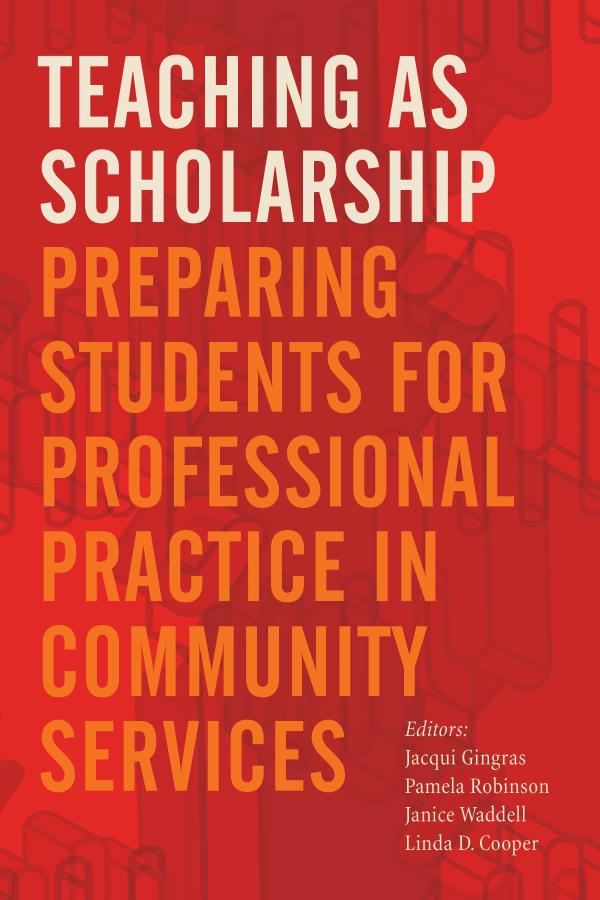
This book brings together faculty reflections on pedagogy and inter-professional collaboration from a broad range of disciplines within a single institution in Toronto: Ryerson University. While a single institution may appear to provide only a limited contextual perspective, the nature of the varied disciplines represented here provides a diverse set of resources, drawing from early childhood studies, nursing, disability studies, social work, sociology, city planning, and midwifery. Though the fields of theology and religion are not represented among the contributors, educators in theological and religious education will resonate with the need to better equip students for inter-professional engagement. Though all contributors are from the same institution, the commonality or coherence among chapters ends with the institutional affiliation of the authors. The editors note the book’s lack of coherence, and justify this by saying that the “frontiers” of community-services-related learning “are not neat, formulaic, or easy to navigate” (5). For this reason, reading this text cover-to-cover can be a disappointment, since the chapters are not of equal quality, nor do they create any obvious structure or overall argument. That said, there are gems in particular contributions for those interested in learning about teaching techniques and reflections that draw from critical pedagogies and integrative approaches, bringing the best of new theories in education. For instance, in “Drawing Close: Critical Nurturing as Pedagogical Practice,” authors May Friedman and Jennifer Poole bring together insights from Indigenous studies, Black feminist thought, maternal pedagogies, and mad studies to argue for a way of being in the classroom that promotes a nurturing relationship between student and teacher, challenging the Enlightenment and Western ideals of independence as a goal of education. These authors call for a suspension on neoliberal concerns for risk and lack of efficiency, instead arguing that an interdependence approach requires the risk of blurring the distinction between teachers and students (96). If a reader of this book were to choose one chapter to read from among the many contributions, this would be the chapter to focus on, and the bibliography provides additional resources to pursue. Other chapters included interesting suggestions and interventions in education, such as “Educating for Social Action among Future Health Care Professionals” which focused on a learner-centered model for course creation. This chapter includes appendices for how the authors Jacqui Gingras and Erin Rudolph were able to craft a course with considerable input from students regarding course themes, which assignments they would have to complete, and what grading rubrics would entail. Other chapters (3, 8) draw from narrative theory and describe the way students are taught to listen to the narratives of clients as well as to their own personal narratives. While this book’s chapters are not equally helpful, the insights available in a few choice chapters are worth the read.
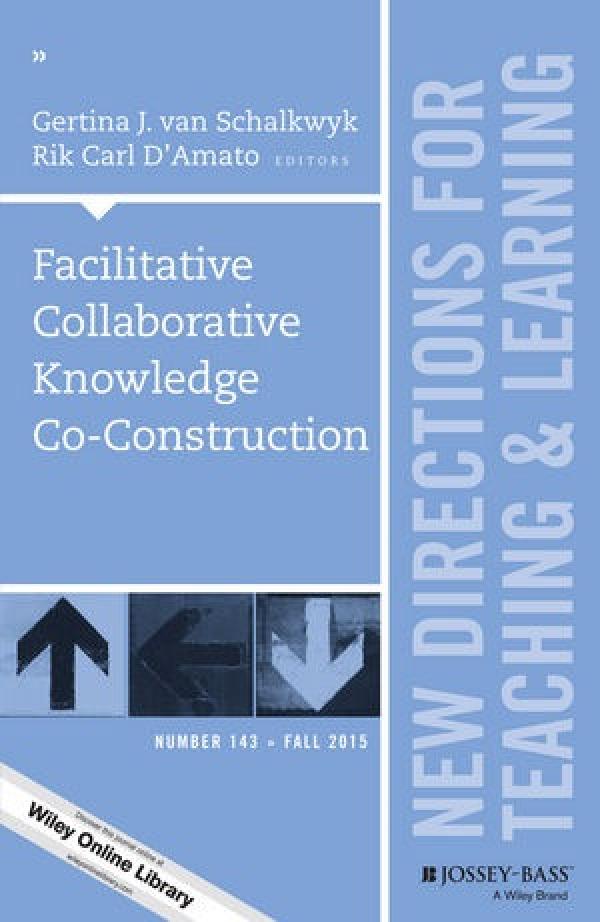
Facilitative Collaborative Knowledge Co-Construction is the second volume in a series under the Jossey-Bass New Directions for Teaching and Learning imprint (see Carolyn Jones Medine’s review of volume 1, From the Confucian Way to Collaborative Knowledge Co-Construction, posted April 15, 2016). Van Schalkwyk and D’Amato both have experience at the Centre for Teaching and Learning Enhancement at the University of Macau, China. As such, this volume and its predecessor aim at improving the learning experience of Asian students, particularly in Confucian teaching contexts. In the first volume, the “authors provided a framework that was designed to encourage teachers as they move from a Confucian way of teaching toward a more collaborative way of providing a co-constructed knowledge base in the classroom” (i). “One can certainly train students to memorize facts and follow algorithms, but unless they know what the algorithms mean and when and how to use them, their mastery of the subject is only superficial. Moreover, most of the knowledge that is acquired by rote learning will be lost quickly because it has no connection to anything meaningful in students’ minds and lives” (3), argue the editors. One challenge in considering this volume for use in US-based contexts is that it is firmly aimed at those who have traditionally taught using rote learning and memorization of facts – repeated references to “the Asian classroom” make this clear. One questions the degree to which such methodologies are entrenched among religious and theological educators in this country. Certainly constructivist learning is a challenge for any number of traditional educators, but involving students in problem-solving or helping them see the value of personal reflection and application in their learning is less foreign to many of us. Where these insights may be useful is in reminding faculty of the unique needs of international students coming from Confucian-based systems. Chapters in this volume focus on the value of constructivist, cooperative, and collaborative learning; relational intelligence; insights from neuropsychology; sociocognitive skills and emotional intelligence; and “engendering critical reflective thinking within a collaborative teaching and learning context” (2-3). Mary M. Chittooran’s chapter on “Reading and Writing for Critical Reflective Thinking,” for example, contextualizes specific tools like questioning, feedback, and the presentation of alternative explanations, demonstrating how each might best be used with Asian students. Chittooran also explores sixteen different reading and writing activities; any of these might spur creative ideas for teaching a variety of students. Helen Y. Sung’s exploration of emotional intelligence offers seventeen suggested questions to help expand students’ emotional fluency. There is some repetitiveness between chapters, particularly as various authors review the characteristics of Confucian learning environments and how education is changing. This volume may lend itself best to “cherry picking” whatever portions or techniques are needed for a given professor’s context or students. Most of Amato’s chapter on brain-based learning with Yuan Yuan Wang, for example, may translate over to a variety of educational contexts. Their advice that “learners should not be grouped by age but should be grouped by processing or aptitude levels in most learning activities” (55) is as germane in a Biblical languages class as it is in a room full of international students.
If teaching is an art its effectiveness rests in the work of many dedicated hands – a conviction that contributors of Coteaching and Other Collaborative Practices in the EFL/ESL Classroom unanimously share. There are many helpful books on teaching but this one is unique in its aim and concrete ways it offers “teachers to collaborate effectively” (xviii). Andrea Honigsfeld and Marla G. Dove achieve their goal of providing “an accessible resource long awaited by educators whose individual instructional practice and/or institutional paradigm shifted to a more collaborative approach to language education” (xviii). Ingeniously compiled, the twenty-six essays, divided into four parts, examine the: rationale for teacher collaboration to support ESL/EFL instruction, presenting current, classroom-based, practitioner-oriented research studies and documentary accounts related to coteaching, coplanning, coassessing, curriculum alignment, teacher professional development, and additional collaborative practices, and offering authentic teacher reflections and recommendations on collaboration and coteaching. (xviii) The authors’ objective is not only to help inquiring instructors teach English as second or foreign language, but also to become effective leaders, learners, and coteachers – a global task. The collaboration encouraged for teachers to exercise transcends teaching English to include other disciplines such as mathematics and biology. Each contributor uniquely provides evidence of how a theory about teaching might be translated into concrete and tangible outcomes. As is evident from the book’s title, collaborations extend beyond just teaching English to fruitful interdisciplinary teaching. The teamwork called for is neither utopian nor essentialist. Rather the authors highlight insights gained from their own experiences of exercising collaborative learning, teaching, and mentorship, highlighting strengths and potential weaknesses.The latter are often symptoms of a lack of deep commitment to collaborative learning and teaching. The art of becoming effective teachers rests on the participants’ willingness to develop a teachable spirit. Put differently, a good teacher is also a student in many ways – one who benefits from the wisdom and knowledge of collaborating with teachers, especially twenty-first century educators who face an overwhelming technological age with a slew of information making it very difficult for a teacher to be fully up-to-date in her or his own field of expertise, much less another field. From a linguistic perspective, to learn English as a second language is also to learn one’s native language – two languages at once. In other words, to grasp English as a foreign or second language, students actually learn more about the syntax of their native languages. As an immigrant myself, who learned to speak and write in English as a foreign language, and now teach and use ancient biblical languages in my writing projects, I treasure the insights and cogent arguments each author made in this priceless volume. In a nutshell, the contributors strongly advocate collaborative or coteaching as a practical and intellectual approach to sharpening one’s teaching pedagogy. To that end, this book enshrines the wisdom of effective learning and teaching -- an invaluable resource that will revolutionize the art of learning to teach for years to come if taken seriously.

Molly Bassett Associate Professor of Religious Studies Georgia State University On Monday, I told the students that for the first time since I started teaching I was blown away by the entire class’s projects. Their podcasts are fantastic, and you can listen to them here. I’m tempted to keep gushing...
Dr. Molly Bassett Associate Professor of Religious Studies Georgia State University By the time you read this, I will have met the students in “Religious Dimensions in Human Experience: Between Animals and Gods.” In this completely redesigned dual-level (grad/undergrad) course, we will explore how people can know a single animal—the...
Monica A. Coleman is Associate Professor of Constructive Theology and African American Religions at Claremont School of Theology. Pedagogical Confession: I learn from lectures. I’m one of those people for whom the traditional academy was made. I listen to lectures...

When I started teaching I relied, like many others, on the examples of my own teachers. When I was an undergraduate, the teachers who moved me most were never straight lecturers. So, I tried to adapt their styles. The more...