Resources

In my last blog on this site (the first of three parts) I reflected on what difference it could make if theological education institutions focused on formation of students rather than imparting information to them. That blog generated some interesting comments, questions, and feedback, so I thought I might dig a little further here. In my seasoning as a scholar and a teacher it has become clear that my focus is not on the students in my institution per se. It is not even on the material I want them to learn. As a pastoral theologian, I focus on the suffering in the world, and God’s longing for the wholeness and the flourishing of all that can only happen through justice, reconciliation, and the labor of peace. I think about my students concluding their time with us at Brite Divinity School and facing anew the world and all the impediments to the flourishing of God’s world. I want to empower them to see what those impediments are, to name them and call them out. I want them to leave Brite with the capacities to envision new possibilities, excite others about those possibilities, and get others involved. I want them to move forward with the knowledge and the tools to offer healing care, to lament and attend to suffering, both personal and systemic, to create genuine community. I want them to have grown and changed personally and to have become better integrated during their time with us. I want each of our students to have the chance to become more whole themselves as they prepare to contribute to the healing and wholeness of others and of communities, no matter where their lives take them. It became clear to me many years ago that no amount of reading Sigmund Freud (or his daughter Anna), no amount of systems theory, or object relations theory, or even narrative theory could accomplish these goals for them. Saying this does not negate the importance of those theories (and my syllabi continue to show my firm commitment to the idea of reading as fundamental to learning). But it does shift how I understand my work. I now ask myself how any course I teach will help students understand what wholeness can look like, what flourishing might taste like. I hope each course will help them understand better how to affect that, both for themselves and for others. Perry Shaw argues in Transforming Theological Education: A Practical Handbook for Integrative Learning that good teaching invites students into deep learning (Carlisle: Langham, 2014). Deep learning, as Shaw defines it, is the learning that continues to affect people 5, 10, or more years beyond the classroom. Deep learning creates space for students to wrestle with the implications of Freud or Heinz Kohut for the world they are facing themselves and the world others are facing. Deep learning teaches students how to connect ideas with lives, practices with change, and gives direction to hope. Deep learning shapes the way students think, how they feel, act, reflect, and engage, more than it relates to what they know. Deep learning changes the way people live and move in the world. It dares to help people figure out what it means to participate in the life of God in the world, to discern what God-as-life-force is doing already, and to magnify that. This is a shift, Shaw asserts, from education-as-teaching to education-as-learning, -changing, and -growing. This kind of education asks less what we are teaching and more what students are taking with them. It teaches them how to assess what is valuable and what is “fake news” in a world inundated by “information.” It helps them sift through the noise to what is most important and meaningful, especially from a theological perspective. This kind of education-as-formation will still require some foundational knowledge, but less of that and more of the work of applying that knowledge to the challenges people and communities are facing. Formation focused education invites much more wrestling, struggling, and deepening than education-as-teaching might. Education-as-formation helps students understand how content relates to and can perhaps be used to change the worlds that they are in. It is funded by the conviction that the God of Life longs for the flourishing of all that is, and that our calling as theological educators is to figure out how to respond to that longing and to do the hard work of living into flourishing; understanding its impediments in ourselves, in others, and in our world; and developing practices (including teaching practices) that nurture flourishing. Deep learning, then, requires that we educators join students where they are and encourage them forward a step or two and much deeper than learning for information does. It invites us to listen to them and the challenges they and their communities are facing. It requires that we faculty get out of our heads on occasion and into our own hearts and souls. It means that we ourselves must be willing to enter ongoing processes of growth and formation, too, as we seek to live more fully into our own wholeness and lean harder into our own flourishing. Deep learning happens best in the context of institutions that understand their role in teaching the formation of effective community, where staff and faculty model growth and integration, and where students can experience a taste of what each of us ultimately seeks.
This volume of collected articles provides snapshots of collaborative teaching and learning in action at US universities. While the authors describe a range of techniques and structures, there is an emphasis throughout on intentionally building and sustaining communities composed of teachers, learners, and even community partners. Richard A. Gale (“Learning in the Company of Others”) and Jeffrey L. Bernstein, et al. (“How Students, Collaborating as Peer Mentors…”) illustrate the positive effects of collaboration in college courses. Gale succinctly articulates numerous benefits of collaborative teaching, from increasing fruitful ambiguity that can inspire critical thinking, to providing teachers with opportunities for “the systematic investigation of student learning” (21). Bernstein’s experience working with students as peer mentors shows that a collaborative approach to class leadership can embolden students to take risks with low stakes, improving their participation in brainstorming and creative activities. The majority of authors convincingly demonstrate that collaborative learning offers students benefits far beyond the immediate course or program experience. Ellen G. Galantucci and Erin Marie-Sergison Krcatovich (“Exploring Academia”) emphasize that their experience as undergraduate collaborative learners helped them prepare for their later work in graduate school and as educators. These authors note that the mentoring they received contributed to their professionalization and enabled them to discuss pedagogy confidently on the academic job market. Multiple articles address the potential for fruitful collaboration with community partners beyond the university. “Collaborative Structures in a Graduate Program,” by Robyn Otty and Lauren Milton, describes a multi-year Centralized Service Learning Model (CSLM) that combined the work of two graduate courses and several community programs. In their article “The Development of a High-Impact Structure: Collaboration in a Service-Learning Program,” Brooke A. Flinders, et al. illustrate students’ internalization of high-impact learning outcomes, including “participation in meaningful work” (44). One important contribution of this text is the collection of students’ testimonies. A number of the authors asked course participants to complete some form of self-assessment. Overwhemingly, students who worked as peer mentors or group leaders reported gaining confidence, independence, critical thinking skills, and practical experience that could be used in the professional world. In Flinders, et al., “The Development of a High-Impact Structure,” young professionals in the nursing field provided feedback about ways their participation in the service-learning program helped them prepare for clinical work. This volume offers a wealth of suggestions for designing learning communities; Milton D. Cox’s contribution (“Four Positions of Leadership…”) identifies traits that administrators and facilitators have found to be essential when organizing faculty learning communities. Each article clearly explains its authors’ methodology, making this a helpful resource for teachers who are looking for direction in implementing collaborative learning strategies. While it might have been helpful in some cases to learn more about how community partners assessed the contributions of university teams to their work, overwhelmingly the articles demonstrate that collaborative learning is beneficial for students and teachers. For those looking to build more collaboration into their courses, this set of articles provides inspiration and concrete guidelines
Facilitative Collaborative Knowledge Co-Construction is the second volume in a series under the Jossey-Bass New Directions for Teaching and Learning imprint (see Carolyn Jones Medine’s review of volume 1, From the Confucian Way to Collaborative Knowledge Co-Construction, posted April 15, 2016). Van Schalkwyk and D’Amato both have experience at the Centre for Teaching and Learning Enhancement at the University of Macau, China. As such, this volume and its predecessor aim at improving the learning experience of Asian students, particularly in Confucian teaching contexts. In the first volume, the “authors provided a framework that was designed to encourage teachers as they move from a Confucian way of teaching toward a more collaborative way of providing a co-constructed knowledge base in the classroom” (i). “One can certainly train students to memorize facts and follow algorithms, but unless they know what the algorithms mean and when and how to use them, their mastery of the subject is only superficial. Moreover, most of the knowledge that is acquired by rote learning will be lost quickly because it has no connection to anything meaningful in students’ minds and lives” (3), argue the editors. One challenge in considering this volume for use in US-based contexts is that it is firmly aimed at those who have traditionally taught using rote learning and memorization of facts – repeated references to “the Asian classroom” make this clear. One questions the degree to which such methodologies are entrenched among religious and theological educators in this country. Certainly constructivist learning is a challenge for any number of traditional educators, but involving students in problem-solving or helping them see the value of personal reflection and application in their learning is less foreign to many of us. Where these insights may be useful is in reminding faculty of the unique needs of international students coming from Confucian-based systems. Chapters in this volume focus on the value of constructivist, cooperative, and collaborative learning; relational intelligence; insights from neuropsychology; sociocognitive skills and emotional intelligence; and “engendering critical reflective thinking within a collaborative teaching and learning context” (2-3). Mary M. Chittooran’s chapter on “Reading and Writing for Critical Reflective Thinking,” for example, contextualizes specific tools like questioning, feedback, and the presentation of alternative explanations, demonstrating how each might best be used with Asian students. Chittooran also explores sixteen different reading and writing activities; any of these might spur creative ideas for teaching a variety of students. Helen Y. Sung’s exploration of emotional intelligence offers seventeen suggested questions to help expand students’ emotional fluency. There is some repetitiveness between chapters, particularly as various authors review the characteristics of Confucian learning environments and how education is changing. This volume may lend itself best to “cherry picking” whatever portions or techniques are needed for a given professor’s context or students. Most of Amato’s chapter on brain-based learning with Yuan Yuan Wang, for example, may translate over to a variety of educational contexts. Their advice that “learners should not be grouped by age but should be grouped by processing or aptitude levels in most learning activities” (55) is as germane in a Biblical languages class as it is in a room full of international students.
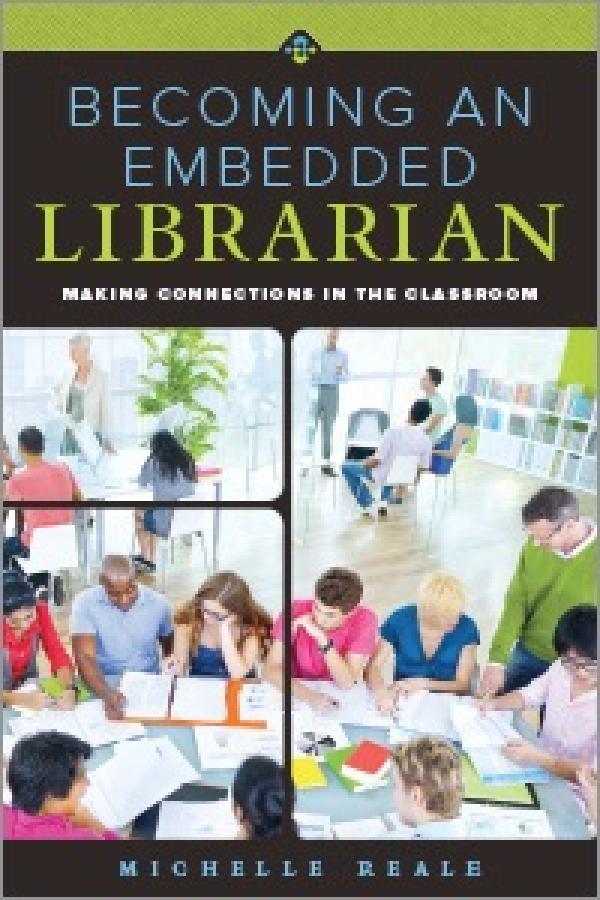
It would be easy to become intimidated while reading Michelle Reale’s book. It isn’t just her wealth of practical knowledge and hard won experience that may intimidate the reader, it is the daunting nature of embedded librarianship (EL) itself. Reale writes that “embedded librarianship necessitates the stepping out of an old, comfortable role and embarking on a new way of being, without the safety net of known results” (79). Even so, setting the intimidation factor aside, there are excellent reasons to add this book to your reading list. The author makes the most of this slim volume, a mere 104 pages, by combining both her personal journey through and scholarly support for her flavor of EL. Tucked in the middle of Reale’s twelve chapters are two chapters discussing educational theory in-depth as it applies to EL. The author’s theoretical foundation is based on Jean Lave and Etienne Wenger’s “community of practice” model of learning. This community work constructs learning through the art of conversation. In addressing the group work that establishes a community of learning Reale writes “learning begins to take shape in community as students are encouraged to think out loud” (37). Her focus is on the librarian encouraging and mediating student communities within the classroom. This approach explains her dedication to in-person EL. While Reale’s scholarship on the application of educational theory to EL is helpful, it is her personal journey that makes this book special. Reale brings the reader along the path, mitigating neither failure nor success, allowing the individual to decide whether this journey is also for them. The book reads a bit like a suspense novel with the reader wondering whether the hero will survive the next faculty encounter or student misunderstanding. The journey is filled with practical advice including concept mapping – hand out sheets of paper with just circles in them to allow the students to fill in; marketing – quoting Ulla de Stricker “Marketing isn’t our issue. Relationships are” (73); and personal goal setting that helps librarians visualize success. Reale’s chapters “Relationship Building,” “Clarifying Your Role,” “Establishing a Teaching Style,” “Setting Personal Goals,” and “Personal Branding” are as effective for standard librarianship as they are for EL. Consequently, even if the reader decides the EL journey is not for them the read is still worthwhile. There was one small negative. It is not evident from the cover that the book discusses only in-class embedding. There is no discussion about online embedding which is becoming more and more relevant with the rapid growth of online education. That in itself is not negative. But this comment juxtaposing online and actual classroom embedding, “I am primarily interested in actual classroom embedding and believe it to be true embedding” (xviii), may lead some to believe Reale is a bit too chauvinistic in her approach. Her comment on one-shot instruction, “The days of one-shot instruction just don’t work anymore,” (8) may add weight to this opinion for those who strive to excel in online embedding or creatively moving forward with one-shot instruction. But considering the value of the rest of the work these are minor concerns.