Resources
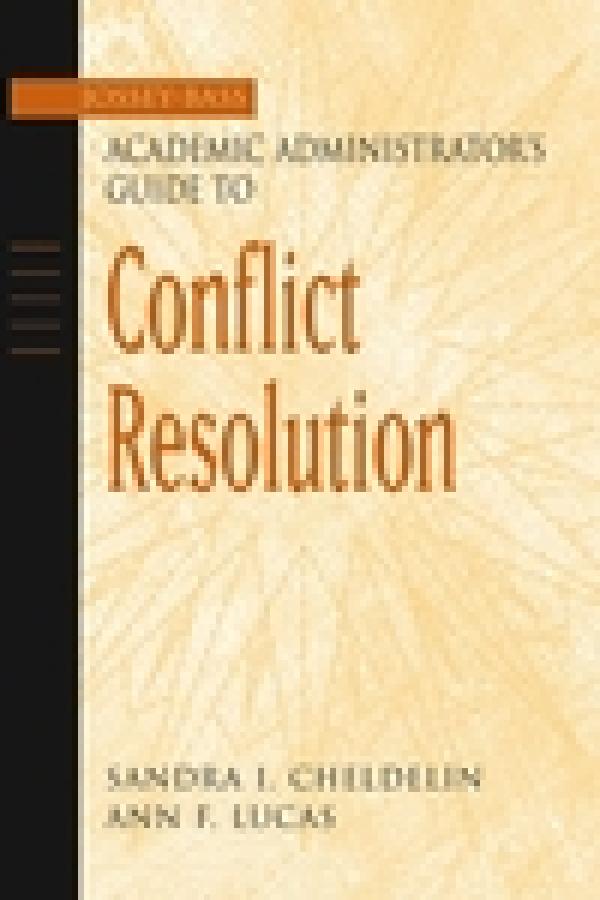
Dealing with conflict is an evitable part of any academic administrator’s job. Often, however, new administrators lack the skills they need to successfully resolve campus conflicts. This important resource includes an array of strategies for identifying and managing conflict between individuals, within a department, and between departments. The Jossey-Bass Academic Administrator’s Guide to Conflict Resolution shows how to turn conflicts into problems to be solved. Authors Sandra I. Cheldelin and Ann F. Lucas offer concrete approaches academic administrators can use to analyze conflicts and design effective interventions. The Jossey-Bass Academic Administrator’s Guide to Conflict Resolution is an invaluable tool that includes · Guidelines for knowing when it is appropriate to intervene in a conflict · Strategies for helping to change irrational and negative thinking to positive rational thought · Methods for handling interpersonal conflict—between two parties—within a department · An outline of the major approaches for managing conflict and information about when they work and when they don’t · Effective strategies for preventing and solving specific problems (From the Publisher)
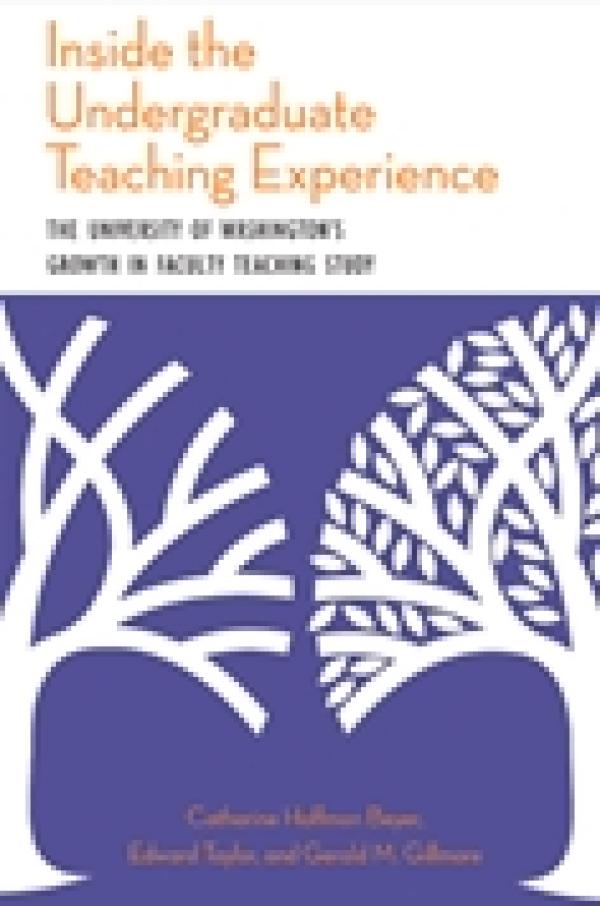
Click Here for Book Review Abstract: Shows what kind of changes college faculty make to their teaching and why they make them. The image of college faculty members as abstracted, white-haired, tweed-jacketed professors, mumbling lectures from notes that were yellowed by twenty years of repeated use is still pervasive. In this view, college faculty care only about their research and have little connection to the students sitting passively in front of them. Inside the Undergraduate Teaching Experience directly challenges this view of today’s college faculty and serves as a guide for graduate students and new faculty who seek ways—both personal and pedagogical—to become more effective teachers. Inside the Undergraduate Teaching Experience reports the results of the University of Washington’s Growth in Faculty Teaching Study (UW GIFTS), which sought to find out whether or not faculty ever change what they do in the classroom, even when there is little external pressure for them to do so. Key findings in the study were that all courses that faculty members taught were deeply embedded in their academic disciplines, even freshman-level classes; that content and critical thinking as goals for learning could not be separated; that faculty members were making changes to their teaching continuously; that such changes were motivated by the faculty member’s intentional assessment of the learning needs of her particular classes; and that most changes were aimed at helping students meet faculty members’ goals for learning. (From the Publisher)
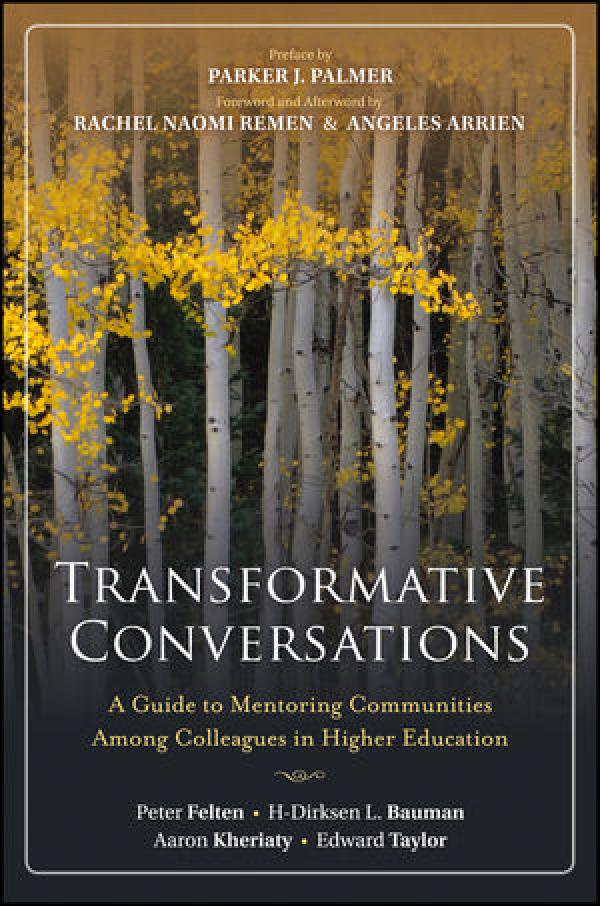
Click Here for Book Review Abstract: From the Inter-generational Mentoring Community project, which develops the next generation of academic leaders, comes formation mentoring, a process to enable faculty to recover, sustain, and further develop a sense of vocation, mission, and purpose. This book is a concise and practical guide to convening and sustaining these kinds of formation mentoring groups in higher education. It provides the necessary direction and structure to orient the process but is open-ended enough to apply across many settings and professional or educational disciplines. (From the Publisher)
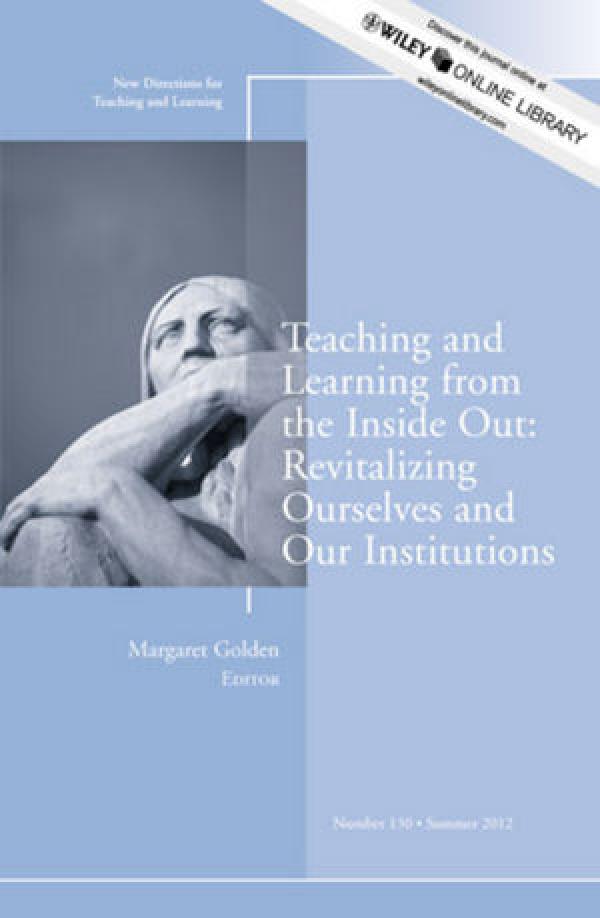
By reclaiming the passions of our hearts and exploring insights and ideas, we begin a remembering of ourselves. As we begin to reclaim our wholeness, we also have the capacity to renew and revitalize our institutions from within. After a long career of writing and speaking about how living in congruence—without division between inner and outer life—allows for being present with ourselves and those who journey with us, Parker Palmer and colleagues at the Center for Courage & Renewal developed a process of shared exploration. This Circle of Trust approach encourages people to live and work more authentically within their families, workplaces, and communities. This issue explores the transformative power of engaging in a Circle of Trust. The authors examine its direct applications to teaching and learning, and they explore and discuss the research being done by the facilitators of this work. This is the 130th volume of this Jossey-Bass higher education series. New Directions for Teaching and Learning offers a comprehensive range of ideas and techniques for improving college teaching based on the experience of seasoned instructors and the latest findings of educational and psychological researchers. (From the Publisher)
With pedagogical philosophy and practice changing significantly, faculty development has become much more important. Each chapter in this volume identifies particular areas of opportunity, and although the authors recognize that not every initiative suggested can be implemented by all institutions—circumstances such as institutional mission, available resources, and governance issues will dictate that—it is their hope that every reader will be able to glean details that might provide a spark or fan a flame on campus. As educators themselves, McKee, Johnson, Ritchie, and Tew invite you to consider the challenges, explore the possibilities, and join them on the journey. This is the 133rd volume of this Jossey-Bass higher education series. New Directions for Teaching and Learning offers a comprehensive range of ideas and techniques for improving college teaching based on the experience of seasoned instructors and the latest findings of educational and psychological researchers. (From the Publisher)
- includes a framework for the sustainability of new educational paradigms based on the combination of formal and informal learning processes supported by network and mobile technology (NMT)  - provides a series of recommendations on how to use attitudes towards NMT gained outside the school to integrate formal and informal learning  - gives a teacher training approach on how to use network and mobile technology-based informal learning to enhance formal learning pathways An ever-widening gap exists between how students and schools use communication technology. Using Network and Mobile Technology to Bridge Formal and Informal Learning introduces new methods (inspired by ‘pedagogy 2.0’) of harnessing the potential of communication technologies for teaching and learning. This book considers how attitudes towards network and mobile technology (NMT) gained outside the school can be shunted into new educational paradigms combining formal and informal learning processes. It begins with an overview of these paradigms, and their sustainability. It then considers the pedagogical dimension of formal/informal integration through NMT, moving on to teachers’ professional development. Next, the organizational development of schools in the context of formal and informal learning is detailed. Finally, the book covers the role of technologies supporting formal/informal integration into subject-oriented education. (From the Publisher)
In The Learning Paradigm College, John Tagg builds on the ground-breaking Change magazine article he coauthored with Robert Barr in 1995, “From Teaching to Learning; A New Paradigm for Undergraduate Education.” That piece defined a paradigm shift happening in American higher education, placing more importance on learning outcomes and less on the quantity of instruction. As Tagg defines it, “Where the Instruction Paradigm highlights formal processes, the Learning Paradigm emphasizes results or outcomes. Where the Instruction Paradigm attends to classes, the Learning Paradigm attends to students.” (From the Publisher)
If higher education is to fulfill its mission, the academy must continue to emphasize the ideals of thought, reflection, and development as well as action. This book stresses the importance of understanding that service is a pre-requisite to leadership. This practical book contains leadership principles and strategies and is based on research and best practice. The book is organized around ten principles of servant leadership and how these principles apply to common issues faced in departments and institutions of higher education. The situations addressed are representative so that it is easy to see how the principles apply to other concerns or issues. (From the Publisher)
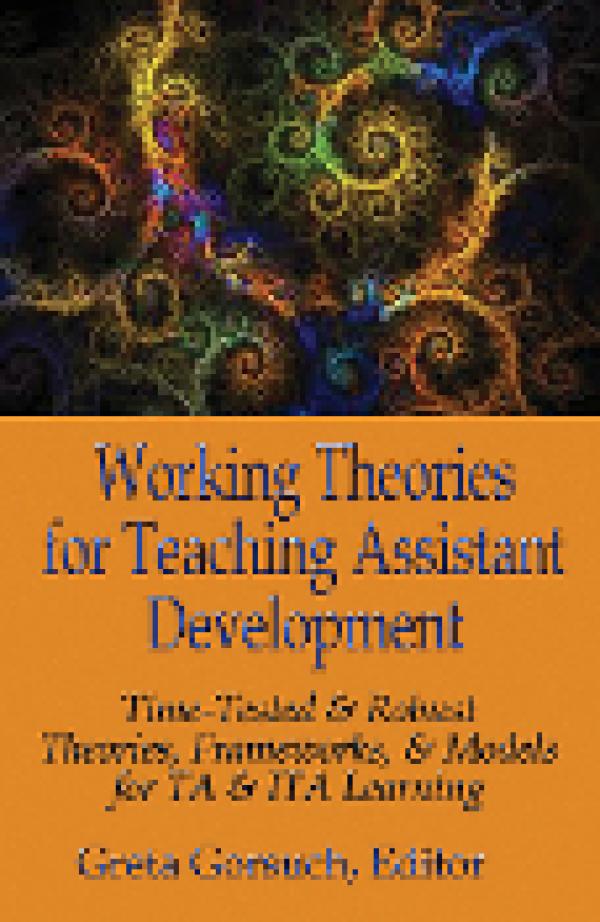
This extensive, edited volume showcases established and emerging scholars in the field of Teaching Assistant (TA) and International Teaching Assistant (ITA) education. Working Theories goes beyond reporting good practices or program descriptions, which typically comprises many books on TA and ITA development.  Instead, Working Theories places time-tested, robust theories, frameworks, and models of TA and ITA learning and development at the center of graduate student education by providing a scholarly venue for description, explication, and application of these theories. In turn, these theories and models from psychology, sociology, pedagogy, discourse analysis, and second language learning will be presented in such as way as to inform good practice, but above all, motivate future research. (From the Publisher)