Resources
Most courses in colleges and universities are taught by only one instructor. This is often necessitated by the financial exigencies of educational institutions, but is also due to an academic tradition in which the ideal is a single expert teaching in a single discipline. The rapidly changing realities of both the higher education and job markets, however, have called the traditional ideal into question. Interdisciplinary collaborative teaching is one way to adapt to the needs of twenty-first-century students, by modeling lifelong learning for students and inviting instructors to be more deliberately reflective about disciplinary assumptions, learning styles, and pedagogies.
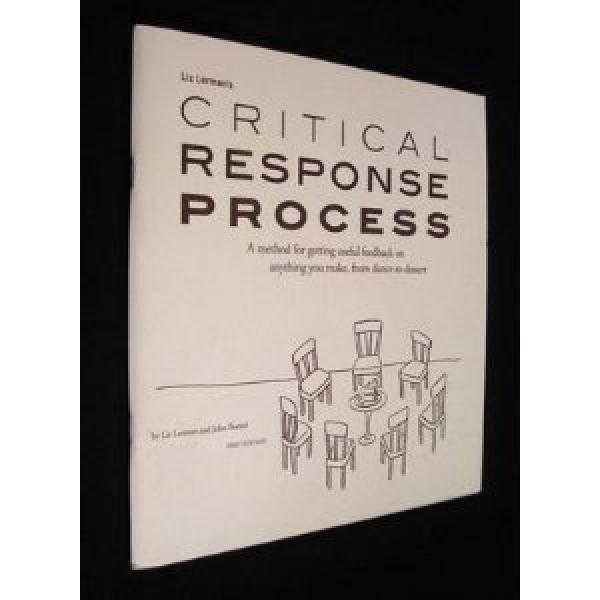
Liz Lerman's Critical Response Process is a multi-step, group system for giving and receiving useful feedback on creative processes and artistic work-in-progress. Originated in the early 1990's by choreographer and MacArthur "Genius Grant" Fellow Liz Lerman, the Process has been widely embraced by artists, educators, and administrators. It has been applied in such diverse contexts as choreography classes, post-performance discussions, actor/playwright collaborations, curatorial decision-making, and university level curriculum assessment. In addition to reflection on the work at hand, the Critical Response Process affords artists a voice and a degree of control within the critique of their work promoting dialogue with audiences, fellow artists, students, mentors, and other colleagues. This book, Liz Lerman's Critical Response Process, offers a detailed introduction to the Process, beginning with its three roles and four core steps. With particular emphasis on the role of the facilitator, this illustrated publication offers guidance on how artists and participants can get the most out of the Process and the opportunities it offers to ask question, give answers, and voice opinions. A final chapter discusses adaptations and variations. Charts and annotated sample dialogues demonstrate the inner workings of the Process. (From the Publisher)
In this book, seventeen senior leaders from faith-based colleges and universities across North America--collectively bringing with them hundreds of years of leadership experience--share fresh insights into the theory and practice of Christian higher education leadership. These authors speak honestly about the successes, failures, and demands that have shaped their current leadership decisions and their visions for the future.In this book, seventeen senior leaders from faith-based colleges and universities across North America--collectively bringing with them hundreds of years of leadership experience--share fresh insights into the theory and practice of Christian higher education leadership. These authors speak honestly about the successes, failures, and demands that have shaped their current leadership decisions and their visions for the future. (From the Publisher)
Leadership is an activity that not only manifests itself in formal positions, but also bubbles up in various places within an organization. Perhaps given the importance of leadership to any endeavor, the literature on this topic has burgeoned. Yet among these titles, Learning to Lead stands out as one of the best texts available on leadership for college and university administrators. Critical skills such as managing people, resolving conflict, and making rational (and legal) decisions are explored within the context of the campus. The book also addresses the needs of those who facilitate leadership workshops, serve as mentors to potential leaders, and teach courses on higher education leadership and administration. While presenting all sides of key issues, the author calls for the reader to define his or her own position through a series of provocative reflection questions in each chapter. Thus the book invites interaction and teaches administrators not what to think about leadership, but how to think about it. (From the Publisher)
Student evaluations of teaching are a common fixture at American law schools, but they harbor surprising biases. Extensive psychology research demonstrates that these assessments respond overwhelmingly to a professor’s appearance and nonverbal behavior; ratings based on just thirty seconds of silent videotape correlate strongly with end-of-semester evaluations. The nonverbal behaviors that influence teaching evaluations are rooted in physiology, culture, and habit, allowing characteristics like race and gender to affect evaluations. The current process of gathering evaluations, moreover, allows social stereotypes to filter students’ perceptions, increasing risks of bias. These distortions are inevitable products of the intuitive, “system one” cognitive processes that the present process taps. The cure for these biases requires schools to design new student evaluation systems, such as ones based on facilitated group discussion, that enable more reflective, deliberative judgments. This article draws upon research in cognitive decision making, both to present the compelling case for reforming the current system of evaluating classroom performance and to illuminate the cognitive processes that underlie many facets of the legal system.
Informal student evaluations of faculty were started in the 1960's by enterprising college students.(1) Since then, their use has spread so that now they are administered in almost all American colleges and universities and are probably the main source of information used for evaluating faculty teaching performance.(2) There is an enormous literature on the subject of student evaluations of faculty (SEF).(3) The following is a summary of some developments in that literature that should be of special interest to faculty, with particular emphasis on criticisms of SEF that have emerged recently. But I begin with the arguments in favor of the use of SEF.
The article discusses associate professors in the U.S., focusing on their overall happiness and attitudes related to their positions. The article cites a study conducted by the Collaborative on Academic Careers in Higher Education at Harvard University which provides statistics related to the job satisfaction of associate professors in areas such as leadership, collaboration, and workload. The article explores the tenure track process for college teachers, notes that few personal and professional services are offered to mid-career professors, and provides comments from various associate professors including Judith C. Amburgey-Peters, Karen L. Kelsky, and Margaret Soltan.
What They Didn’t Teach You in Graduate School: 299 Helpful Hints for Success in Your Academic Career
* This irreverent, but serious, guide to what life in higher education institutions is really like, now enhanced by 100 new tips * Invaluable advice that ranges from getting your Ph.D. to setting the course of your academic career Just landed your first faculty position? Close to getting your Ph.D., and planning a career in academe? What will academic life be like? How do you discover its tacit rules? Develop the habits and networks needed for success? What issues will you encounter if you’re a person of color, or a woman? How is higher education changing? Paul Gray and David E. Drew share their combined experience of many years as faculty and (recovering) administrators to offer even more insider advice—the kind that’s rarely taught or even talked about in graduate school – to help you succeed. The 100 new hints expand sections on the dissertation process, job hunting, life in the classroom and on dealing with students, as well as on matters that affect readers’ careers, such as research, publication, and tenure. The book concludes with a tongue-in-cheek appendix on How to Become a Millionaire while an academic. Already have the first edition? Give it to someone less fortunate than you, and take advantage of the new advice you will find in these pages. Too penurious to buy this book? Persuade a family member or friend to get it as a gift. (From the Publisher)
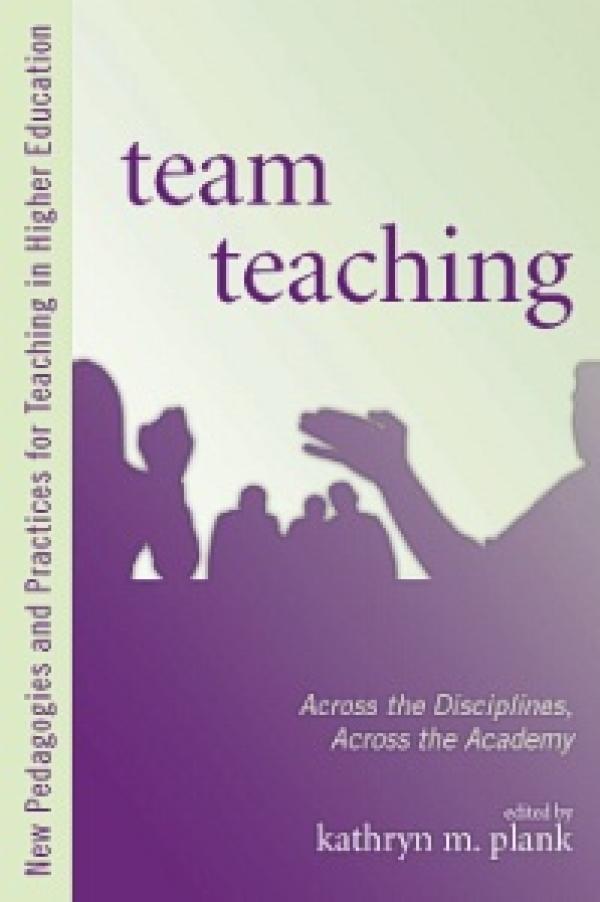
For those considering adopting team teaching, or interested in reviewing their own practice, this book offers an over-view of this pedagogy, its challenges and rewards, and a rich range of examples in which teachers present and reflect upon their approaches. The interaction of two teachers—both the intellectual interaction involved in the design of the course, and the pedagogical interaction in the teaching of the course—creates a dynamic environment that reflects the way scholars make meaning of the world. The process naturally breaks down the teacher-centered classroom by creating a scholarly community in which teachers and students work together to understand important ideas, and where students don’t just learn content, but begin to understand how knowledge is constructed, grasp the connections between disciplines as well as their different perspectives, see greater coherence in the curriculum, and appreciate how having more than one teacher in the classroom leads naturally to dialogue and active learning. Each of the five examples in this book shares the story of a course at a different institution, and each is designed to reflect a number of different variables in team-taught courses. They represent courses in a variety of different disciplines, including the sciences, social sciences, humanities, and the arts; and at a range of levels, from first-year seminars to graduate courses. They also illustrate a number of different models for instructional teams, such as faculty from the same disciplines, from related disciplines, from two very different disciplines, from different institutions, and one pairing of a faculty member and a staff member. This book provides insight into the impact of team teaching on student learning and on faculty development. It also addresses the challenges, both pedagogical an administrative, that need to be addressed for team teaching to be effective. (From the Publisher)