Resources
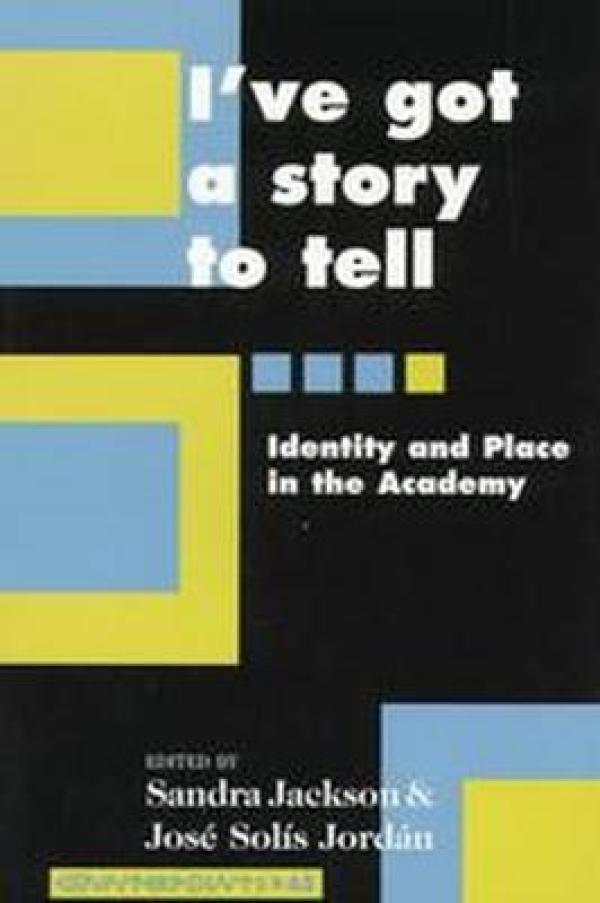
Conventional wisdom has it that education is the great equalizer in a society. Notwithstanding, access to higher education and terminal degrees have not proven synonymous with the establishment of legitimacy for many voices. Academics and scholars of color continue to confront barriers constituent of the racialized, gendered, and class(ed) baggage characterizing dominant social relations. In I've Got a Story to Tell different members of academe struggle with the institutionalized constructs that pose real challenges to the transformation and democratization of higher education. (From the Publisher)
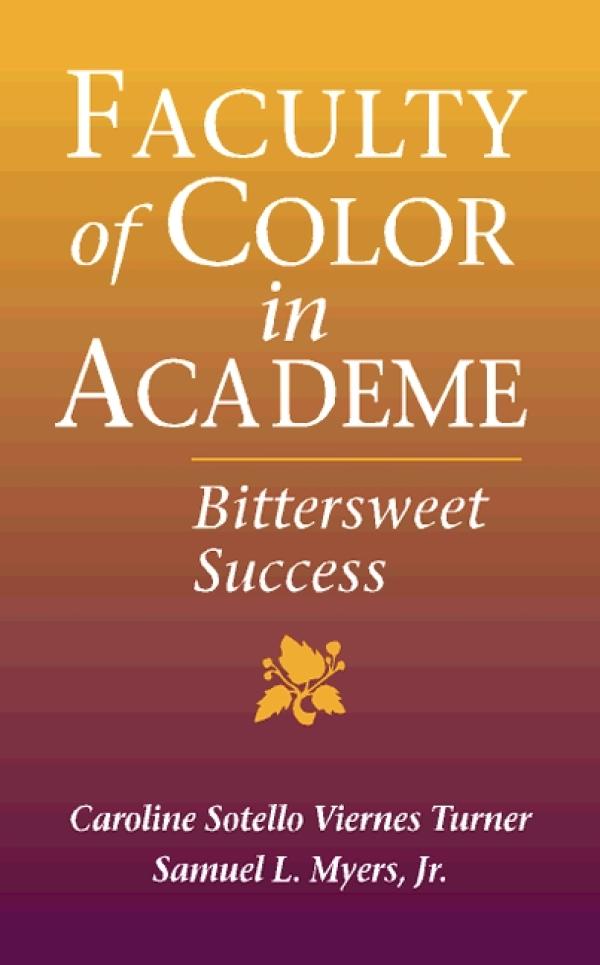
Key Benefits: Faculty of Color in Academe focuses on inequities based on racial and ethnic differences within the professional workplace in higher education. This book draws on a comprehensive study of African American, Asian, Pacific American, American Indian, and Latino faculty in eight mid-western states. By using both narrative and statistical data, this book provides an in-depth view of the issues surrounding the successful recruitment, retention, and development of faculty of color. Key Topics: The authors attempt to capture and describe some of the similarities and differences experienced by faculty among each of the above mentioned racial/ethnic groups. Includes a comprehensive discussion of what needs to be done in order to achieve diversity in the teaching profession. (From the Publisher)
This anti-racist feminist anthology brings together diverse and challenging theoretical perspectives on the experiences of radical educators who work to redefine pedagogies for communicating the claims of both insurgent disciplines--Women's Studies, African-American Studies, Latino Studies, Ethnic Studies, Queer Theory, etc.--and radicalized versions of traditional areas of study--History, Sociology, Foreign Languages, Literature, Philosophy. The authors' analyses of where and how feminist teachers stand in the fray of conflictive classroom dynamics and institutional politics lead them to outline new inquiries into feminist pedagogy highlighted by an intense focus on identity, experience, and difference. In doing so, Twenty-First Century Feminist Classrooms opens a space for engaged feminist self-criticism that seeks to reinvigorate pedagogical practices grounded in multicultural feminist identities. (From the Publisher)
Latinas/os are the largest ethnic minority group in the U.S. They are propelling minority communities to majority status in states as disparate as California, Florida, New Jersey, New York and Texas. Their growth in the population at large is not reflected in higher education. In fact Latinos are the least represented population in our colleges and universities, whether as administrators, faculty or students; and as students have one of the highest levels of attrition. Opening access to Latinas/os, assuring their persistence as students in higher education, and their increased presence in college faculty and governance, is of paramount importance if they are to make essential economic gains and fully to participate in and contribute to American society. In this ground-breaking book, twenty-four Latina/o scholars provide an historical background; review issues of student access and achievement, and lessons learned; and present the problems of status and barriers faced by administrators and faculty. The book includes narratives by graduate students, administrators and faculty that vividly bring these issues to life. This is a book that should be read by policy makers, college administrators, student affairs personnel and faculty concerned about shaping the future of higher education -- and constitutes an invaluable resource for all leaders of the Latino community. (From the Publisher)
Diversity—gender, class, racial, ethnic, theological, sexual orientation as well as personality, learning style, ability, and experience— exists as threat and promise, problem and possibility in theological education. The negotiations of administrators, faculty, students, and school constituencies that make up the dynamics of difference in theological education are particularly intense, and occasionally volatile, in decisions about who should teach, what should be taught, and how we should teach. Reflecting on my conscientization to these dynamics during my own career as theological educator and administrator, I argue that the interdependence of theological school pedagogies of formation and empowerment for ministry must be revisioned. This means, at least, expanding our assumptions about education and teaching by exploring pedagogical possibilities emerging from the embrace of differences among us and by viewing the community of teaching and learning as an ecology of language processes, cultural patterns, and world views. The essay concludes with three suggestions for altering pedagogical practices in the diverse theological education setting: the diversification of assessment patterns; the clear and expansive articulation of guidelines, criteria, and standards for learning; and the establishment of rules of discourse to ensure the participation of all.
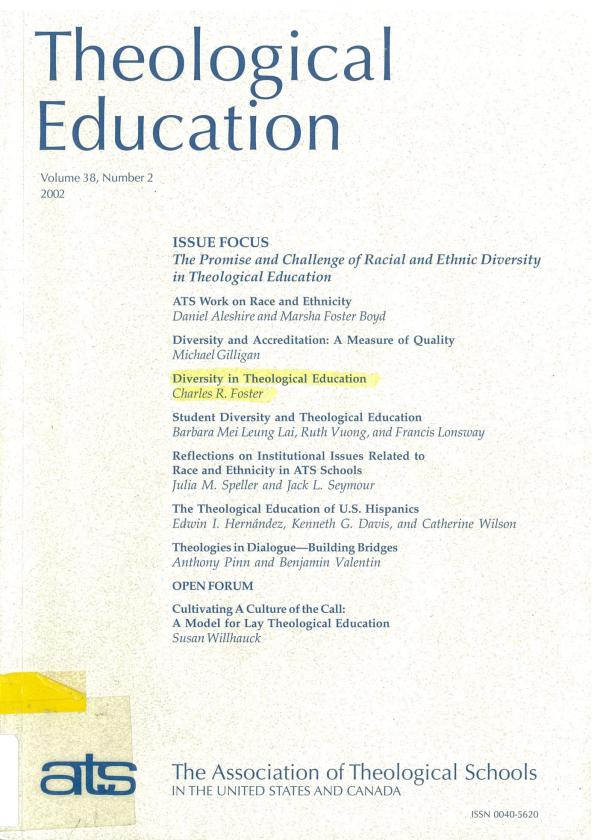
Journal Issue. Full text is available online.
Gender and Teaching provides a vivid, focused, and interactive overview of the important gender issues in education today. This is accomplished through conversations among experts, practitioners, and readers that are informed by representative case studies and by a range of theoretical approaches to the issues. Gender and Teaching is the third volume in the "Reflective Teaching and the Social Conditions of Schooling" series edited by Daniel P. Liston and Kenneth M. Zeichner. It follows the same format as previous volumes in the series. Part I includes four cases dealing with related aspects of gendered experiences in schools (nonsexist elementary school curricula, gender and race implications of special education assignment practices, homophobia in high schools and classrooms, and teaching as a woman's profession), followed by a set of teachers', administrators', and professors' reactions to each case. Part II is an elaboration of four "public arguments"--conservative, liberal, women-centered, and radical multicultural--pertaining to the issues raised in the cases in Part I. These arguments exemplify clusters of orientations, organized around general values rather than hard and fast principles. Part III presents the authors' own interpretations of the issues raised throughout the work and provides activities and topics for reflection and an annotated bibliography of additional resources. Content and Pedagogical Features: *Readers are encouraged throughout to interact with the text. They can respond to each case and compare their responses to those of others in the field. *The cases and discussions that follow help students begin to evolve their own "practical theories"; explore and perhaps modify some of their basic beliefs and assumptions; become acquainted with other points of view; and look further into the connections and intersections of gender with other structural dynamics and practices--those of race, class, and culture--as intrinsic to their explorations into the social conditions of schooling. *The major strands in feminist theory about women and education are presented so that students can analyze the differences among them, come up with positions of their own, and learn to defend them. *Although the authors draw on historical and sociological frameworks that show how women have historically been discriminated against in our schools and in our society, their goal is an education that is equally fair to everyone, boys as well as girls. Gender and Teaching is pertinent for all prospective and practicing teachers at any stage of their training. It can be used in any undergraduate or graduate course that addresses issues of gender and teaching. (From the Publisher)
Journal Issue.