Resources
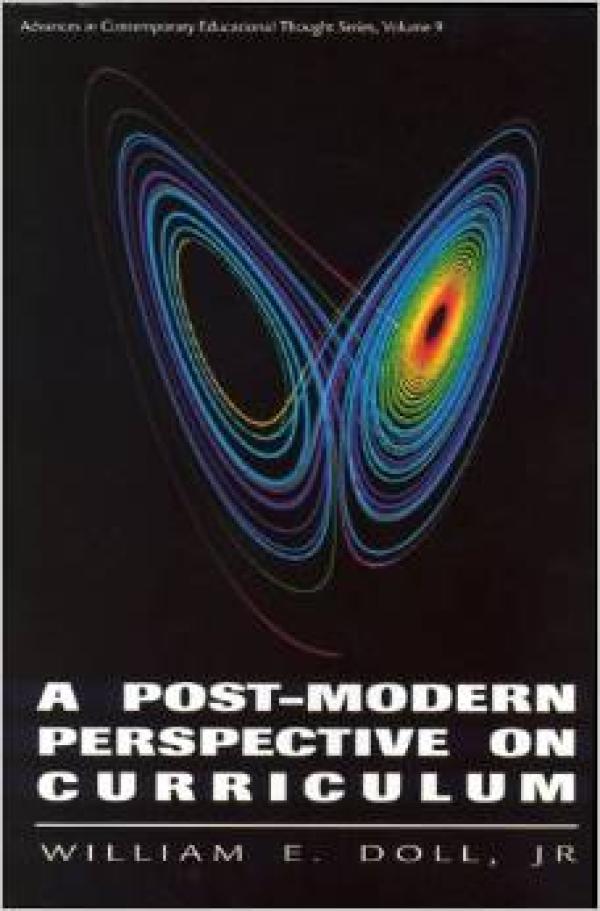
Doll offers a post-modernist, process-oriented vision of teaching and curriculum built from the base of a constructivist and experiential epistemology where we engage ourselves in a conversation with each other in the context of our collective history and seek meaning through alternative interpretations and transformations. In this book he ably demonstrates the power of historical reflection to illuminate our present position on the cusp of change, and he provides a powerful vision of what might be. (From the Publisher)
"When I read this book it was like starting over as a teacher. I had been convinced of the importance of the flipped classroom, but not until Fink’s approach did I see how the various components of my courses—the goals and outcomes, assignments, learning activities, and evaluation—need to be aligned and integrated in a coherent way. For too long these connections were implicit and students had to figure out how it all made sense.  At the beginning of every semester, I pull Fink off the shelf and do a few of the exercises to make sure my courses are ready to go. I strongly recommend you do the same." Kathleen Cahalan, St. John's School of Theology and Seminary Offering methods for improving teaching practices in higher education, Fink challenges educators to shift from the content-oriented "information dump" approach toward one that is learning-centered. Fink outlines his taxonomy of significant learning and shows how to combine new and traditional techniques to create powerful learning experiences. (From the Publisher)
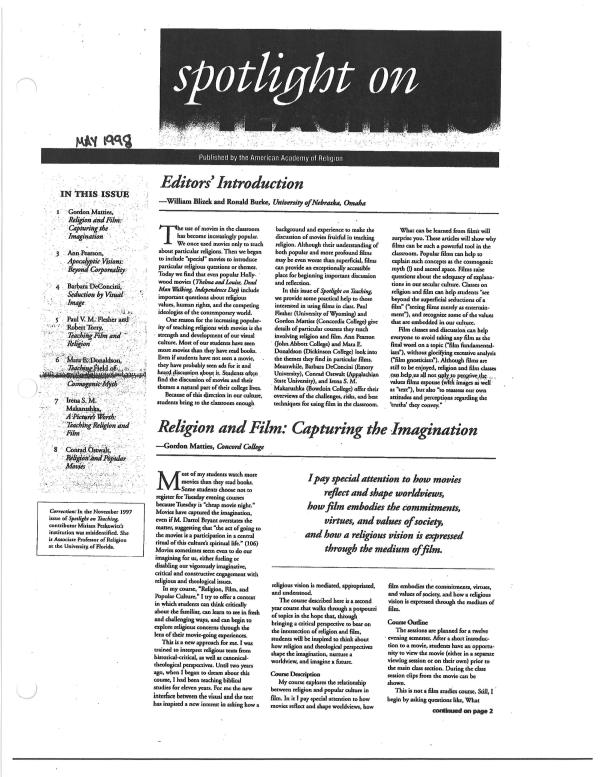
Journal Issue. (This issue, and all "Spotlight on Teaching" issues prior to 1999, are not available on the AAR website.)
A handout from BYU's Faculty Center, based on the work of L. Dee Fink, provides a series of detailed questions to guide you through the construction of a course, organized in categories such as: where are you? where do you want to go? how would you know if the students got there? how can you help them get there? what are the students going to do? etc.
This paper will discuss some pedagogical principles and practices that can be employed in a particular type of distance learning that I refer to as asynchronous learning networks (ALNs). ALNs are courses offered exclusively on-line via the internet or a remote server in an asynchronous mode that involves no face-to-face interaction and no conventional classroom sessions. The pedagogical techniques described below were developed while participating in a Sloan Foundation supported distance learning project at the State University of New York at New Paltz (under the auspices of the SUNY Learning Network) and teaching a ALN sociology course titled "Social and Economic Development". Many of the ideas and strategies presented stem from conversations with, and the advice and comments of, teaching colleagues in the SUNY Learning Network and instructional developers at the Center for Learning and Technology at Empire State College.