Resources
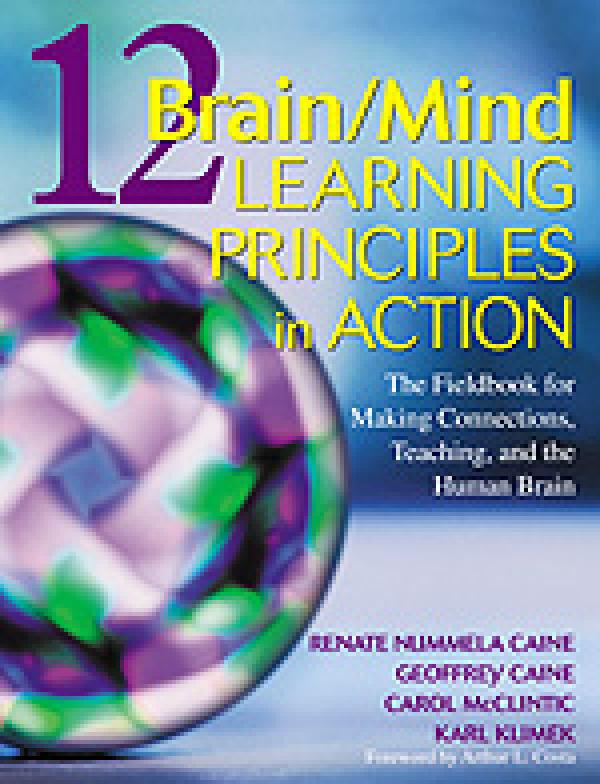
Step up to-and meet-the challenges of how to use the latest brain research for teaching, with practical concrete applications! This new book from the Caines and their colleagues will introduce new readers to their renowned 12 organizing principles for how the brain learns and how to use that knowledge for student learning. For those hundreds of thousands already using the Caines' groundbreaking work in their schools, this fieldbook will bring the latest research on the brain and its executive function and make the principles more practical than ever before for classroom application. 12 Brain/Mind Learning Principles in Action is grouped around key teaching and learning fundamentals: * Climate for learning * Instruction * Student processing (From the Publisher)
This essay argues that teachers would be more effective at promoting students' willingness to work hard at course content that seems to them remote and abstract if teachers explicitly presented that content to students more as a means to their education rather than as the aim of their education. Teachers should confront the fact that most of the content they teach will be forgotten by students. Once this fact is accepted, then it follows that teaching content that teachers know will be forgotten as if it should never be forgotten is myopic and perhaps dysfunctional. An alternative teaching model is to use course content to stimulate the flourishing of developmental human skills--rationality, language, aesthetic responsiveness, imagination, introspection, moral and ethical deliberation, sociability, and physicality--in the service of a developmental notion of liberal education that can never go out of date and can never be forgotten because its effects become absorbed as developmentally advanced orientations of life, not crammed into short-term memory for the sake of passing tests.
This article draws six key lessons from cognitive science for teachers of critical thinking. The lessons are: acquiring expertise in critical thinking is hard; practice in critical thinking skills themselves enhances skills; the transfer of skills must be practiced; some theoretical knowledge is required; diagramming arguments ("argument mapping") promotes skill; and students are prone to belief preservation. The article provides some guidelines for teaching practice in light of these lessons.
Finding ways to reduce students' anxiety and maximize the value of learning Greek and Hebrew is a continual challenge for biblical language teachers. Some language teachers use technology tools such as web sites or CDs with audio lessons to improve the experience. Though these tools are helpful, this paper explores the value gained from understanding first how students learn and then how technology tools best support that learning. Developments in cognitive psychology and neuroscience offer many insights concerning adult learning and retention. After a presentation of key insights, several ideas are suggested for enhancing the learning and retention experience of biblical language students.
Cognitive Dissonance Theory and the Induced-Compliance Paradigm pose some interesting questions for those teaching religious studies in publicly funded colleges and universities. Given that religious beliefs can be challenged by the historical-critical study of scriptures, for example, and that the cognitive dissonance generated when this occurs can result in unconscious alteration of beliefs and attitudes, it is vital to make explicit the potential for manipulation of student beliefs. The author asks what, if any, responsibilities are implied for the instructor.
This book explores how insights into figurative language can reshape what teachers do in the classroom. It reveals why some well-known methods work while others do not. Rejecting prescriptive pedagogical formulae, it recounts classroom episodes that help teachers rethink their own practice. Finally, the book sets out how we can use these episodes to reappraise language learning theory in a way that treats it as consonant with the cognitive nature of language. (From the Publisher)

This fine sourcebook provides college and university teachers, across the curriculum, with specific classroom-tested activities and assignments to stimulate and develop student critical thinking. The book consists of fifty modules, each containing: * A description of a critical thinking assignment, * An explanation of the assignment's purposes and benefits, * A discussion of ways to use or modify the assignment in the classroom, and * Suggested related activities, including relevant bibliographical sources. Most modules were developed by the author; in other cases, the author shaped, refined, and expanded on material that has been developed and used by colleagues. Some modules are discipline-specific, some are suitable for a number of disciplines; and many can easily be modified for use in a wide variety of fields. The assignments vary in scope, difficulty and complexity. Some are deigned for introductory freshman courses, while others have been used in graduate courses but could be adapted for lower level courses. Each module stands alone, but the modules are loosely grouped into five sections: (1) Problems and Puzzles (2) Analyses and Critiques (3) Opinions, Decisions, Values (4) Projects, Experiments, Adventures (5) Student as Teacher, Teacher as Student. The sourcebook also includes an introductory chapter on the nature and importance of critical thinking, a cross-referencing of all activities by discipline, and a wide-ranging bibliography. Cultivating Judgment has been extensively tested in college classrooms, then revised, expanded and significantly improved. The author has conducted extensive research on the teaching of thinking skills, and discovered that discovered that no existing source filled the need for a book that spells out and demonstrates how to teach critical thinking in virtually any discipline, from liberal arts to more specialized career programs. You will find Cultivating Judgment to be an engaging book, and one that combines intellectual rigor with a playful, creative spirit – and, one that can be used as a textbook in a general course on critical thinking, or as a resource for teachers across the curriculum! (From the Publisher)
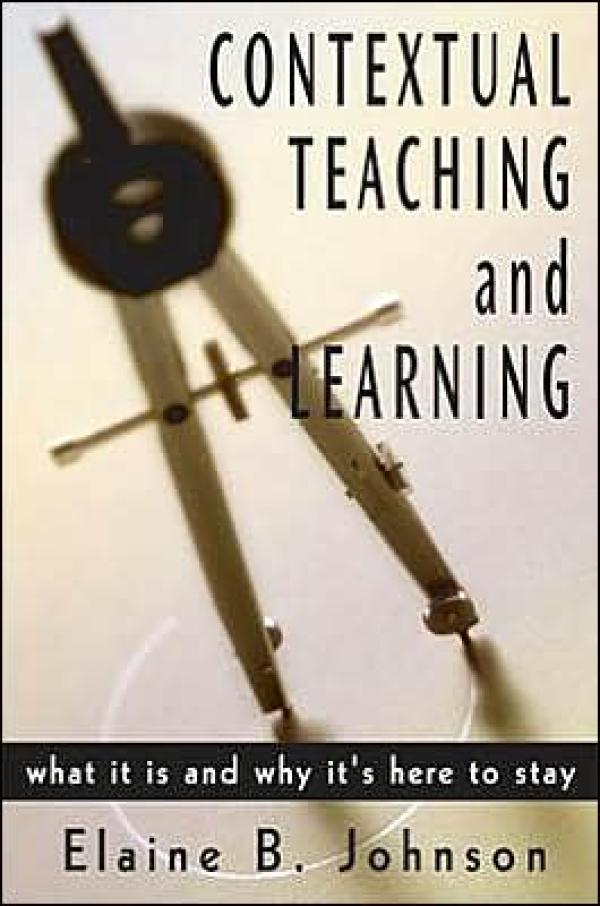
Contextual teaching and learning (CTL) is a system for teaching that is grounded in brain research. Brain research indicates that we learn best when we see meaning in new tasks and material, and we discover meaning when we are able to connect new information with our existing knowledge and experiences. Students learn best, according to neuroscience, when they can connect the content of academic lessons with the context of their own daily lives. Johnson discusses the elements of the brain-compatible contextual teaching and learning system: making meaningful connections; investing school work with significance; self-regulated learning; collaboration; critical and creating thinking; nurturing the individual; reaching high standards; and using authentic assessment. Drawing on the practices of teachers in kindergarten through university, Johnson provides numerous examples of how to use each part of the CTL system. Contextual Teaching and Learning: What it Is and Why It's Here to Stay is more than a handbook on precise steps to follow to help children of all abilities achieve high standards by joining academic lessons with their immediate context. This book also explains how the brain works, discusses why teachers need to pay attention to context, and makes a strong case for the need to teach students to think critically and creatively. This inspirational book urges educators to eliminate the student question: "Why do we have to learn this?" If the educators invest learning with meaning by relying on context, that question won't have to be asked. (From the Publisher)
While there is much available research and theory about learning and motivation, until now there has been no resource that translates esoteric findings into everyday language and examples that can be readily applied in college classrooms. This book brings the findings and theories of educational psychology to classroom faculty, helping them to adopt a scholarly approach to understanding their students' learning problems. (From the Publisher)