Resources
From the Publisher Understanding college students' intellectual development is at the heart of effective educational practice. How do college students learn? How can educators maximize intellectual development in the college environment for both sexes—both in and out of the classroom? In this book Marcia B. Baxter Magolda demonstrates how educators can use a deeper understanding of the way students learn to teach more effectively. Drawing on a unique longitudinal study of more than one hundred college students, both male and female—and presenting information not available in single-gender studies—the author explains surprising gender-related patterns that affect the way students develop. Baxter Magolda uses data gathered from in-depth interviews over a five-year period to reveal four distinct "ways of knowing." The book provides useful real-life examples of how instructional approaches, class expectations, peer interaction, evaluation methods, and other factors affect intellectual development in the classroom. Similarly, the author demonstrates how peer relationships, student organizations, educational advising, internships, employment, and international and cultural exchange can support and develop complex learning beyond the classroom. "Knowing and Reasoning in College" provides practical recommendations on how to respond to each of the four ways of knowing. It shows how, by designing instruction and interaction to reach students at every level, educators can maximize learning, promote skill acquisition and development of complex reasoning, and enrich students' overall college experience. (PsycINFO Database Record (c) 2012 APA, all rights reserved)
This research article explores the active use of cognitive-developmental or mediated cognitive learning strategies in undergraduate online courses. Examples and applications are drawn from two online sessions integrating online interaction, essay and discussion assignments, as well as a variety of multimedia components conducted during the spring of 2008. While focus on the interaction among students remains an important aspect of the online discussion environment, particular attention is given to the interaction between the student and the instructor. This paper argues that while online learning environments are ultimately student-controlled, they should be teacher-centered. The findings of this research suggest that students are more directly influenced by an instructor’s intentional effort to mediate the learning process than by the course objectives, material, or subject matter. Successful use of online technologies requires deliberate action on the part of the instructor to integrate various mediated cognitive learning strategies: (a) student participation and response is significantly increased, and (b) student motivation and morale is dramatically influenced.

Our goal in writing this book was to validate teachers for strong efforts in their life's work. We often observe teachers' frustrations with what they perceive to be a multitude of different hot topics in education that they must attend to now, but which they expect to come and go, like the last hot topics. So, we wanted to help readers see similarities between many of these hot topics-differentiation, multiple intelligences, culturally responsive teaching, brain-friendly strategies, authentic assessment, and ethical classroom management which we feel are not flashes in the pan. And we trust that serious practitioners will not oversimplify the findings of neuroscientists and their application to education. Reading studies and books by scientists, a number of which are user-friendly, can help ensure that teachers separate the hype from credible information. We have seen this professionally judicious approach in the work of graduate students (Kolinski, 2007) in adopting brain-friendly strategies. We have intentionally packed both theoretical/research-based and practical information in this book because professional educators want to know why they should use certain approaches, models, and strategies. In turn, as professionals, we should be able to explain why we teach the way we do-not to justify, but to educate others about our knowledge-based, reflective, decision-making processes and the impact on student learning. Thus, it is important to read Chapter 1 because it lays a foundation. Each succeeding chapter (2-6) has unique and compelling twists and turns-chock full of ideas to use or to adapt. It is possible to gain lots of ideas, processes, and strategies from reading and implementing (or adapting) even one of the unit chapters, or a part of it. While some of the units are explicitly about literacy, others focus on content using reading, writing, speaking, and listening as critical in the learning process. Thus, literacy skills are reinforced and strengthened. Additionally, some of our colleagues and public school partners have given us feedback that they wanted to implement some of the units and activities themselves. So, feel free to use this book for self-exploration and professional development. (From the Publisher)
The purpose of this practical guide is to facilitate college students' academic success by fostering self-regulated learning skills or learning to learn through the use of Integrative Learning Technologies (ILT). It enables the college instructor, online instructor, instructional developer, or educator to envision, plan for, and implement customized instructional and curricular designs that foster learning to learn and motivate students to take ownership of their own learning. Specifically, this book demonstrates how college faculty who use Learning Management Systems (LMS) as well as emerging technologies such as Web 2.0 applications and social software can design learning tasks and course assignments that support and promote student: goal setting use of effective task strategies self-monitoring and self-evaluation time management help seeking motivation and affect Given the emphasis on retention of freshmen as a measure of institutional effectiveness, the focus on student success, and the increasing use of ILT in higher education, this book fulfills a dire need in the literature on the integration of technology and self-regulated learning. (From the Publisher)
The second edition of Student Development in College offers higher education professionals a clear understanding of the developmental challenges facing today's college students. Thoroughly revised and updated, this edition includes new integrative theories of student development, expanded coverage of social identity theories, a targeted focus on higher education-related research, a current review of student development research and application, and reconceptualization of typology theories as a way to understand individual differences. (From the Publisher)
The Evolving Self focuses upon the most basic and universal of psychological problems--the individual's effort to make sense of experience, to make meaning of life. According to Robert Kegan, meaning-making is a lifelong activity that begins in earliest infancy and continues to evolve through a series of stages encompassing childhood, adolescence, and adulthood. The Evolving Self describes this process of evolution in rich and human detail, concentrating especially on the internal experience of growth and transition, its costs and disruptions as well as its triumphs. At the heart of our meaning-making activity, the book suggests, is the drawing and redrawing of the distinction between self and other. Using Piagetian theory in a creative new way to make sense of how we make sense of ourselves, Kegan shows that each meaning-making stage is a new solution to the lifelong tension between the universal human yearning to be connected, attached, and included, on the one hand, and to be distinct, independent, and autonomous on the other. The Evolving Self is the story of our continuing negotiation of this tension. It is a book that is theoretically daring enough to propose a reinterpretation of the Oedipus complex and clinically concerned enough to suggest a variety of fresh new ways to treat those psychological complaints that commonly arise in the course of development. Kegan is an irrepressible storyteller, an impassioned opponent of the health-and-illness approach to psychological distress, and a sturdy builder of psychological theory. His is an original and distinctive new voice in the growing discussion of human development across the life span. (From the Publisher)
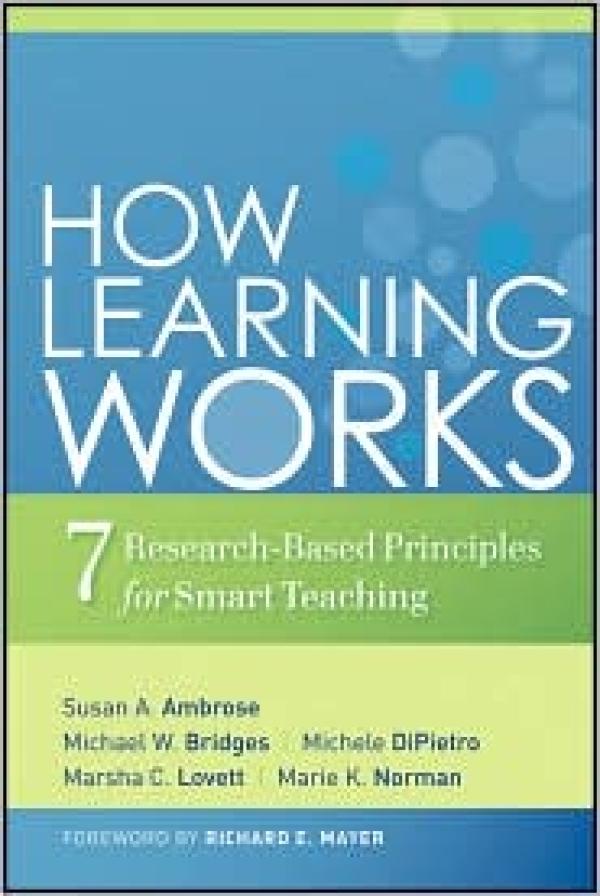
Click Here for Book Review Praise for How Learning Works How Learning Works is the perfect title for this excellent book. Drawing upon new research in psychology, education, and cognitive science, the authors have demystified a complex topic into clear explanations of seven powerful learning principles. Full of great ideas and practical suggestions, all based on solid research evidence, this book is essential reading for instructors at all levels who wish to improve their students' learning. This book is a must-read for every instructor, new or experienced. Although I have been teaching for almost thirty years, as I read this book I found myself resonating with many of its ideas, and I discovered new ways of thinking about teaching. Thank you Carnegie Mellon for making accessible what has previously been inaccessible to those of us who are not learning scientists. Your focus on the essence of learning combined with concrete examples of the daily challenges of teaching and clear tactical strategies for faculty to consider is a welcome work. I will recommend this book to all my colleagues. As you read about each of the seven basic learning principles in this book, you will find advice that is grounded in learning theory, based on research evidence, relevant to college teaching, and easy to understand. The authors have extensive knowledge and experience in applying the science of learning to college teaching, and they graciously share it with you in this organized and readable book. (From the Publisher)
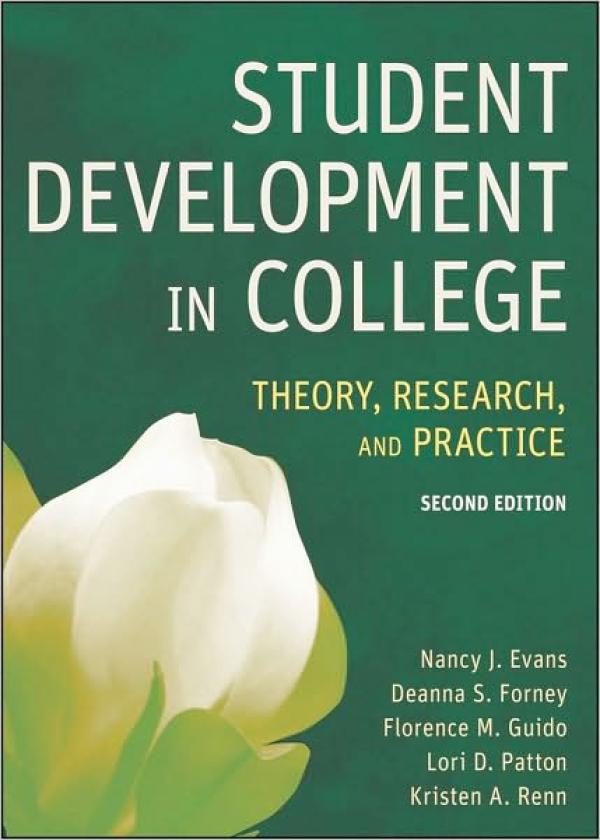
The second edition of Student Development in College offers higher education professionals a clear understanding of the developmental challenges facing today's college students. Thoroughly revised and updated, this edition includes new integrative theories of student development, expanded coverage of social identity theories, a targeted focus on higher education-related research, a current review of student development research and application, and reconceptualization of typology theories as a way to understand individual differences. Praise for the Second Edition of Student Development in College Student Development in College is a rich, comprehensive exploration of the major theoretical perspectives that inform development. The authors' attention to nuances and complexities results in a substantive history of theory development and a careful story about how various perspectives evolved yielding contemporary theorizing. The book is a masterful blend of theoretical lenses and their use in designing developmentally appropriate practice for diverse populations of contemporary college students. It is an excellent resource for all educators who work on college campuses. (From the Publisher)

A fresh look at study abroad programs on American college and university campuses. (From the Publisher)
This book includes far-readching suggestions for research that could increase the impact that classroom teaching has on actual learning. Like the original hardcover edition, this book offers exciting new research about the mind and the brain that provides answers to a number of compelling questions. When do infants begin to learn? How do experts learn and how is this different from non-experts? What can teachers and schools do—with curricula, classroom settings, and teaching methods—to help children learn most effectively? New evidence from many branches of science has significantly added to our understanding of what it means to know, from the neural processes that occur during learning to the influence of culture on what people see and absorb. How People Learn examines these findings and their implications for what we teach, how we teach it, and how we assess what our children learn. The book uses exemplary teaching to illustrate how approaches based on what we now know result in in-depth learning. This new knowledge calls into question concepts and practices firmly entrenched in our current education system. (From the Publisher)