Resources
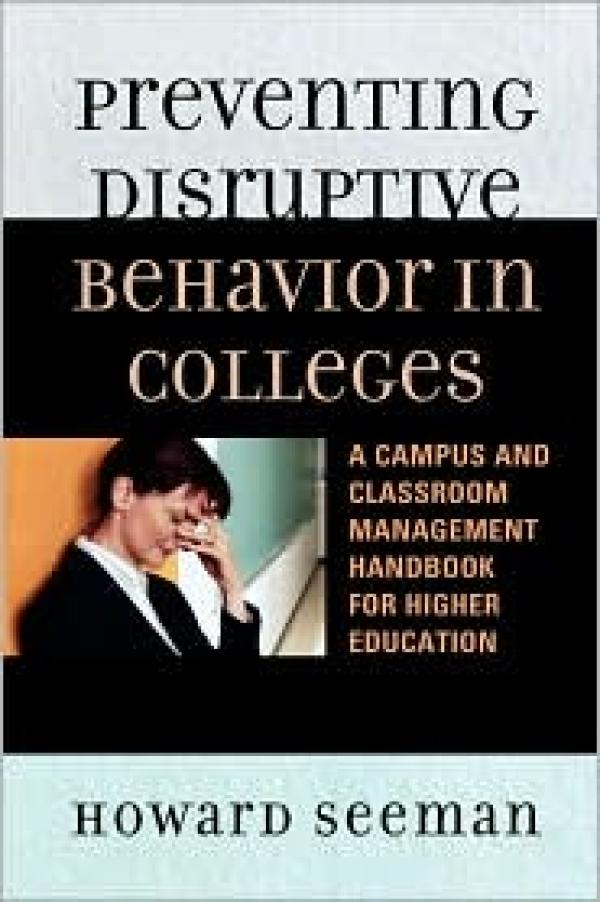
This book helps college instructors not just handle, but prevent these real-life disruptions in higher education so as to not lower learning standards. The book includes guidelines for preventive skills that respect the teaching style of the instructor/professor. Included are: concrete examples of problems and their prevention/solution; help with creating a Course Syllabus that curtails these problems; and training exercises to practice these skills. (From the Publisher)
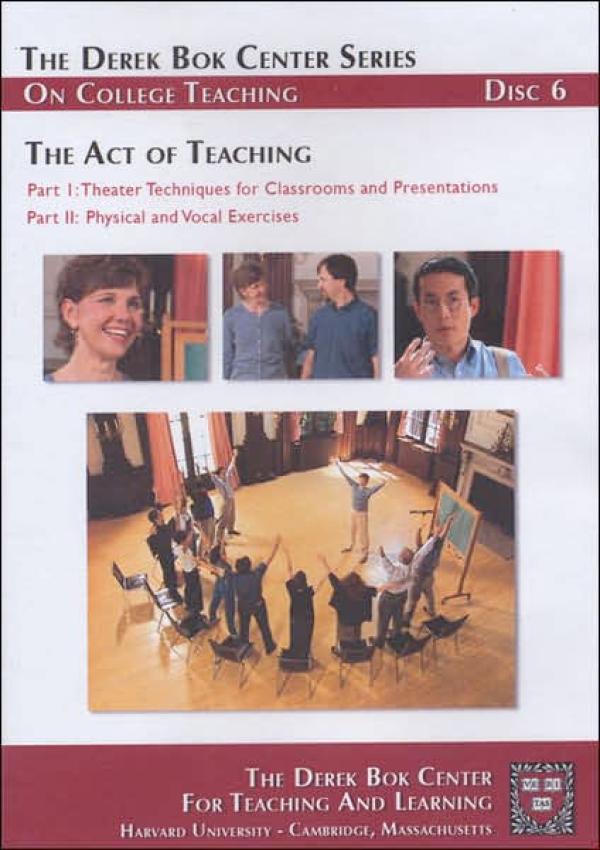
Teachers can convey their ideas more powerfully if they take time to improve their presentation skills. The Act of Teaching , Nancy Houfek, Head of Voice and Speech for the American Repertory Theatre at Harvard University, leads a workshop that stresses the importance of communication with the whole self in order to reach an audience. Throughout the workshop, she introduces participants to the same techniques that actors use to prepare and deliver a performance, including warm-ups, relaxation, strengthening, and visualizing exercises. In Part I, Theater Techniques for Classroom and Presentation, Houfek focuses on overcoming stage fright, knowing your objectives, and "landing your message." In part II, Physical and Vocal Exercises , she leads teachers through 20 minutes of exercises specifically designed to prepare them for the physical challenges of the classroom, beginning with "Waking Up the Body," and moving to vocal warm-ups that treat the voice as an instrument requiring care. Together, these techniques and exercises present a new set of resources that greatly broaden the avenues we customarily use in communicating with colleagues and students. An illustrated guide to exercises is included ad a PDF. (From the Publisher)
Megan Boler combines cultural history with ethical and multicultural analyses to explore how emotions have been disciplined, suppressed or ignored at all levels of education and in educational theory. Feeling Power begins by charting the philosophies and practices developed over the last century to control social conflicts arising from gender, class and race. The book traces the development of progressive pedagogies from civil rights and women's liberation movements to the author's recent studies of "emotional intelligence" and "emotional literacy". She concludes by outlining a "pedagogy of discomfort" that examines empathy, fear and anger to negotiate ethics and difference. Drawing on the formulation of emotion as knowledge within feminist, psychobiological and poststructuralist theories, Boler develops a unique theory of emotion from contemporary educational discourses. (From the Publisher)
Asserts that the relationship between students and faculty is the result of responses to a negotiated social setting. Reports on a study of 132 college students on factors that might affect class participation. Offers four recommendations for faculty to encourage student participation and responses to questions.
There is no pedagogical philosophy or technique that ensures the emergence of genuine community in the religious studies classroom. But teachers can engage in activities that create the conditions for community and student transformation. Among these is strategic self-disclosure – the practice of revealing one's own orientation toward a subject matter, a discipline, or the institutional context in which teaching and learning take place. But strategic self-disclosure is not without risks. It can permanently alter the classroom environment and may tap into the teacher's insecurities. The author explores these matters by analyzing a remarkable teaching experience in which community happened.

Increase student learning with an effective classroom management plan! One of the most challenging tasks for teachers is classroom management that ensures high levels of achievement for all students. In this updated edition, Karen Bosch helps preservice and experienced teachers develop classroom management plans tailored to their specific needs and skills. She discusses a five-step process that includes introspection, classroom observation, plan development, implementation, and plan revision. Field-tested for more than ten years, this unique book includes: Worksheets with questions to guide each step of the process Ample vignettes and examples Strategies for organization, discipline, classroom operation, and instruction Tips for working with diverse students This excellent resource provides guidance for teachers seeking to create a positive classroom environment, plan for student-centered learning, and meet the demands of today’s classrooms. (From the Publisher)

Changes in instructional paradigms are leading to changes in the way student achievement is tested, including group testing, online testing and authentic testing. This issue discusses the theory and practice of these new forms of testing and offers practical suggestions for instructors considering their use. (From the Publisher)
While there is much available research and theory about learning and motivation, until now there has been no resource that translates esoteric findings into everyday language and examples that can be readily applied in college classrooms. This book brings the findings and theories of educational psychology to classroom faculty, helping them to adopt a scholarly approach to understanding their students' learning problems. (From the Publisher)