Resources
Workplace is a refereed, open access journal published by the Institute for Critical Education Studies (ICES) and a collective of scholars in critical university studies, or critical higher education, promoting dignity and integrity in academic work. Contributions are aimed at higher education workplace scholar-activism and dialogue on all issues of academic labor.
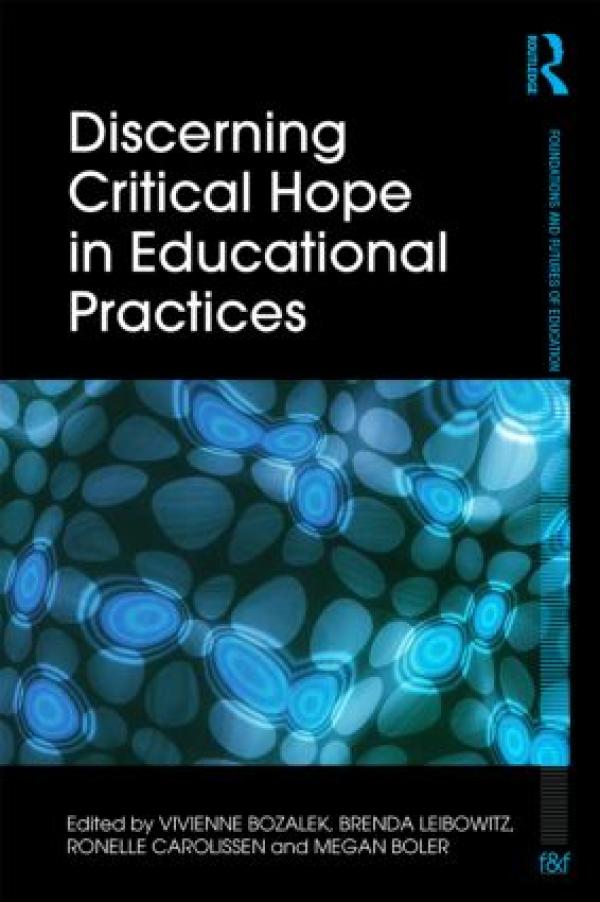
Click Here for Book Review Abstract: How can discerning critical hope enable us to develop innovative forms of teaching, learning and social practices that begin to address issues of marginalization, privilege and access across different contexts? At this millennial point in history, questions of cynicism, despair and hope arise at every turn, especially within areas of research into social justice and the struggle for transformation in education. While a sense of fatalism and despair is easily recognizable, establishing compelling bases for hope is more difficult. This book addresses the absence of sustained analyses of hope that simultaneously recognize the hard edges of why we despair. The volume posits the notion of critical hope not only as conceptual and theoretical, but also as an action-oriented response to despair. Our notion of critical hope is used in two ways: it is used firstly as a unitary concept which cannot be disaggregated into either hopefulness or criticality, and secondly, as an analytical concept, where critical hope is engaged and diversely theorized in ways that recognize aspects of individual and collective directions of critical hope. The book is divided into four sub-sections: - Critical Hope in Education - Critical Hope and a Critique of Neoliberalism - Critical Race Theory/Postcolonial Perspectives on Critical Hope - Philosophical Overviews of Critical Hope. Education can be a purveyor of critical hope, but it also requires critical hope so that it, as a sector itself, can be transformative. With contributions from international experts in the field, the book will be of value to all academics and practitioners working in the field of education. (From the Publisher)
Click Here for Book Review Abstract: Critical theory has much to teach us about higher education. By linking critical models, methods, and research tools with an advocacy-driven vision of the central challenges facing postsecondary researchers and staff, Critical Approaches to the Study of Higher Education makes a significant—and long overdue—contribution to the development of the field. The contributors argue that, far from being overly abstract, critical tools and methods are central to contemporary scholarship and can have practical policy implications when brought to the study of higher education. They argue that critical research design and critical theories help scholars see beyond the normative models and frameworks that have long limited our understanding of students, faculty, institutions, the organization and governance of higher education, and the policies that shape the postsecondary arena. A rigorous and invaluable guide for researchers seeking innovative approaches to higher education and the morass of traditionally functionalist, rational, and neoliberal thinking that mars the field, this book is also essential for instructors who wish to incorporate the lessons of critical scholarship into their course development, curriculum, and pedagogy. (From the Publisher)
Click Here for Book Review Abstract: Higher education is facing unprecedented change as today’s graduates need particular skills, awareness, and knowledge to successfully navigate a complex and interconnected world. Higher education institutions and practitioners are under pressure to be attentive to internationalization initiatives that support increasingly diverse student populations and foster the development of global citizenship competencies which include, “problem-defining and solving perspectives that cross disciplinary and cultural boundaries” (Hudzik, 2004, p. 1 as cited in Leask & Bridge, 2013). Internationalizing Higher Education: Critical Collaborations across the Curriculum is for current and future faculty, student affairs staff, and administrators from diverse disciplinary, institutional, and geographic contexts. This edited volume invites readers to investigate, better understand, and inform intercultural pedagogy that supports the development of mindful global citizenship. This edited volume features reflective practitioners exploring the dynamic and evolving nature of intercultural learning as well as the tensions and complexities. Contributors include institutional researchers, directors and key implementers of EU/Bologna process in Poland (one of the newest members and one that is facing unprecedented change in the diversity of its students), international partners in learning abroad programs, and scholars and instructors across a range of humanities, STEM, and social sciences. (From the Publisher)
Click Here for Book Review Abstract: Moving beyond critique, Alternative Solutions to Higher Education’s Challenges uses an appreciative approach to highlight what is working in colleges and universities and offers an examination of how institutions can improve practice. Drawing on examples and cases from real higher education institutions, this book offers a solution-focused framework that challenges the negative assumptions that have plagued higher education. Chapters explore how current narratives have perpetuated and maintained systematic flaws in our education system and have hindered reform. This invaluable resource breaks from the substantial literature that only highlights the many problems facing higher education today, and instead provides alternative strategies and essential recommendations for moving higher education institutions forward. (From the Publisher)
Here for Book Review Abstract: Focuses on the opportunities and challenges of using the science of change to improve the academic enterprise. This is not another book about why higher education needs to change. This volume is about how to facilitate change. What could higher education achieve if varied stakeholders decided to work together to accomplish a shared vision by using data and scaling up evidence-based interventions? The contributors offer examples and instructions to help execute change in order to drive collective impact. When we understand large-scale change in other sectors, such as healthcare, business, and the social sector, it can help inform us of what collective impact looks like and how to get there. A deeper investigation into the science of change will enable us to work towards increasing access, overcoming racial disparities, reducing the need for remediation, and improving learning outcomes. (From the Publisher)

Responding to Jacques Derrida's vision for what a 'new' humanities should strive toward, Peter Trifonas and Michael Peters gather together in a single volume original essays by major scholars in the humanities today. Using Derrida's seven programmatic theses as a springboard, the contributors aim to reimagine, as Derrida did, the tasks for the new humanities in such areas as history of literature, history of democracy, history of profession, idea of sovereignty, and history of man. Deconstructing Derrida engages Jacques Derrida's polemic on the future of the humanities to come and expands on the notion of what us proper to the humanities in the current age of globalism and change. (From the Publisher)
Click Here for Book Review Abstract: Best Practices in Online Program Development is a practical, hands-on guide that provides the concrete strategies that academic and administrative departments within institutions of higher learning need to develop in order to create and maintain coherent and effective online educational programs. Unlike individual courses, an online education program requires a comprehensive, inter-departmental effort to be integrated into the ongoing educational project of a college or university. This book focuses on the: Integration of online education into the institutional mission Complex faculty-related issues including recruiting, training, and teaching Multifaceted support required for student retention and success Need for multilayered assessment at the course, program, technical, and institutional levels Challenges posed to governance and by the need to garner resources across the institution Model to insure ongoing, comprehensive development of online educational programs Best Practices in Online Program Development covers the above topics and more, giving all the stakeholders in online educational programs the building blocks to foster successful programs while encouraging them to determine what role online education should play in their academic offerings. (From the Publisher)
Click Here for Book Review Abstract: Based on the authors’ experiences in academe over seventy-five years, The Higher Education Scene in America: Some Observations discusses a number of issues that confront America’s higher education scene today. Those issue embrace such problems as: (1) the missions(s) of our colleges and universities and the development of critical thinking and/or employability; (2) the role of for-profit academic institutions; (3) the impact of online technology; (4) diffusion of power and achievement of consensus between administrators and faculty; (5) the importance of financial matters, embracing budgets, fundraising, and endowments; (6) the insidious problem of conflicts of interest; (7) the scandalous impact of big-time, big-money Division 1 sports on academe; (8) the growth of non-academic functions; and (9) the importance of leadership in consensual institutions and how leaders are chosen. (From the Publisher)
Click Here for Book Review Abstract: The case for a flexible work schedule for faculty has been repeatedly made, with one policy recommendation being part-time positions for tenure-track/tenured faculty (PTTT). Despite some of the benefits of this approach for both faculty and institutions, the PTTT concept is the least implemented policy for faculty flexibility and is poorly understood. This report offers the first comprehensive treatment of PTTT, suggesting that this mode of flexibility enhances recruitment, retention, and engagement of faculty, while offering value-added productivity, planning potential, and faculty loyalty for the institution. Herbers provides data that explore how a PTTT policy can lead to faculty success and satisfaction across the lifespan of a career, and likewise offers analogies and examples of well-established practices that administrators across institution types can adapt to create their own policies. Administrators and faculty will find the author’s policy recommendations, best practices, and solutions to common challenges to be a roadmap for stimulating change in their institutions. This is the 5th issue of the 40th volume of the Jossey-Bass series ASHE Higher Education Report. Each monograph is the definitive analysis of a tough higher education issue, based on thorough research of pertinent literature and institutional experiences. Topics are identified by a national survey. Noted practitioners and scholars are then commissioned to write the reports, with experts providing critical reviews of each manuscript before publication. (From the Publisher)