Resources
Sexual violence on campus is a major issue facing students, faculty, and administrators, and institutions of higher education are struggling to respond. This forum brings together three responses to the problem, with a focus on the religious studies classroom. The responses move from the institution to the faculty to the classroom, exploring three separate but linked spaces for responding to sexual violence. The first contribution (Graybill) critiques common institutional responses to sexual violence. The second contribution (Minister) advocates for long-term, classroom-based responses to sexual violence and describes a faculty/staff workshop response. The third contribution (Lawrence) emphasizes the classroom, examining the issues that arise when perpetrators of sexual assault are part of the student body. Read together, the pieces offer a comprehensive view of the complicated intersections of sexual violence, the university, and pedagogical issues in religious studies.
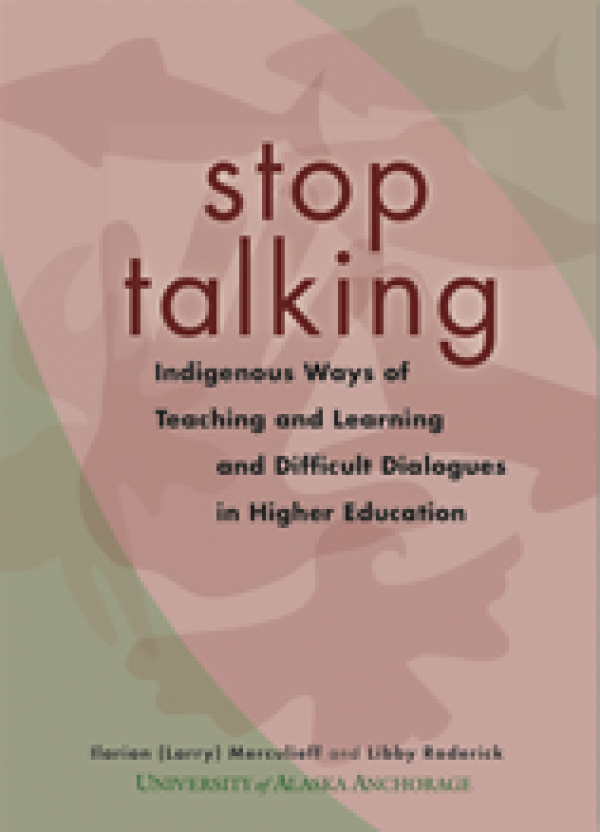
Click Here for Book Review For 10,000 years, Alaska’s Native peoples have survived and thrived in some of the harshest conditions in the world. During that time, they perfected teaching and learning practices that ensured the survival of their communities and the wellbeing of their natural environments. Those ancient practices offer fresh insights for educators who care about the state of our world and seek ways to make education more relevant and engaging. This book describes a unique higher education project that broke some difficult silences between academic and Native communities by introducing a small group of non-Native faculty members to traditional Alaska Native ways of teaching and learning. It presents a model for a Native-designed and run faculty development intensive, strategies for applying indigenous pedagogies in western learning environments, reflection on education by Alaska Native Elders, and reports from participants on what they learned and what they tried in their classrooms. It is intended to stimulate discussion and reflection about best practices in higher education. (From the Publisher)
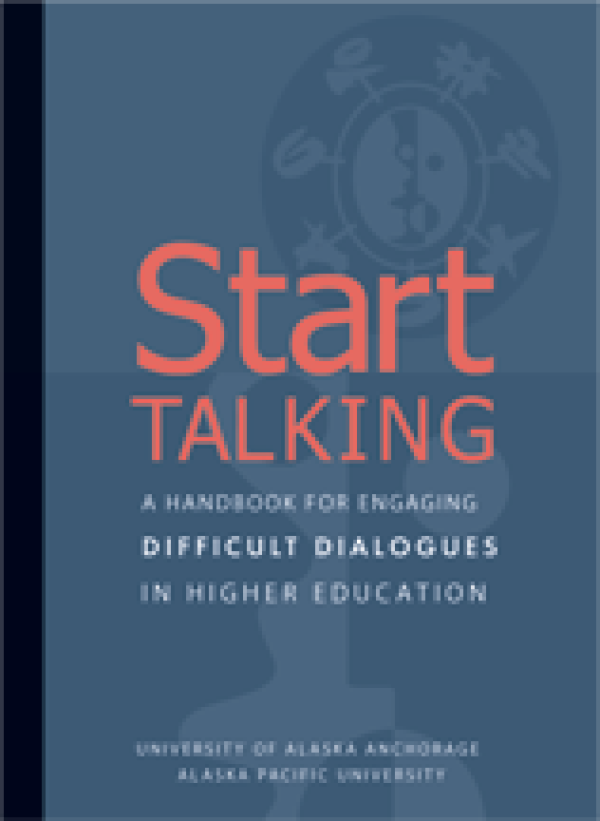
Click Here for Book Review The University of Alaska Anchorage and Alaska Pacific University created Start Talking: A Handbook for Engaging Difficult Dialogues in Higher Education, a field manual for professors who wish to engage their students more effectively in conversations about the most important issues of our time. The book addresses themes of academic freedom; classroom safety; rhetoric and debate; race, class and culture; science and religion; and business, politics and social justice. For information about the project, including faculty intensives on difficult dialogues and indigenous ways of teaching and learning, see UAA Initiatives. (From the Publisher)
Daryl G. Smith has devoted her career to studying and fostering diversity in higher education. She has witnessed and encouraged the evolution of diversity from an issue addressed sporadically on college campuses to a reality of the modern university experience. In Diversity’s Promise for Higher Education, Smith brings together scholarly and field research relevant to the next generation of diversity work. The book argues that achieving excellence in a diverse society requires increasing the institutional capacity for diversity while simultaneously working to understand how diversity is tied to better leadership, positive change, research in virtually every field, student success, accountability, and more equitable hiring practices. To become more relevant to society, the nation, and the world while remaining true to their core missions, colleges and universities must continue to see diversity—like technology—as central, not parallel, to their work. In Diversity’s Promise for Higher Education, Smith proposes a set of clear and realistic practices that will help colleges and universities locate diversity as a strategic imperative and pursue diversity efforts that are inclusive of the varied—and growing—issues apparent on campuses without losing focus on the critical unfinished business of the past. In this edition, which is aimed at administrators, faculty, researchers, and students of higher education, Smith emphasizes a transdisciplinary approach to the topic of diversity, drawing on an updated list of sources from a wealth of literatures and fields. The tables have been refreshed to include data on faculty diversity over a twenty-year period and the book includes new information about gender identity, stereotype threat, student success, the growing role of chief diversity officers, the international emergence of diversity issues, faculty hiring, and implicit bias. (From the Publisher)
Click Here for Book Review The newest release from Bringing Theory to Practice, Well-Being and Higher Education, explores the multiple connections of well-being to higher education and why those connections matter—for the individual lives of students and those who teach; for the institution; and for whether or not the unique promise of higher education to a democratic society can be advanced and realized. The publication’s thirty-five original essays and provocations—by some of the most highly respected voices within and beyond the academy—address the theoretical underpinnings and practical expressions of these connections. Articles include “Higher Education, the Struggle for Democracy, and the Possibility of Classroom Grace”; “Why Well-Being is Fundamental to Liberal Learning”; “Honoring the Humanity of Our Students”; “Thriving: Expanding the Goal of Higher Education”; and “College Makes Me Feel Dangerous: On Well-Being and Nontraditional Students.” Well-Being and Higher Education opens the discussion on learning’s connection to well-being; responds to current challenges against the state of higher education today; and brings to the forefront a conversation considering the greater purposes of higher education and the need to preserve and revive the institution’s role to look beyond itself to a greater good. (From the Publisher)
Click Here for Book Review Abstract: This exciting new text examines one of the most important and yet elusive terms in higher education and society: What do we mean when we talk in a serious way about “diversity”? A distinguished group of diversity scholars explore the latest discourse on diversity and how it is reflected in research and practice. The chapters trace how the discourse on diversity is newly shaped after many of the 20th century concepts of race, ethnicity, gender and class have lost authority. In the academic disciplines and in public discourse, perspectives about diversity have been rapidly shifting in recent years. This is especially true in the United States where demographic changes and political attitudes have prompted new observations - some which will clash with traditional frameworks. This text brings together scholars whose research has opened up new ways to understand the complexities of diversity in higher education. Because the essential topic under consideration is changing so quickly, the editors of this volume also have asked the contributors to reflect on the paths their own scholarship has taken in their careers, and to see how they would relate their current conceptualization of diversity to one or more of three identified themes (demography, democracy and discourse). Each chapter ends with a candid graduate student interview of the author that provides an engaged picture of how the authors wrestle with one of the most complicated topics shaping them (and all of us) as individuals and as scholars. Of interest to anyone who is following the debates about diversity issues on our campuses, the book also offers a wonderful introduction to graduate students entering a discipline where critically important ideas are still very much alive for discussion. (From the Publisher)
Click Here for Book Review The first edition of this book constituted a comprehensive resource for students of higher education, faculty, higher education administrators and student affairs leaders engaging with multiculturalism and diverse populations on college campuses. It was one of the first texts to gather in a single volume the related theories, assessment methods, and environmental and application issues pertinent to the study and practice of multiculturalism, while also offering approaches to enhancing multicultural programming and culturally diverse campus environments. This second edition retains the structure and vision of the first, introducing readers to the key theories and models for understanding the complexity of the students they serve, and for reflecting on their own values and motivations. It provides an array of case studies, discussion questions, examples of best practice, and recommendations about resources for use in the classroom. This edition includes a new chapter on intersectionality; updates several chapters, presents a number of new cultural frameworks and updated best practices for creating an inclusive environment for marginalized groups, and expands the third section of the book on cultural competent practice. (From the Publisher)
Click Here for Book Review Abstract:Thinking about teaching in educational terms has become increasingly difficult because of the conceptions of higher education that predominate in both policy and public debate. Framing the benefits of higher education simply as an economic good poses particular difficulties for making educational sense of teaching. Moreover, the assumptions about social mobility, usefulness, and the economic advantages of higher education, upon which these conceptions are based, can no longer be taken for granted. The chapters in this book all wrestle with understandings of education and teaching experiences in changing global, national, and institutional contexts. They explore questions of difference and privilege, the social transformation of teaching through transforming teachers, contestations of global citizenship and interculturality, learning and sensibilities of self-in-the-world, the relationship between programme content and student decision-making, divergent conceptions of learning in international education, and subject-centred approaches to embodied teaching. The book considers the value of disciplinary tools of analysis in addressing contextual challenges in developing societies, connections between pedagogies, autonomy and intercultural classrooms, and ways of countering the marketization of higher education through online teaching communities. This book was originally published as a special issue of Teaching in Higher Education. (From the Publisher)
Click Here for Book Review Students and their parents wonder if college is worth the investment. Employers want graduates with the skills they need. The public wonders if higher education is preparing future generations for an era of dynamic change. In his latest book, William Sullivan offers a model of higher education that answers all these questions in the affirmative, through the power of integrated learning. Drawing on examples from the 25 members of the New American Colleges & Universities (NAC&U) consortium, the book makes the case for an approach that combines the strengths of the liberal arts, professional studies, and civic responsibility in order to give students the combination of skills and experience that will prepare them for success in all aspects of life after graduation. NAC&U campuses place emphasis upon enabling their students to know themselves and their abilities, as well as providing them with opportunities to develop a sophisticated understanding of the world. To achieve these goals, the academic programs focus on developing students’ intellectual and practical skills, such as analytical ability, problem solving, facility in written and spoken communication, and an appreciation for human diversity and creativity. These have traditionally been identified as the goals of a liberal arts education, and are the same ones identified in a national employer survey as giving job-seekers an edge. These institutions also invest a great deal of effort to provide their students with state-of-the-art preparation for professional life and occupational success in diverse fields. These range from the technical – science and technology fields, with disciplines such as engineering and computer science – through business, and across the human service fields, such as education, nursing, pre-medicine, and pre-law, to architecture, and the performing and visual arts. In these courses of study, students begin to shape their future careers. The important third value of a NAC&U education is fostering civic responsibility among students. In programs of study abroad and a range of internship and service opportunities, these colleges support their students in shaping for themselves unique and effective ways to contribute to the larger life of their world. Parents and prospective students may appreciate the chance to learn more about these schools and what they have to offer, while those working in higher education will appreciate the chance to learn more about a model that their own institutions may be motivated to emulate. All readers will take away a picture of a truly vital part of the higher education landscape in this country. (From the Publisher)
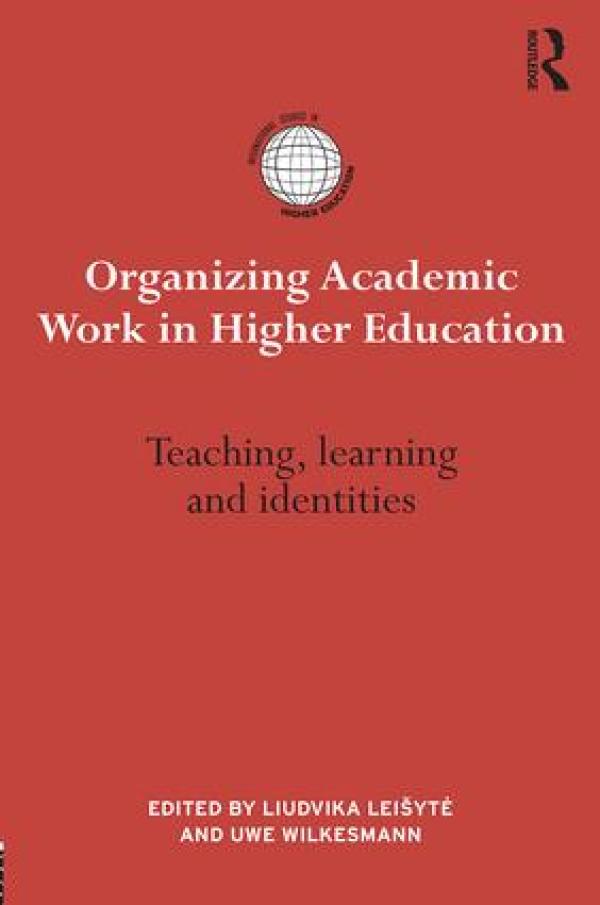
Click Here for Book Review Organizing Academic Work in Higher Education explores how managers influence teaching, learning and academic identities and how new initiatives in teaching and learning change the organizational structure of universities. By building on organizational studies and higher education studies literatures, Organizing Academic Work in Higher Education offers a unique perspective, presenting empirical evidence from different parts of the world. This edited collection provides a conceptual frame of organizational change in universities in the context of New Public Management reforms and links it to the core activities of teaching and learning. Split into four main sections: - University from the organizational perspective, - Organizing teaching, - Organizing learning and - Organizing identities, this book uses a strong international perspective to provide insights from three continents regarding the major differences in the relationships between the university as an organization and academics. It contains highly pertinent, scientifically driven case studies on the role and boundaries of managerial behaviour in universities. It supplies evidence-based knowledge on the effectiveness of management behaviour and tools to university managers and higher education policy-makers worldwide. Academics who aspire to institutionalize their successful academic practices in certain university structures will find this book of particular value. Organizing Academic Work in Higher Education will be a vital companion for academic interest in higher education management, transformation of universities, teaching, learning, academic work and identities. Bringing together the study of the organizational transformation in higher education with the study of teaching, learning and academic identity, Organizing Academic Work in Higher Education presents a unique cross-national and cross-regional comparative perspective. (From the Publisher)