Resources
Click Here for Book Review From the University of California, Berkeley, to Middlebury College, institutions of higher learning increasingly find themselves on the front lines of cultural and political battles over free speech. Repeatedly, students, faculty, administrators, and politically polarizing invited guests square off against one another, assuming contrary positions on the limits of thought and expression, respect for differences, the boundaries of toleration, and protection from harm. In Free Speech on Campus, political philosopher Sigal Ben-Porath examines the current state of the arguments, using real-world examples to explore the contexts in which conflicts erupt, as well as to assess the place of identity politics and concern with safety and dignity within them. She offers a useful framework for thinking about free-speech controversies both inside and outside the college classroom, shifting the focus away from disputes about legality and harm and toward democracy and inclusion. Ben-Porath provides readers with strategies to de-escalate tensions and negotiate highly charged debates surrounding trigger warnings, safe spaces, and speech that verges on hate. Everyone with a stake in campus controversies—professors, students, administrators, and informed members of the wider public—will find something valuable in Ben-Porath's illuminating discussion of these crucially important issues. (From the Publisher)
Click Here for Book Review Whilst much has been written about the doors that technology can open for students, less has been said about its impact on teachers and professors. Although technology undoubtedly brings with it huge opportunities within higher education, there is also the fear that it will have a negative effect both on faculty and on teaching standards. Education Is Not an App offers a bold and provocative analysis of the economic context within which educational technology is being implemented, not least the financial problems currently facing higher education institutions around the world. The book emphasizes the issue of control as being a key factor in whether educational technology is used for good purposes or bad purposes, arguing that technology has great potential if placed in caring hands. Whilst it is a guide to the newest developments in education technology, it is also a book for those faculty, technology professionals, and higher education policy-makers who want to understand the economic and pedagogical impact of technology on professors and students. It advocates a path into the future based on faculty autonomy, shared governance, and concentration on the university’s traditional role of promoting the common good. Offering the first critical, in-depth assessment of the political economy of education technology, this book will serve as an invaluable guide to concerned faculty, as well as to anyone with an interest in the future of higher education.
Click Here for Book Review The Idea of the PhD: The doctorate in the twenty-first-century imagination analyses the PhD as it is articulated in diverse areas of contemporary discourse at a time in which the degree is undergoing growth, change and scrutiny worldwide. It considers not just institutional ideas of the PhD, but those of the broader cultural and social domain as well as asking whether, and to what extent, the idea of the Doctor of Philosophy, the highest achievable university award, is being reimagined in the twenty-first century. In a world where the PhD is undergoing significant radical change, and where inside universities, doctoral enrolments are continually climbing, as the demand for more graduates with high-level research skills increases, this book asks the following questions: How do we understand how the PhD is currently imagined and conceptualised in the wider domain? Where will we find ideas about the PhD, from its purpose, to the nature of research work undertaken and the kinds of pedagogies engaged, to the researchers who undertake it and are shaped by it? International in scope, this is a text that explores the culturally inflected representation of the doctorate and its graduates in the imagination, literature and media. The Idea of the PhD contributes to the research literature in the field of doctoral education and higher education. As such, this will be a fascinating text for researchers, postgraduates and academics interested in the idea of the university. (From the Publisher)
This Auburn Studies report highlights the changing features of online distance education (ODE) within theological schools. Distance education is not a new phenomenon, particularly within the broader field of higher education, and yet the “disruptive innovation” of the internet, as Clayton Christensen and others have argued, has only recently begun to change theological education.[i] While in some respects the impact of the internet is dramatic and new, many faith traditions have deep experience with the sort of mediated presence distinctive of ODE. For many world religions, the embodied presence of their founders—Moses, Jesus, Mohammad, Buddha, and others—was brief. For most of the histories of these great traditions, “not being there” has been normative. Take, for example, the story of Jesus’ post-resurrection appearance to the disciples in the Gospel of John. All the disciples were there, save Thomas, who would not believe Jesus was truly alive without “being there” to see and touch Jesus. Lucky for him, a week later Jesus appeared to Thomas as well. But note what Jesus said: “Have you believed because you have seen me? Blessed are those who have not seen and have come to believe.” This is the case for millions of believers today, whose experience of the holy is through a mediating presence, holy objects, or rituals, and perhaps, most profoundly, through scriptures understood as God’s presence, voice, or word. It is then not an unfamiliar world at all for people of faith to teach and learn at a distance, using mediated relationships to do so—even when the technology affording the connection is indeed new. While this report outlines our research findings, we also hope to offer resources for thinking in creative and hopeful ways in a time of change. The report takes stock of a generation of change in theological education driven by what is often called the “digital revolution.” We highlight three key findings: First, ODE is growing rapidly, pushing the boundaries of who typically attends theological school. Over the past decade, enrollment at member schools of The Association of Theological Schools (ATS) dropped by 11%; in the same period, online enrollment rose almost 200%. Broader cultural patterns regarding spirituality are surely at play as we see the democratizing force of the internet opening theological exploration to a much wider—and, it turns out, quite interested—audience. Given the success of ODE, many schools suddenly find themselves with too large and expensive a physical plant for the educational needs. Second, ODE student outcomes are equal to or better than those of traditional residential classes. Many critics—even now—harbor doubts that anything but students and a professor in a room together can achieve the desired educational outcomes. Yet the evidence shows this is not true. ODE provokes pedagogical innovation, shifting the focus from teacher to learner, and the power of the contexts in which the student learns. For both faculty and students, it is powerful to take seriously the “real world” context where student learning and daily work dynamically interrogate one another. Ironically, we found, while ODE takes more time and effort, remarkably few resources are currently dedicated to training and supporting faculty as they learn this new medium. Third, the integrated reality of digital life is quickly making the old divide between “traditional” and “online” classes—and hybrid courses or programs, which toggle between the two—obsolete. ODE creates an identity crisis for many schools that value highly the formative power of “being there” in classroom, chapel, and community life. Yet the question the disruption of the internet raises is “where” does education actually happen? It is clearly wherever the student lives, works, and learns, including in virtual spaces and through digitally mediated access to human and material resources.
A panel at the 2016 American Academy of Religion conference staged, taped, transcribed, and edited this conversation about the challenges and opportunities of teaching in a “nano department” – an undergraduate religion or religious studies department (or combined religion and philosophy department) with only one, two, or three faculty members. Two things quickly become evident: one is the impossibility of coverage of the full religious studies curriculum, and the other is the necessity for collaboration with other departments. Neither of these is unique to nano departments, but there exists an intimacy between students and faculty in small departments, a necessary freedom to rethink the place of the study of religion in the liberal arts curriculum, and a disruptive value in what can be critiqued and contributed from a marginalized position. Arguably, nano departments are the canaries in the academic coal mine, charting the future of the humanities that cannot be discerned from the vantage point of Research-1 contexts.
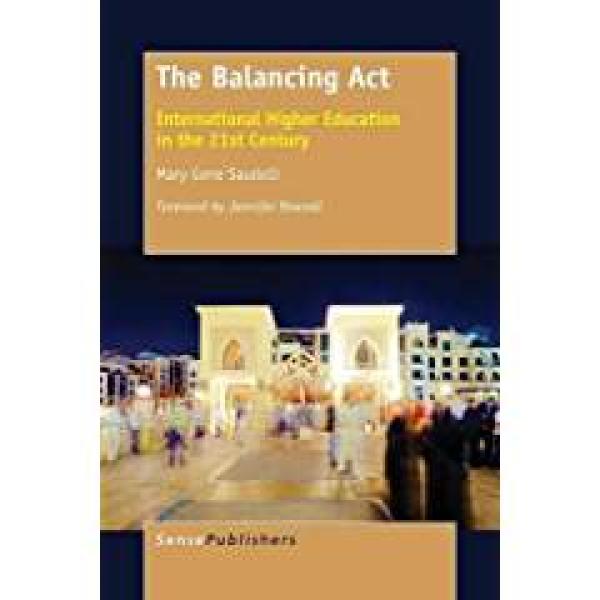
Why is it important to learn about higher education in international contexts? Why learn about curriculum, teaching, and learning at Dubai Women’s College of the Higher Colleges of Technology? Global education systems have remarkable contributions to make to understandings of 21st century curriculum, teaching, and learning. Adult educators across the globe are exploring how to make learning meaningful in a world that is experiencing change, global migration, rapid development, cross-cultural communication demands, and systems with mandates for accountability and international standardized measures of quality. Dubai is an Emirate in the United Arab Emirates that has experienced these issues, which have had a profound impact on higher education for Emirati women. The international educators who contributed to this book reveal how they designed and implemented a curriculum that represented a complex balancing act replete with recognition of local, global, religious, cultural, and societal implications. There is no other book like The Balancing Act: International Higher Education in the 21st Century. It reveals the nature of a highly devoted team of international educators who designed a contextually and globally relevant transdisciplinary, 21st century curriculum. “Dr. Mary Gene Saudelli has tremendous knowledge and experience with delivering world class education in the Middle East. She has a deep commitment to progressive education and an understanding of global mindedness. It is wonderful that she shares her research on a wide range of topics in educational curriculum and global issues. In The Balancing Act: International Higher Education in the 21st Century, Dr. Saudelli opens the dialogue of reciprocity in learning from higher education in diverse contexts. This book honours Emirati women’s backgrounds and differences, yet cherishes the uniqueness of the international educators involved in this study.” – Kim Critchley, Dean and CEO, University of Calgary in Qatar (From the Publisher)
Click Here for Book Review This book provides a detailed look at the current state of Latino/a theological education in the United States. This includes consideration of the career development and opinions of Latinos/as in seminary education, as well attention to other important modes of Latino/a theological education, like non-degree programs and Hispanic-serving organizations like the HTI and HSP. Another goal of this project was to make recommendations for ways in which schools of theology can do a better job preparing the next generation of Latino/a religious leaders to serve as bridge builders for the future. Thus, we paid special attention to how hospitable theological educational institus are to Hispanics. This book also offers recommendations on improving Latino/a recruitment, revamping the curriculum and Hispanic ministry education, tending better to the sense of community on campuses, and so much more. (From the Publisher)
Click Here for Book Review In recent decades, American universities have begun to tout the “diversity” of their faculty and student bodies. But what kinds of diversity are being championed in their admissions and hiring practices, and what kinds are being neglected? Is diversity enough to solve the structural inequalities that plague our universities? And how might we articulate the value of diversity in the first place? Transforming the Academy begins to answer these questions by bringing together a mix of faculty—male and female, cisgender and queer, immigrant and native-born, tenured and contingent, white, black, multiracial, and other—from public and private universities across the United States. Whether describing contentious power dynamics within their classrooms or recounting protests that occurred on their campuses, the book’s contributors offer bracingly honest inside accounts of both the conflicts and the learning experiences that can emerge from being a representative of diversity. The collection’s authors are united by their commitment to an ideal of the American university as an inclusive and transformative space, one where students from all backgrounds can simultaneously feel intellectually challenged and personally supported. Yet Transforming the Academy also offers a wide range of perspectives on how to best achieve these goals, a diversity of opinion that is sure to inspire lively debate. (From the Publisher)
Click Here for Book Review The institution of tenure—once a cornerstone of American colleges and universities—is rapidly eroding. Today, the majority of faculty positions are part-time or limited-term appointments, a radical change that has resulted more from circumstance than from thoughtful planning. As colleges and universities evolve to meet the changing demands of society, how might their leaders design viable alternative faculty models for the future? Envisioning the Faculty for the Twenty-First Century weighs the concerns of university administrators, professors, adjuncts, and students in order to critically assess emerging faculty models and offer informed policy recommendations. Cognizant of the financial pressures that have led many universities to favor short-term faculty contracts, higher education experts Adrianna Kezar and Daniel Maxey assemble a top-notch roster of contributors to investigate whether there are ways to modify the existing system or promote new faculty models. They suggest how colleges and universities might rethink their procedures for faculty development, hiring, scheduling, and evaluation in order to maintain a campus environment that still fosters faculty service and student-centered learning. Even as it asks urgent questions about how to retain the best elements of American higher education, Envisioning the Faculty for the Twenty-First Century also examines the opportunities that systemic changes might create. Ultimately, it provides some starting points for how colleges and universities might best respond to the rapidly evolving needs of an increasingly global society. (From the Publisher)
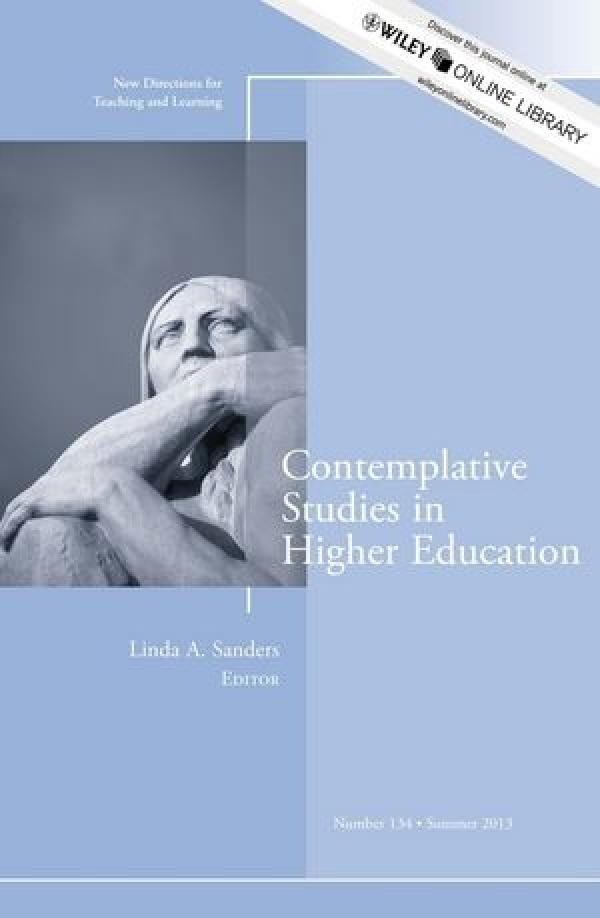
The complexities of 21st-century life- personal, social, cultural, and environmental - demand thoughtful responses, responses fostered and enhanced through contemplative experience. Contemplative education includes studies of the history, psychology, and socialcultural context of such experience, as well as the development of experiential knowledge through one or more personal practices. Contemplative education has recently emerged in the academy. Although there has been significant published discussion of postsecondary courses and programs that incorporate contemplative views and practices, there have been few studies of relevant curricula and pedagogy. This volume integrates research, theory, and practice through a fusion of perspectives and approaches, giving readers the opportunity to review contemplative educational concepts and applications in academic, social, and institutional domains. This is the 134th volume of this Jossey-Bass higher education series. New Directions for Teaching and Learning offers a comprehensive range of ideas and techniques for improving college teaching based on the experience of seasoned instructors and the latest findings of educational and psychological researchers. (From the Publisher)