Resources
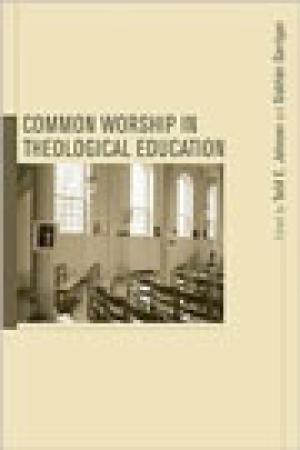
What is the place of corporate warship in theological education? Certainly it is not unexpected to have ministry students attending seminary chapel, but what are the expectations for the students who attend chapel? Is it to form their liturgical sensibilities into conformity with a particular worship tradition or style? Or is it to provide a safe place to try things that one would be reluctant to experiment with in congregational worship? Although common worship for ministry students is almost a given in all theological schools, there are few common understandings about it goals and purposes. Common Worship in Theological Education is the first book to address the theological, pedagogical, and political issues involved in the planning and execution of seminary chapel. It offers voices from across the theological and ecumenical spectrum about chapel, as well as involving multiple disciplines in the conversation. This volume provides the first comprehensive survey of the worship issues at stake in seminary education today. The essays in this collection provide the foundation for a productive conversation within a seminary faculty or among colleagues within a theological discipline. This volume makes the case that the chapel ought to have a seat at the table when the education mission of a theological school is being discussed. So pull up a chair and prepare for a fascinating conversation. (From the Publisher)

This book provides distinctive analysis of the full range of expressions in global education at a crucial time, when international competition rises, tensions with American foreign policy both complicate and motivate new activity, and a variety of innovations are taking shape. Citing best practices at a variety of institutions, the book provides practical coverage and guidance in the major aspects of global education, including curriculum, study abroad, international students, collaborations and branch campuses, while dealing as well with management issues and options. The book is intended to guide academic administrators and students in higher education, at a point when international education issues increasingly impinge on all aspects of college or university operation. The book deals as well with core principles that must guide global educational endeavors, and with problems and issues in the field in general as well as in specific functional areas. Challenges of assessment also win attention. Higher education professionals will find that this book serves as a manageable and provocative guide, in one of the most challenging and exciting areas of American higher education today. (From the Publisher)
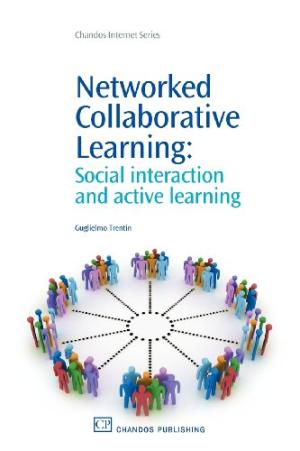
The sustainability of Networked Collaborative Learning (NCL) is a key topic of discussion amongst the institutions where it has been or may potentially be introduced. In order to determine the extent of NCL's sustainability, the added value university education may yield by adopting collaborative learning strategies must be quantified. In turn, an understanding of the implications NCL produces in terms of design and management is gained. After comparing NCL with other Technology Enhanced Learning (TEL) approaches and discussing the possible reasons for adopting it, a multidimensional model for the sustainability of NCL is proposed. The model is characterized by four dimensions: pedagogical approaches, e-teacher professional development, instructional design models and valuation/assessment approaches. Each of these dimensions is examined on the basis of the authors direct experience gained through applying NCL to his university teaching. (From the Publisher)
The first textbook to offer novice and experienced teachers guidelines for the “how” and “why” of self-study teacher research Designed to help pre- and in-service teachers plan, implement, and assess a manageable self-study research project, this unique textbook covers the foundation, history, theoretical underpinnings, and methods of self-study research. Author Anastasia Samaras encourages readers to think deeply about both the “how” and the “why” of this essential professional development tool as they pose questions and formulate personal theories to improve professional practice. Written in a reader-friendly style and filled with interactive activities and examples, the book helps teachers every step of the way as they learn and refine research skills; conduct a literature review; design a research study; work in validation groups; collect and analyze data; interpret findings; develop skills in peer critique and review; and write, present, and publish their studies. Key Features • A Self-Study Project Planner assists teachers in understanding both the details and process of conducting self-study research. • A Critical Friends Portfolio includes innovative critical collaborative inquiries to support the completion of a high quality final research project. • Advice from the most senior self-study academics working in the U.S. and internationally is included, along with descriptions of the self-study methodology that has been refined over time. • Examples demonstrate the connections between self-study research, teachers’ professional growth, and their students’ learning. • Tables, charts, and visuals help readers see the big picture and stay organized. (From the Publisher)
From the “Forward” by Stephen D. Brookfield, Distinguished University Professor, University of St. Thomas, Minneapolis St. Paul, Minnesota “These days it is fashionable to lament the passing of adult education’s transgressive spirit. The historical myth that exercises considerable influence on the field is that adult education used to be a radical expression of the democratic spirit, but it has been tamed, moved to the dark side, become the lapdog of workplace learning, sold its soul to the devil of professionalism in a misguided attempt to be taken seriously by more powerful branches of education. This myth is just that – a myth. I have never believed it. The radical, transgressive spirit of adult education has endured and constantly reconfigured itself, doing its best to escape and outwit those who would contain and neutralize its energy and surfacing in ways that constantly take adult e ducators by surprise. The colleagues I work with in adult and higher education and the learners I serve and study with are neither tamed nor ideologically hoodwinked. This volume of spirited commitment — defiantly hopeful, seriously playful, and placing matt ers of desire and resistance at its center — is an apt representation of the enduring radical spirit of the best of adult education.”

Journal Issue.

Journal Issue.
Just-in-Time Teaching (JiTT) is a pedagogical approach that requires students to answer questions related to an upcoming class a few hours beforehand, using an online course management system. While the phrase “Just in time” may evoke shades of slap-dash work and cut corners, JiTT pedagogy is just the opposite. It helps students to view learning as a process that takes time, introspection, and persistence. Students who experience JiTT come to class better prepared, and report that it helps to focus and organize their out-of-class studying. Their responses to JiTT questions make gaps in their learning visible to the teacher prior to class, enabling him or her to address learning gaps while the material is still fresh in students’ minds – hence the label “just in time.” JiTT questions differ from traditional homework problems in being designed, not only to build cognitive skills, but also to help students confront misconceptions, make connections to previous knowledge, and develop metacognitive thinking practices. Students consequently spend more time on course concepts and ideas, but also read their textbooks in ways that result in more effective and deeper learning. Starting the class with students’ work also dramatically changes the classroom-learning environment, creating greater student engagement. This book demonstrates that JiTT has broad appeal across the academy. Part I provides a broad overview of JiTT, introducing the pedagogy and exploring various dimensions of its use without regard to discipline. Part II of the book demonstrates JiTT’s remarkable cross-disciplinary impact with examples of applications in physics,biology, the geosciences, economics, history, and the humanities. Just-in-Time Teaching article from The Hispanic Outlook in Higher Education Reprinted with permission from Hispanic Outlook in Higher Education Magazine. www.hispanicoutlook.com (From the Publisher)

Presenting the human face of internationalization, this discursive text examines the social learning experience of international students against the background of current cultures in Higher Education. (From the Publisher)
Journal Issue.
Wabash Center Staff Contact
Sarah Farmer, Ph.D.
Associate Director
Wabash Center
farmers@wabash.edu