Resources
Essential principles of timeless learning include attention, contemplation, connection, participation, and responsibility; helping students achieve a sense of purpose; and improving alertness and mental health. (From the Publisher)
After decades of marginalization in the secularized twentieth-century academy, moral education has enjoyed a recent resurgence in American higher education, with the establishment of more than 100 ethics centers and programs on campuses across the country. Yet the idea that the university has a civic responsibility to teach its undergraduate students ethics and morality has been met with skepticism, suspicion, and even outright rejection from both inside and outside the academy. In this collection, renowned scholars of philosophy, politics, and religion debate the role of ethics in the university, investigating whether universities should proactively cultivate morality and ethics, what teaching ethics entails, and what moral education should accomplish. The essays quickly open up to broader questions regarding the very purpose of a university education in modern society. (From the Publisher)
In this volume - the third book in the Missional Church series - eminent missional church expert Craig Van Gelder continues to track and contribute to the expanding missional church conversation, inviting today's brightest minds in the field to speak to key questions concerning church leadership. (From the Publisher)
"This guide is primarily for the Master of Divinity degree program ... and the M.Div. concentrations"--P. 1.
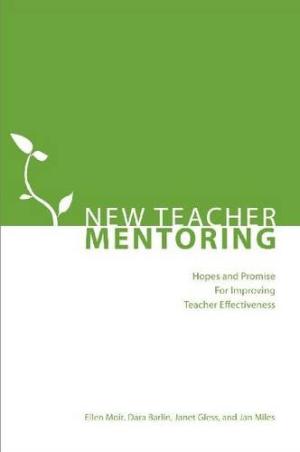
This book is written for K-12 educational contexts, but many of its ideas and analyses can be applied to higher education contexts.
During the last century American students and scholars have found it increasingly difficult to discuss the relation of religion to the mission of self-consciously secular colleges and universities. Respected scholar C. John Sommerville here offers thought-provoking reflections on this subject in a conversational style. / Sommerville explores the crisis of the secular university, argues that religion and secular universities need each other, and examines how Christianity shows up on both sides of our "culture wars." The astute reflections in Religious Ideas for Secular Universities point the way to a dialogue that would do justice both to religious insights and to truly neutral secular education. (From the Publisher)

What makes the modern university different from any other corporation?' asked Columbia's Andrew Delbanco recently in the New York Times. 'There is more and more reason to think: less and less,' he answered.In this provocative book, Frank Donoghue shows how this growing corporate culture of higher education threatens its most fundamental values by erasing one of its defining features: the tenured professor.Taking a clear-eyed look at American higher education over the last twenty years, Donoghue outlines a web of forces—social, political, and institutional—dismantling the professoriate. Today, fewer than 30 percent of college and university teachers are tenured or on tenure tracks, and signs point to a future where professors will disappear. Why? What will universities look like without professors? Who will teach? Why should it matter? The fate of the professor, Donoghue shows, has always been tied to that of the liberal arts —with thehumanities at its core. The rise to prominence of the American university has been defined by the strength of the humanities and by the central role of the autonomous, tenured professor who can be both scholar and teacher. Yet in today's market-driven, rank- and ratings-obsessed world of higher education, corporate logic prevails: faculties are to be managed for optimal efficiency, productivity, and competitive advantage; casual armies of adjuncts and graduate students now fill the demand for teachers.Bypassing the distractions of the culture wars and other 'crises,' Donoghue sheds light on the structural changes in higher education—the rise of community colleges and for-profit universities, the frenzied pursuit ofprestige everywhere, the brutally competitive realities facing new Ph.D.s —that threaten the survival of professors as we've known them. There are no quick fixes in The Last Professors; rather, Donoghue offers his fellow teachers and scholarsan essential field guide to making their way in a world that no longer has room for their dreams. (From the Publisher)

Journal Issue.
Critics from three major racial/ethnic minority communities in the United States African American, Asian American, and Latino/a American focus on the problematic of race and ethnicity in the Bible and in contemporary biblical interpretation. With keen eyes on both ancient text and contemporary context, contributors pay close attention to how racial/ethnic dynamics intersect with other differential relations of power such as gender, class, sexuality, and colonialism. In groundbreaking interaction, they also consider their readings alongside those of other racial/ethnic minority communities. The volume includes an introduction pointing out the crucial role of this work within minority criticism by looking at its historical trajectory, critical findings, and future directions. (From the Publisher)
An updated edition of the down-to-earth resource that offers twelve practices to make Christian faith a way of life Many Christians are looking for ways to deepen their relationship with God by practicing their faith in everyday life. This best-selling guide helps take belief out of the realm of theory and shows how to live it out in a series of twelve central practices such as hospitality, forgiveness, healing, testimony, and keeping Sabbath. Designed to work across a wide range of Christian laypeople, leaders, denominations, and study groups, this is the second edition of the book that Theology called "... a stimulating contribution to the work of making explicit the connection between what Christians do and what they believe." • Contains information on the practices discussed in the book and shows how they relate to and intersect with prayer, worship, and Bible study • Offers a guide for conversation, learning, and growth at the back of the book • This updated and expanded new edition includes a new introduction and two additional chapters that describes new insights into and experiences with the "practicing our faith" approach The book includes a variety of prominent contributors, who draw on their rich shared experience as believers, theologians, ethicists, and educators. (From the Publisher)
Wabash Center Staff Contact
Sarah Farmer, Ph.D.
Associate Director
Wabash Center
farmers@wabash.edu