Resources
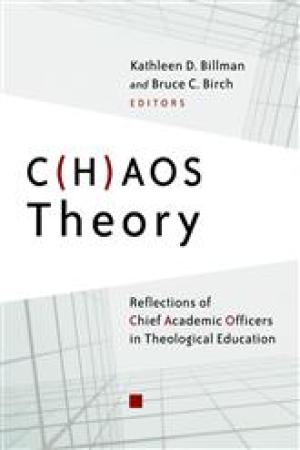
Members of the Association of Theological Schools' Chief Academic Officers Society (CAOS) -- deans and CAOs at more than 250 theological schools in the United States and Canada -- face a number of unique vocational tasks and trials. C(H)AOS Theory brings together in one volume perspectives from more than thirty veteran deans on a variety of topics related to academic leadership, from understanding institutional contexts and nurturing relationships to negotiating conflict, setting and meeting academic goals, building budgets, working with assessment and accreditation, and more. With its rich amalgam of useful information, bold instruction on a host of academic leadership issues, and lively narratives on the ways different colleagues address common challenges, C(H)AOS Theory will serve as a helpful resource for academic leaders. (From the Publisher)

In Teachers as Learners, a collection of landmark essays, noted teacher educator and scholar Sharon Feiman-Nemser shines a light on teacher learning. Arguing that serious and sustained teacher learning is a necessary condition for ambitious student learning, she examines closely how teachers acquire, generate, and use knowledge about teaching over the trajectory of their careers. Together, these essays bear witness to the evolution and development of a body of scholarship about teacher learning in which the author herself played a catalyzing role. (From the Publisher)
Effective pedagogy in the capstone course or integrative seminar — a 1000 word response to a Call for Papers.
Effective pedagogy in the capstone course or integrative seminar — a 1000 word response to a Call for Papers.
Tomoko Masuzawa and a number of other contemporary scholars have recently problematized the categories of “religion” and “world religions” and, in some cases, called for its abandonment altogether as a discipline of scholarly study. In this collaborative essay, we respond to this critique by highlighting three attempts to teach world religions without teaching “world religions.” That is, we attempt to promote student engagement with the empirical study of a plurality of religious traditions without engaging in the rhetoric of pluralism or the reification of the category “religion.” The first two essays focus on topical courses taught at the undergraduate level in self-consciously Christian settings: the online course “Women and Religion” at Georgian Court University and the service-learning course “Interreligious Dialogue and Practice” at St. Michael's College, in the University of Toronto. The final essay discusses the integration of texts and traditions from diverse traditions into the graduate theology curriculum more broadly, in this case at Loyola Marymount University. Such confessional settings can, we suggest, offer particularly suitable – if somewhat counter-intuitive – contexts for bringing the otherwise covert agendas of the world religions discourse to light and subjecting them to a searching inquiry in the religion classroom.
One page Teaching Tactic: a free write exercise helps students reflect on and articulate their values.
One page Teaching Tactic: using an acronym to help students remember basic biblical chronology and plot outline.
One page Teaching Tactic: students memorize and recite a selection from another tradition's scripture.
Theological educators are now fostering dialogues, projects, and practices that are designed to acknowledge the challenges and opportunities resulting from the shifting racial and ethnic demographic climate in the U.S. and Canada. As well-intentioned as these efforts are, most of the scholarship focuses on the contemporary experiences of underrepresented minorities, current institutional concerns, or practical classroom scenarios, leaving Scripture courses, which have long been the backbone of theological education, beyond the scope of critical engagement. In this article I argue that the existing scholarship on teaching and learning in general, and among biblical scholars in particular, does not adequately address the specific challenges that arise when questions about race and ethnicity are exposed in Scripture courses. Therefore, based on my own classroom experiences, I develop a pedagogy of (Emb)Racing the Bible that seeks to bridge the gap between theoretical readings and practical applications of ancient and contemporary discourses about race and ethnicity.
In this paper, I suggest that community-based learning can act as a “public space” for the exchange of religious and non-religious identities. By providing a space for the collaboration between religiously-affiliated Universities and non-religiously affiliated community partners, community-based learning offers the opportunity for the negotiation of what civic engagement means in a pluralistic society. This exchange can inform the conversation on the public role of religion by offering an example of how religious and secular communities can discover a common language through the realization of shared interests.
Wabash Center Staff Contact
Sarah Farmer, Ph.D.
Associate Director
Wabash Center
farmers@wabash.edu