Resources
Teaching theology within academic institutions with confessional commitments and theologically conservative students requires holding together, in creative tension, two pedagogical goals. The challenge is to promote rigorous academic inquiry by encouraging student openness to engagement with perspectives that challenge their own beliefs while simultaneously constructing a course that is experienced as a safe space where students do not feel their personal faith is under attack. This essay presents the argument that a methodological framework for introductory theology courses informed by Alasdair MacIntyre's reflections on the nature of living traditions holds great promise for achieving these objectives. The essay will also describe how a creative extended analogy drawn from the game of basketball facilitates student comprehension of this initially abstract intellectual framework. Finally, the essay will offer some representative examples of student participation in course online discussion forums in order to illustrate the effectiveness of this approach for student learning.
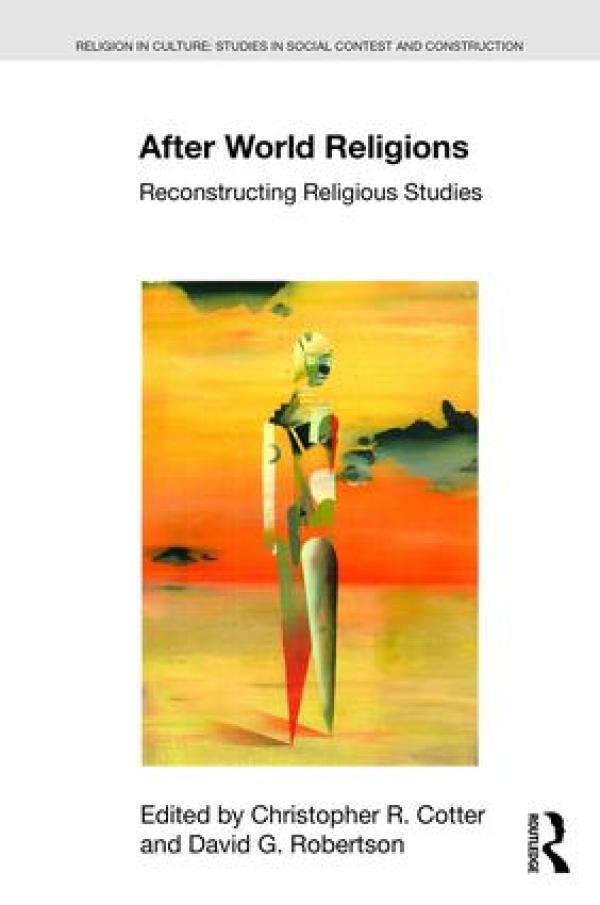
Click Here for Book Review Abstract: The World Religions Paradigm has been the subject of critique and controversy in Religious Studies for many years. After World Religions provides a rationale for overhauling the World Religions curriculum, as well as a roadmap for doing so. The volume offers concise and practical introductions to cutting-edge Religious Studies method and theory, introducing a wide range of pedagogical situations and innovative solutions. An international team of scholars addresses the challenges presented in their different departmental, institutional, and geographical contexts. Instructors developing syllabi will find supplementary reading lists and specific suggestions to help guide their teaching. Students at all levels will find the book an invaluable entry point into an area of ongoing scholarly debate. (From the Publisher)
A special section of "Teaching Theology and Religion" that collects short essays providing snapshots of how religion is taught in the undergraduate (college/university) curriculum in 9 countries around the world: Denmark, Ireland, Turkey, Botswana, Japan, Malaysia, Japan, New Zealand, and Brazil.
Journal Issue. Full text is available online.
This article argues that attention to material culture can enhance teaching classical rabbinic literature (Talmud, Midrash, and related Jewish texts from the first seven centuries C.E.) at universities. Following an examination of broader scholarship on teaching and learning on using visuals, this article explores four ways in which material culture can help instructors teach rabbinics to students without background in Jewish studies or the relevant languages (Hebrew, Aramaic). It builds upon teaching other areas of biblical and religious studies (Hebrew Bible, New Testament, and teaching rabbinics at liberal seminaries), research methods, and broader scholarship on using visuals and material culture for pedagogical purposes. Contributing to these fields, this article addresses a lacuna in research on teaching rabbinic literature at secular institutions of higher learning and models ways to bring material culture into religious studies classrooms.
A collection of one page Teaching Tactics: S. Brent Plate's introductory essay orients the reader to the academic move toward material text studies, a wide range of research questions and pedagogical practices that includes attention to the history of the book, book technologies, the social habits of readership especially in relation to print culture, and issues raised in media studies about differences in verbal communication. This introduction is followed by a series of one-page Teaching Tactics that prompt students to ask about the material conditions in and through which scriptures acquire meaning. Students are challenged to become aware of the sensorial nature of sacred texts, and of communication itself. They touch, see, and hear in new ways, learning with their bodies.
An undergraduate liberal arts education can help students be not simply shaped by tradition but also shapers of tradition. Specifically, undergraduate theological education, aimed at ministry preparation in a liberal arts setting, can seek to graduate students who are responsible shapers of the traditions that shape them, that is, who are tradents. The work of a tradent involves active engagement that requires skills and capacities well beyond simply passing on the past formulations of a tradition. The pedagogical question, then, is how to engage in undergraduate theological education if this image of the tradent is what we have in mind for our students. Three aspects of this image can serve as pervasive or recurrent themes across the structure of a major or program. One aspect is the interpretive nature of the tradent's work, a second is facility with traditions, and a third is the creative, constructive work of thinking theologically. Whatever particular traditions characterize a department's context, the image of students as tradents can help focus pedagogical reflection on the department's work: teaching students as shapers of the traditions that shape them.
The essays collected in this manuscript respond to “How We Teach Introductory Bible Courses: A Comparative and Historical Sampling” by Collin Cornell and Joel M. LeMon, published in this issue of the journal.
The millennial generation is distinctive for several reasons, not the least is its growing religious disaffiliation. Given a growing disinterest in religion in general and the Bible in particular especially among the fast growing group of millennial “nones” how can biblical studies classes still be seen as appealing and relevant? This article seeks to answer this question by examining the identity and concomitant values of millennials. As a result of this analysis I argue that while the Bible as inherent authority may be quickly losing its appeal, the Bible as an example of human creativity, group reflection, political rhetoric, and social discourse makes the study of the Bible particularly relevant for millennials contemplating careers in the global marketplace even if the importance of the Bible itself is waning for this generation. I show how in my introductory New Testament class I attempt to implement these ideas.
This study identifies the dominant modes of biblical interpretation being taught in introductory Bible courses through a qualitative analysis of course syllabi from three institutional contexts: evangelical Christian colleges, private colleges, and public universities. Despite a proliferation of methods and scholarly approaches to the Bible, this study reveals that historical-critical approaches continue to predominate in pedagogical contexts, especially private colleges and public universities. In Christian colleges, theological approaches appear more frequently, usually alongside historical criticism and rarely supplanting it. The study also shows that teachers have been deploying social scientific and ideological approaches with increasing frequency over the past decade. Additionally, the study tracked instruments of student assessment in these courses. Public universities showed a particularly high level of pedagogical conservatism in this regard, while Christian colleges exhibit the greatest diversity with respect to course assignments and evaluations. See also “Response to ‘How We Teach Introductory Bible Courses’” by Caryn A. Reeder, Tat-siong Benny Liew, Jane S. Webster, Alicia J. Batten, and Chris Frilingos, published in this issue of the journal. The complete data set is included in an extended Appendix at the end of the article, and is also available electronically on the “Supporting Information” tab of the article's webpage and at the Wabash Center (http://www.wabashcenter.wabash.edu/pdfs/AppendixCornellandLeMon.pdf).