Resources
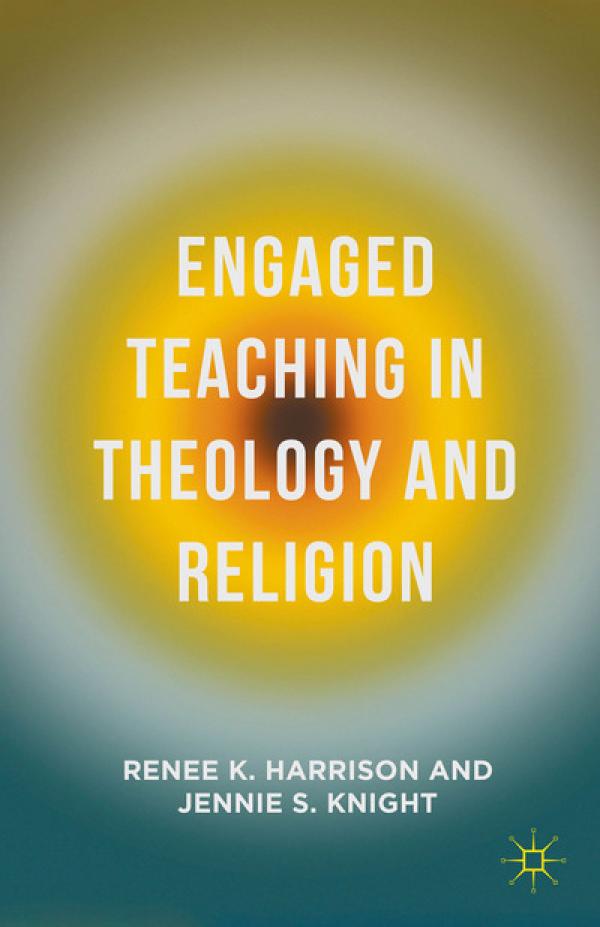
Click Here for Book Review Abstract: The goal of Engaged Teaching in Theology and Religion is to guide a process of self-reflection for scholars and teachers of theology and religion that leads to intentional, transformative teaching, dialogue, and reform in theological education and religious studies. Effective teaching approaches must address the selfhood of the teacher, as well as pedagogy, course content, and community engagement. This book sets itself apart from other works in the field because of this holistic approach. In addition to addressing these four areas, Harrison and Knight provide a variety of practices for teaching that take seriously students' cries for a more socially and personally relevant pedagogy and curriculum in a rapidly changing transnational world. The volume provides a well-reasoned and accessible re-thinking of teaching theology and religion so that schools of theology and departments of religion might better live out their stated goals of forming transformative, courageous, and thoughtful leaders and teachers in the twenty-first century. (From the Publisher)

Journal Issue. Full text is available online.
One page Teaching Tactic: Scaffolded activities and assignments beginning the first day of class to help students engage significant life questions in the Bible.
One page Teaching Tactic: Inspiring students through informal encounters with the wide diversity of actual living biblical scholars.
One page Teaching Tactic: A final paper assignment that knits together the major themes of the course by drawing on activities from the first day of class and peer interviews students have conducted during the semester.
The undergraduate study of religion is predominantly undertaken by non-majors who are meeting a general education requirement. This means that, while curricular discussions make important distinctions between the work of lower- and upper-division courses, many religion and theology faculty are teaching hybrid courses that we call “introductory upper-level courses.” These play an introductory role in general education while also serving the study of religion in a more advanced way. Attention to how these courses fit into multiple curricular goals will be important for the scholarship of teaching and learning in religious studies and theology. This essay draws on scholarship about introductory teaching and a survey of faculty about introductory upper-level courses to argue that the content of such courses should be understood as serving the study of religion at an advanced level, the context should be understood as introducing general education goals, and the goals for intellectual growth must strike a challenging balance between the two.
Journal Issue.
Georgia State University associate professor of religious studies, Molly Bassett, writes about a dual-level course she's teaching for a third time this fall titled "Religious Dimensions in Human Experience.” Part 2, is a reflection by one of her former graduate students, Sarah Levine, who took the course the first time Bassett taught it in the fall of 2010.
This essay is part of a collection of short essays solicited from authors around the globe who teach religion courses at the college level (not for professional religious training). They are published together with an introduction in Teaching Theology and Religion 18:3 (July 2015). The authors were asked to provide a brief overview of the curriculum, student learning goals, and pedagogical techniques employed in their courses.
This essay is part of a collection of short essays solicited from authors around the globe who teach religion courses at the college level (not for professional religious training). They are published together with an introduction in Teaching Theology and Religion 18:3 (July 2015). The authors were asked to provide a brief overview of the curriculum, student learning goals, and pedagogical techniques employed in their courses.