Resources
In this article, I explore an ethical and pedagogical dilemma that I encounter each semester in my world religions courses: namely, that a great number of students enroll in the courses as part of their missionary training programs, and come to class understanding successful learning to mean gathering enough information about the world's religious “traditions” so as to effectively seduce people out of them. How should we teach world religions – in public university religious studies courses – with this student constituency? What are/ought to be our student learning goals? What can and should we expect to accomplish? How can we maximize student learning, while also maintaining our disciplinary integrity? In response to these questions, I propose a world religions course module, the goal of which is for students to examine – as objects of inquiry – the lenses through which they understand religion(s). With a recognition of their own lenses, I argue, missionary students become more aware of the biases and presumptions about others that they bring to the table, and they learn to see the ways in which these presumptions inform what they see and know about others, and also what they do not so easily see.
This article provides two short responses to Kathleen M. Fisher's essay “Look Before You Leap: Reconsidering Contemplative Pedagogy,” published in this issue of the journal.
This paper presents a critique of a set of teaching strategies known as “contemplative pedagogy.” Using practices such as meditation, attentive listening, and reflective reading, contemplative inquiry focuses on direct first-person experience as an essential means of knowing that has historically been overshadowed and dismissed by an emphasis on analytical reasoning. In this essay, I examine four problematic claims that appear frequently in descriptions of contemplative pedagogy: (1) undergraduate students have a kind of spiritual hunger; (2) pedagogies focused on cognitive skills teach students only what, not how, to think; (3) self-knowledge fosters empathy; and (4) education needs a new epistemology centered on spiritual and emotional, rather than intellectual, experience. I argue that these claims underestimate the diversity of undergraduate students, the complexity of what it means to think and know, the capacity for self-knowledge to become self-absorption, and the dangers of transgressing the boundaries between intellectual, psychological, and religious experiences. [See as well “Response to Kathleen Fisher's ‘Look Before You Leap,’” by Andrew O. Fort and Louis Komjathy, published in this issue of the journal.]
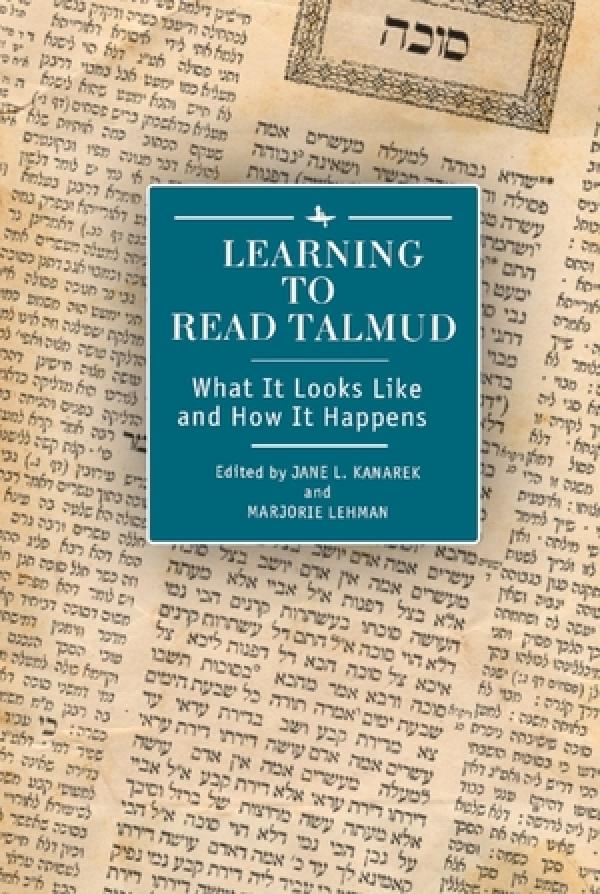
Click Here for Book Review Learning to Read Talmud is the first book-length study of how teachers teach and how students learn to read Talmud. Through a series of studies conducted by scholars of Talmud in classrooms that range from seminaries to secular universities and with students from novice to advanced, this book elucidates a broad range of ideas about what it means to learn to read Talmud and tools for how to achieve that goal. Bridging the study of Talmud and the study of pedagogy, this book is an essential resource for scholars, curriculum writers, and classroom teachers of Talmud. (From the Publisher)
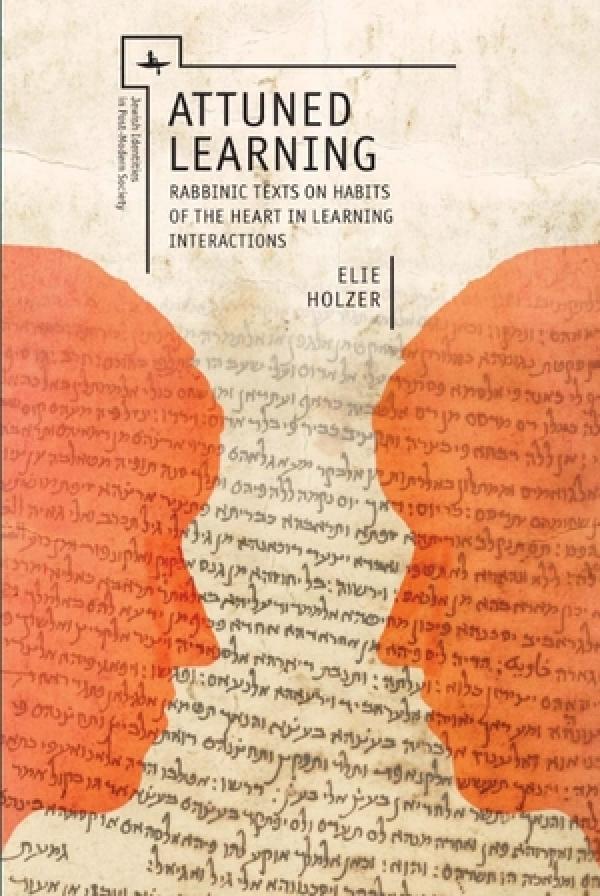
Click Here for Book Review Practice-oriented educational philosopher Elie Holzer invites readers to grow as teachers, students, or co-learners through “attuned learning,” a new paradigm of mindfulness. Groundbreaking interpretations of classical rabbinic texts sharpen attention to our own mental, emotional, and physical workings as well as awareness of others within the complexities of learning interactions. Holzer integrates pedagogical pathways with ethical elements of transformative teaching and learning, the repair of educational disruptions, the role of the human visage, and the dynamics of argumentative and collaborative learning. Literary analyses reveal that deliberate self-cultivation not only leads to ethical and spiritual growth, but also offers a corrective for the pitfalls of the contemporary calculative modalities in educational thinking. The author speaks to the existential, humanizing art of learning and of teaching. This book can serve as a companion volume for A Philosophy of Havruta: Understanding and Teaching the Art of Text Study in Pairs, adding a new dimension of its model of joint learning. (From the Publisher)

Journal Issue.
In 2014, a roundtable on pedagogy appeared in the Journal of the American Academy of Religion with an initial piece by Vanessa Sasson. Although neither Sasson nor the respondents explicitly situated her article as a part of the broader body of work known as the “ Scholarship of Teaching and Learning” (SoTL), readers would reap benefit from such a contextualization. In this article, after first exploring what SoTL is and how it has interacted with the field of religious studies, I explore three main elements of this particular kind of scholarship: research with human subjects and the Institutional Review Board, a foundation in other scholarship, and assessment. In these three areas, I uncover special questions, considerations, and resources for all religious studies instructors interested in embarking upon a SoTL project with the aim of contributing to the ongoing conversation about pedagogy.
This interview was recorded and transcribed in November 2015. Stephen Prothero is a professor of religious studies at Boston University, where he has taught since 1996. His publications include several that directly address teaching about religion, most notably Religious Literacy: What Every American Needs to Know – and Doesn't, which made an argument regarding K-12 education. In this manuscript he pulls the conversation into his own undergraduate classrooms – providing a vivid glimpse of his teaching practices, including how he conducts large lecture classes and seminars, how he works with teaching assistants, and how he conducts discussions even in very large courses. He also shares his broader reflections on the nature and importance of religious literacy and its place in American education.
One page Teaching Tactic: student writing assignments in which they are forbidden to use direct quotations but required to provide a citation for every sentence that uses information from one of their sources.
One page Teaching Tactic: an in class exercise in which students to apply course material to a local issue on the  college campus.