Resources

This is the final volume in a trilogy of works that examine the impact of writing and reading about traumatic subjects. "Diaries to an English Professor" (1994) explores the ways in which undergraduate students use psychoanalytic diaries to probe conflicted issues in their lives. "Surviving Literary Suicide" (1999) investigates how graduate students respond to suicidal literature-novels and poems that portray and sometimes glorify self-inflicted death. In Risky Writing, Jeffrey Berman builds on those earlier studies, describing ways teachers can encourage college students to write safely on a wide range of subjects often deemed too personal or too dangerous for the classroom: grieving the loss of a beloved relative or friend, falling into depression, coping with the breakup of one's family, confronting sexual abuse, depicting a drug or alcohol problem, encountering racial prejudice. Berman points out that nearly everyone has difficulty talking or writing about such issues because they arouse shame and tend to be enshrouded in secrecy and silence. This is especially true for college students, who are just emerging from adolescence and find themselves at institutions that rarely promote self-disclosure. Recognizing the controversial nature of his subject, Berman confronts academic opposition to personal writing head on. He also discusses the similarities between the "writing cure" and the "talking cure," the role of the teacher and audience in the self-disclosing classroom, and the pedagogical strategies necessary to minimize risk, including the importance of empathy and other befriending skills. (From the Publisher)
The inaugural title of a series in which faculty members at Lesley University in Cambridge, Massachusetts will address critical issues in arts education for university faculty, classroom teachers, and students of education, based on the innovation programs in the arts there. The 25 contributions discuss creating the teacher and changing the world, collaborative learning and improvisation, constructing a space for creativity in science, and other topics. (From the Publisher)
A historical case study of the construction and reconstruction of race between the late 19th century and the 1940s is used to document the ways in which the social, cultural, political, and historical contexts in which knowers are embedded influence the knowledge they construct and reconstruct.
In 1978, Jack Mezirow introduced the concept of transformative learning in his groundbreaking study of women who returned to community college to continue their education. As their understanding of personal, cultural, and social histories grew, so did the students' ability to modify their assumptions and expectations of learning. Since that time, transformative learning has inspired a significant body of research and theory. This volume continues the work begun over twenty years ago—revealing the impact of transformative learning on the theory and practice of adult education Fifteen of the field's top scholars and practitioners join Jack Mezirow in these pages. Together, they review the core principles of transformation theory, analyze the process of transformative learning, describe different types of learning and learners, suggest key conditions for socially responsible learning, explore group and organizational learning, and present revelations from the latest research. They also share real-world examples drawn from their own experiences as educators and assess the evolution of transformative learning in practice and philosophy. Learning as Transformation presents an intimate portrait of a powerful learning concept and invites educators, researchers, and scholars to consider the implications of transformative learning in their own professional work. (From the Publisher)
Transformative Dimensions of Adult Learning describes the dynamics of how adults learn--and how their perceptions are transformed by learning--as a framework for formulating educational theory and practice. It presents an in-depth analysis of the ways in which adults learn, how they make meaning of the learning experience, and how their lives can be transformed by it. (From the Publisher)
In a poem entitled The World’s Feeling,[1] the Brazilian poet Carlos Drummond de Andrade has a line that says: “I have only two hands and all the feelings of the world.” I love this metaphor and I feel that this is how I have been living lately. The political arena seems to be depleting us day by day with news of atrocities, shocking moves that place the world at a tipsy point, and new national laws that put people in danger and potential situations of disaster. And we have just started! Too many feelings, too much disastrous news, and too few defused responses and ideas without anything that seems to be truly articulating the moment in any clarifying direction. Every movement is divided. The so-called leftists, living in a time of potentialities to create a new left, is bitterly divided over issues either defending one candidate or accusing another. However, there have been positive moments. The Women’s March was a balm to many of us. As were the responses from Boston and NYC about Trump’s threat to immigrants and registering Muslims. As a citizen and as a teacher, I feel the weight of the feelings of the world and yet I only have two hands to deal with it all. The task of living our days in resistance to power seems insurmountable and that also seems to be the hope of the leaders of this country. The battle at hand is not only on the front of new laws and administrative resolutions but also on the controlling of feelings and emotions. The attack on media as the new enemy, the creation of “alternative facts,” and actions such as “President Donald Trump to publish a weekly list of crimes committed by immigrants,”[2] are all tactics used by the government to disturb our feelings and confuse our ideas. This is not removed from the classroom. Students carry their emotions into every class. Teaching engages the world of ideas and contemporary movements. Teachers must engage ideas and human feelings at the same time. Ideas are dependent on feelings and feelings are affected by ideas and it is in this chiaroscuro time and place where teachers work. Antonio Gramsci defines our time in precise ways: “The old world is dying, and the new world struggles to be born; now is the time of monsters.” An empire is eroding, a collapsing new world order is emerging and in the midst of it all, there are monsters of all kinds! We can surely name them! It is in this chiaroscuro time that faculty are called, even demanded, to attend to teaching in ways that take seriously the complicated interplay between ideas and feelings in their subject matters and within the student’s lives. Our classrooms are containers of the world’s feelings with only few hands. However, if education is for life and not for a program of profit and if outcomes are hoped for the decolonization of the minds and bodies and not to fulfill a neoliberal project of processual measurement, then we can meet each other now; but also, beyond the surroundings of the classroom: in soup kitchens, in marches for rights of people, in strikes against economic austerity deals of destitution. We can continue to organize something that will be plural, filled with ambiguities and paradoxes, but that can somewhat, produce sustainable forms of resistance to be engaged. In order to do that, teachers must teach with their heart and mind filled with feelings of strength and possibilities. Classrooms must be places for thinking and feeling, where emotions embolden ideas and where ideas help organize emotions. Our classes should fuse Descartes with Antonio Damasio: we think and we feel, therefore we are! We need idea-feelings, that is, thinking that feels and feelings that think. In this way, classrooms will be spaces with deep liberating thinking and expansive feelings. The song Volver a Los 17[3] (Returning to seventeen) calls us to engage our feelings: What feelings can grasp knowledge cannot understand, not even the clearest move not even the widest thought, the moment changes everything We need poetry and songs to continue moving! Art, poetry, and songs to expand us, to help us be better teachers. The same song says something akin to our endless task of teaching: Entangling, entangling it moves, like the ivy on the wall, and so it flowers, and it grows, like tiny moss on the stone. Oh yes oh yes We are ivy on the wall of empire! Entangling in everything there is. We are flowers inside of guns, we are tiny mosses on the stones of our reality. Oh yes oh yes! When our minds cannot grasp the intensity of this moment, we can recur to our hearts. For there, in our hearts, if well cared, we can find solace, peace, and sustenance. For the hearts of teachers are bigger than anything. The hearts of teachers embrace all kinds of students and realities, wrestle with all kinds of theories, and engage all forms of thinking-feeling. So we don’t fear the world! If the world looks frightening, our heart knows better. As the same poet Drummond says… World, world, wide world, wider is my heart.[4] [1] Carlos Drummond de Andrade, Sentimento do Mundo. [2] http://www.independent.co.uk/news/world/americas/donald-trump-publish-weekly-list-crimes-immigrants-commit-refugees-aliens-executive-order-us-a7546826.html?cmpid=facebook-post [3] Song by Violeta Parra. Hear the song here by Mercedes Sosa and Milton Nascimento: https://www.youtube.com/watch?v=MB37oAxOkzA [4] Carlos Drummond de Andrade, Poema de Sete Faces.
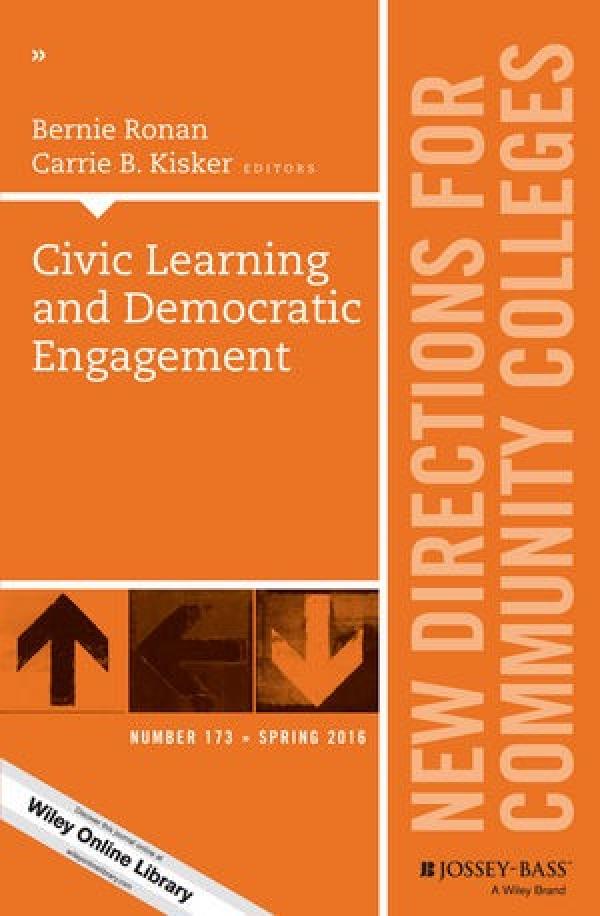
New Directions in Community Colleges, may be an unfamiliar journal to many scholars in theology and religion, but growing interest in community colleges as transformational contexts warrants attention. This edition presents scholarship on ethical and pedagogical issues of civic engagement in higher education. Recording workshops at the Kettering Foundation convened by Derek Barker collaborating with editors, Ronan and Kisker, these authors share the conviction that higher education should promote democratic values. Without fully acknowledging controversial aspects of that claim, they explore common ground working for social mobility, civic agency, and democratic practices such as voting, public discourse, and advocacy. Contributors reflect on two reports, both published in 2012: “Advancing Civic Learning,” representing the work of the U.S. Department of Education, and “A Crucible Moment,” written by the National Task Force on Civic Learning and Democratic Engagement, work of the American Association of Colleges and Universities. Both reports address educational goals of preparing engaged citizens who transfer civic skills like capacities for communicating, leading, organizing, and advocating from the classroom to workplace, public, and personal settings. Furthermore, the integration and assessment of civic learning and democratic engagement across educational programs from formal curriculum to extracurricular opportunities offered insight for building institutional support or resources for others innovative programs. For instance, Carrie Kisker surveyed sixty community colleges asking whether civic engagement was a goal stated in missions or strategic plans with dedicated infrastructure and incentives in tenure or advancement process. She found diversity of approaches but high level of integration in curriculum and encouragement in extracurricular programs. However, her findings document a lack of a standardized instrument to assess civic engagement and the need for more study of institutionalized support. Other highlights include David Matthews’s proposed deliberative pedagogy which he linked to timely questions about authority and legitimacy in the public mandate for institutions of higher education. For example, John J. Theis cited the problems of people losing confidence in each other and in institutions, drawing on Carcasson’s work noting that the “expert model” usually dominates higher education in ways that disempowers collective action (43). The authors connect their work as educators with enduring questions of ethics, cultural identities, and inequality. Significant numbers of students learning about religious studies and theology are enrolled in classes at community colleges with more racial and economic diversity than most seminary or elite college and university classes. Despite the lack of prestige or attraction these settings may have for many faculty, community colleges are rich in ability to shape citizens and hence the future of our communities. Furthermore, although many seminaries and religious studies departments compete fiercely and perpetuate bitter rivalries to attract students, community colleges seem better able to collaborate with each other and learn together in ways institutions for teaching religion and theology would do well to study. Since religious institutions also need leaders with civic competencies, theological educators concerned with the future will find the journal provocative. Especially those educators committed to promoting the common good, social justice, and public engagement will benefit from reading this book.
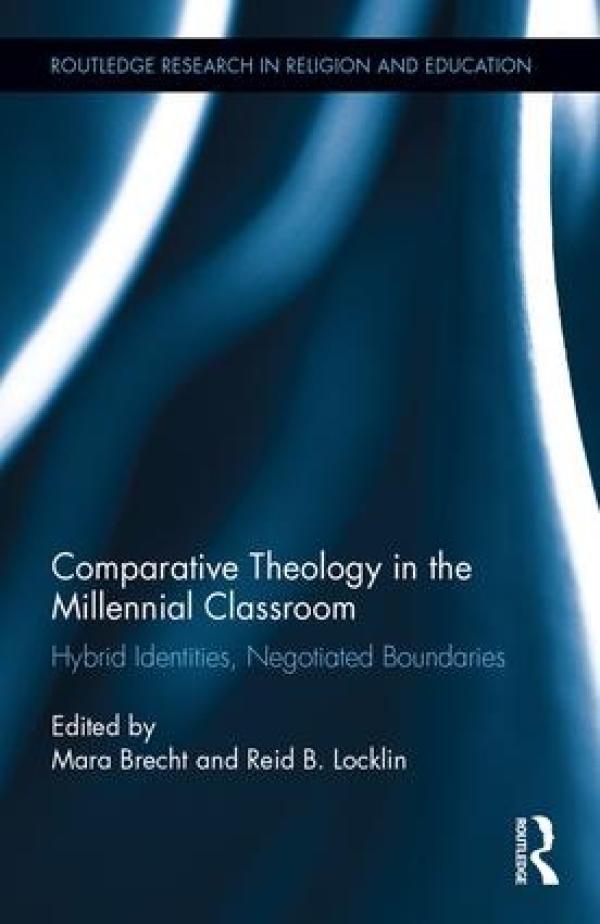
his is the fourth in the Routledge Research in Religion and Education series. The series editor provides a Foreword distinguishing between religious education as formation within religious institutions and the concern of the series, which is education about religion. In this context, the essays address comparative theology as a process and as a pedagogical method in primarily, though not exclusively, undergraduate classrooms. Editors Brecht and Locklin provide a concise, effective introduction which establishes an overview of the intersecting thematic components of the collection: comparative theology, particularly the “departure-and-return” model as developed by Francis X. Clooney, SJ., and ways in which the digital culture of the millennial generation impacts epistemology and identity. The fifteen essays are arranged in three sections. The well-placed first essay, by Judith Gruber, offers a postcolonial critique of the comparative theological model as implicitly essentialist. Essays in the second group address issues of identity raised by millennials and the nature of the millennial classroom in relation to comparative theology. Essays in the third section discuss hands-on examples and specific pedagogical practices. An afterword by Clooney, in which he identifies “six recurring issues” which he finds in the essays and addresses sequentially, concludes the volume. Clooney’s frankly personal account of his own context in developing the departure-and-return model and his rejoinder to the charge of essentialism bring the dialogue to a fitting end. The diversity of the collection is rich in both content and authorial voices, some of whom are well-established scholars and others of whom are emerging, most teaching in religious studies or theology departments at public or private North American universities, though the balance leans toward Roman Catholic institutional affiliations. Editors Brecht and Locklin note that this collection is the fruit of a Wabash Center teaching workshop. The robust range of reflection invites readers into the feel of a working group of teacher/scholars who share a concern for facilitating transformative learning in the religion or theology classroom, yet who address this concern and comparative theology’s relevance to the millennial context in quite distinct ways. A brief sampling demonstrates the range of perspectives authors develop: soteriological privilege (Brecht); Muslim theology of tawhid (Hussain); embodiment and material culture (Gasson-Gardner and Smith); storytelling as a pedagogical method of African Traditional Religions (Aihiokhai); comparing dharma and moksha, works and faith, ethics and spirituality (Yadlapati); a voluntary female Jewish-Muslim textual study group (Golberg); and use of film in an online context (Sydnor). As Jeanine Hill Fletcher writes in her essay, “the work of the comparative theology classroom shares in this important work of shaping citizens in a multifaith world toward tolerance, appreciation, meaningful relationships, and the common good” (149). The same may also be said for religious studies classrooms. Many teachers of religion who are neither theologians nor comparativists by academic training will nevertheless find this collection useful and even inspiring for their pedagogical reflection and practice.
The goal of the contributors to Critical Approaches to the Study of Higher Education is to apply critical theories to the study of higher education which, they insist, “has only begun to develop research using such essential approaches as critical feminist theories, critical race theories, critical discourse analysis, state theoretical approaches, or theories of power and marginalization.” Added to this genuine concern is the scarcity of published material “addressing key topics in higher education that are central to critical work elsewhere in the social sciences” (5). To meet this need, they marshal “critical theories, models, and research tools with a critical vision of the central challenges facing postsecondary researchers” hoping to shape future “scholars and scholarship in higher education” (5). They are convinced that these critical tools will “provide policymakers, the public, and institutional actors clear, reasonable, and authoritative information about higher education as it is experienced in a democracy” (1). The result is a fine compilation of well-written essays for teachers and researchers to adopt and exercise their critical edge with a view to innovating their teaching pedagogies and research. The vision Mertínez-Ahlemán, Pusser, and Bensimon have is to ensure a sustained exercise of critical theory in the service of humanity, namely “for understanding politics and policy making in higher education” (5). They carry their readers through fifteen intriguing arguments critically testing theory against lived experiences filled with autobiographical elements that share the same thread – an abiding concern and determination to ensure that justice and equity are exercised in higher education. After all, critical theory came into being for this purpose as exemplified in feminist criticism, critical race theory, and other critical studies dealing with various dimensions of human life such as marginalization, economic disparity, and power differential. Simply stated, things are not the way they seem and something must be done even if it might be subversive. This volume is, indeed, “long overdue” (5) as it provides salient insights on how to critically navigate the host of complex and challenging issues facing higher education. These dynamic tensions inherent in higher education include: areas of scholarship and lived experience, power differential, critical historiography, the making of globalization, policymaking, race, equity, opportunities, and institutional change, and so on. Quite frankly, this book is a gem with a delicate vision to motivate scholars and teachers alike to engage in the noble – yet difficult – task of effecting change, especially the kind of transformation that advocates justice and nurtures equity in higher education. Educators and researchers may strive to embody and diligently exercise its content in their classrooms or writing projects because of its timely and urgent call for action. In other words, justice and equity matter (311).
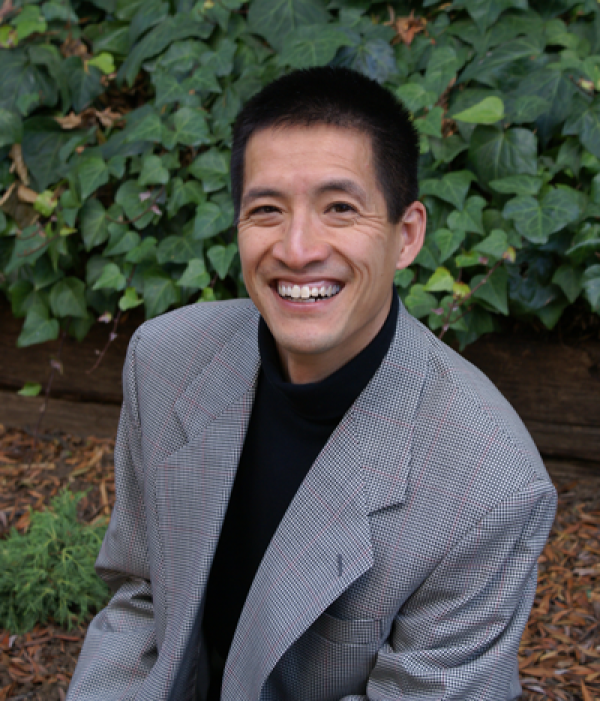
Tat-siong Benny Liew Class of 1956 Professor in New Testament Studies College of the Holy Cross “You are now entering the real world.” This is undoubtedly one of the most popular remarks that college/university graduates hear around the time of their commencement ceremony. The comment implies, of course, that life