Resources

Click Here for Book Review Abstract: In the current ever changing world – the liquid modernity – the most pressing psychological challenge to all of us is to create and maintain a personal balance between mental stability and mental flexibility. In Transformative Learning and Identity Knud Illeris, one of the leading thinkers on the way people learn, explores, updates and re-defines the concept and understanding of transformative learning while linkingthe concept of transformative learning to the concept of identity. He thoroughly discusses what transformative learning is or could be in a broader learning theoretical perspective, including various concepts of learning by change, as opposed to learning by addition, and ends up with a new, short and distinct definition. He also explores and discusses the concept of identity and presents a general model depicting the complexity of identities today. Building on the work of Mezirow, various perspectives of transformative learning are analysed and discussed, including; transformative learning in different life ages; progressive and regressive transformations; motivation and identity defence; development of identity; personality and competence, and transformative learning in school, education, working life, and in relation to current and future life conditions. This vital new book by one of the leading learning theorists of our time will prove of lasting interest to academics, teachers, instructors, leaders and researchers in the field of adult learning and education. It will also appeal to many students and researchers of psychology and sociology in general. (From the Publisher)
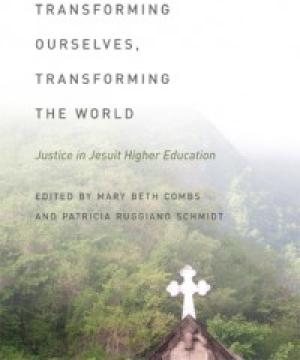
Click Here for Book Review Abstract: Transforming Ourselves, Transforming the World is an insightful collection that articulates how Jesuit colleges and universities create an educational community energized to transform the lives of its students, faculty, and administrators and to equip them to transform a broken world. The essays are rooted in Pedro Arrupe’s ideal of forming men and women for others and inspired by Peter-Hans Kolvenbach’s October 2000 address at Santa Clara in which he identified three areas where the promotion of justice may be manifested in our institutions: formation and learning, research and teaching, and our way of proceeding. Using the three areas laid out in Fr. Kolvenbach’s address as its organizing structure, this stimulating volume addresses the following challenges: How do we promote student life experiences and service? How does interdisciplinary collaborative research promote teaching and reflection? How do our institutions exemplify justice in their daily practices? Introductory pieces by internationally acclaimed authors such as Rev. Dean Brackley, S.J.; David J. O’Brien; Lisa Sowle Cahill; and Rev. Stephen A. Privett, S.J., pave the way for a range of smart and highly creative essays that illustrate and honor the scholarship, teaching, and service that have developed out of a commitment to the ideals of Jesuit higher education. The topics covered span disciplines and fields from the arts to engineering, from nursing to political science and law. The essays offer numerous examples of engaged pedagogy, which as Rev. Brackley points out fits squarely with Jesuit pedagogy: insertion programs, community-based learning, study abroad, internships, clinical placements, and other forms of interacting with the poor and with cultures other than our own. This book not only illustrates the dynamic growth of Jesuit education but critically identifies key challenges for educators, such as: How can we better address issues of race in our teaching and learning? Are we educating in nonviolence? How can we make the college or university “greener”? How can we evoke a desire for the faith that does justice? Transforming Ourselves, Transforming the World is an indispensable volume that has the potential to act as an academic facilitator for the promotion of justice within not only Jesuit schools but all schools of higher education. (From the Publisher)
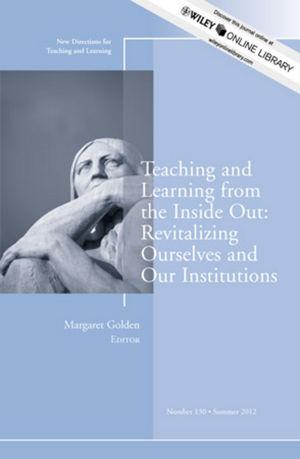
By reclaiming the passions of our hearts and exploring insights and ideas, we begin a remembering of ourselves. As we begin to reclaim our wholeness, we also have the capacity to renew and revitalize our institutions from within. After a long career of writing and speaking about how living in congruence—without division between inner and outer life—allows for being present with ourselves and those who journey with us, Parker Palmer and colleagues at the Center for Courage & Renewal developed a process of shared exploration. This Circle of Trust approach encourages people to live and work more authentically within their families, workplaces, and communities. This issue explores the transformative power of engaging in a Circle of Trust. The authors examine its direct applications to teaching and learning, and they explore and discuss the research being done by the facilitators of this work. This is the 130th volume of this Jossey-Bass higher education series. New Directions for Teaching and Learning offers a comprehensive range of ideas and techniques for improving college teaching based on the experience of seasoned instructors and the latest findings of educational and psychological researchers. (From the Publisher)

Robert and DeMethra’s book, Me-Searching and Re-Search, has caught my fancy in a number of ways. The book title cleverly captures what SPN is all about—it is about self narratives (the “me-search” part) and about scholarly meaning making (the “re-search” part). This eye-catching title also illuminates the authors’ intent to turn this seemingly intimidating method of self-inquiry into something very accessible and doable. Their jargon-free language is friendly and inviting. Although they don’t intend to make their many methodological tips and tools too prescriptive, their practical suggestions provided in this guide book are, indeed, helpful and useful. I believe that Robert and DeMethra have demonstrated admirable talents as effective educators by unpacking the complex method of SPN writing into bite-sized steps. I am fully convinced that the steps will help both novices, and the experienced researcher, to reach the ultimate height of producing engaging, and scholarly significant, SPN’s. The book is also fun to read. The authors intersperse throughout their own SPN’s, pedagogical insights from their doing and teaching, and real-life stories, in order to illustrate the methodological process, challenges, and triumphs. (From the Publisher)
This new book from the award-winning author of Psychology and Adult Learning puts the spotlight on the kind of learning that brings about significant personal change. Tennant explores the techniques, processes, and practices educators can use to promote learning that leads to change and examines assumptions about self and identity, how we are formed, and our capacity for change. Throughout the book, Tennant posits that individuals can be agents in their own self-formation and change by understanding and acting on the circumstances and forces that surround and shape them. Educators, he argues, must be open to different theoretical ideas and practices while simultaneously valuing these practices and viewing them with a critical eye. The book aims to: • promote, among educators and others with an educational dimension to their work, a more critical approach to their learning designs and practices; • equip individuals with a framework for understanding and being agents of their own self-formation and change.
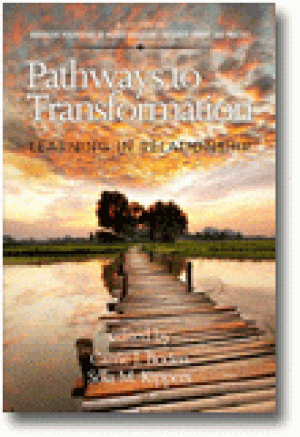
Pathways to Transformation: Learning in Relationship is an edited collection that synthesizes current research on transformative learning and expands the current knowledge-base. This book is timely and significant as it provides a synthesis of some of the most exciting research in two fields: adult education and human services. The objectives of this themed edited collection, Pathways to Transformation: Learning in Relationship, are threefold. First, this collection serves as a space to synthesize current research on transformative learning. Through an extensive literature review, the editors have discerned several important strands of research in the area of transformative learning and solicited chapters dealing with these topics. The second objective of the collection is to expand the current knowledge-base in the area of transformative learning by creating a space for dialog on the subject and bringing together diverse voices. The third objective of the collection is to transcend the field of adult education, with a specific goal to reach an audience in human services (psychology, counseling, social work, marriage and family therapy). (From the Publisher)
The Handbook of Transformative Learning provides a comprehensive and critical review of more than three decades of theory development, research, and practice in Transformative Learning (TL). It will help adult educators understand what transformative learning is, distinguish it from other forms of learning, and foster it in their practice. The book covers five broad areas: historical, theoretical, practical, research, and future perspective. It is comprehensive, interdisciplinary, critical, reflective, and accessible to a wide audience of interested scholars, students, and practitioners. Co-edited by leading experts in the field with an advisory group of prominent authorities, this handbook is the leading resource for the field. (From the Publisher)
What is contemplative pedagogy and how is it practiced in Religious Studies classrooms? Contemplative pedagogy cultivates inner awareness through first-person investigations, often called “contemplative practices.” Contemplative teaching practices range widely: silent sitting meditation, compassion practices, walking meditation, deep listening, mindfulness, yoga, calligraphy, chant, guided meditations, nature observation, self-inquiry, and many others. Since narrative is a mode of instruction prevalent in contemplative literature, the article includes first-hand reflections from students and a narrative account of how an initially skeptical professor came to incorporate contemplative teaching methods into her courses. It expands from the personal narratives to highlight the work of many contemplative professors in the field. These real-life examples are put into the context of recent publications on shifts in higher education and meditation research. The article seeks to demonstrate the power of contemplative teaching to fulfill many hopes for liberal arts learning. Of particular importance is its emphasis on interior qualities of lifelong impact, such as self-knowledge and ethical cultivation.
Drawing on indigenous belief systems and recent work in critical race studies and multicultural-feminist theory, Keating provides detailed step-by-step suggestions, based on her own teaching experiences, designed to anticipate students' resistance to social-justice issues and encourage them to change. She offers a holistic approach to theory and practice. (From the Publisher)
Educational theorist Richard Kiely highlights the central importance of “high intensity dissonance” in successful international service-learning. This essay applies Kiely’s model of dissonance and transformative learning to Intercordia, an international service-learning program offered at the University of St. Michael’s College and the University of Toronto, in partnership with the Non-Governmental Organization (NGO) Intercordia Canada. By placing its students in situations of significant vulnerability and weakness, the Intercordia program attempts to problematize familiar assumptions about the otherness of oppressed persons and thereby encourage an authentic sense of belonging across boundaries of difference. The results, as reported by participants in the program, are quite profound. At the same time, the program design invites critical questions about how, and to what extent, such transformative experiences of dissonance should be scripted for students as an expected and desired result of their international service.